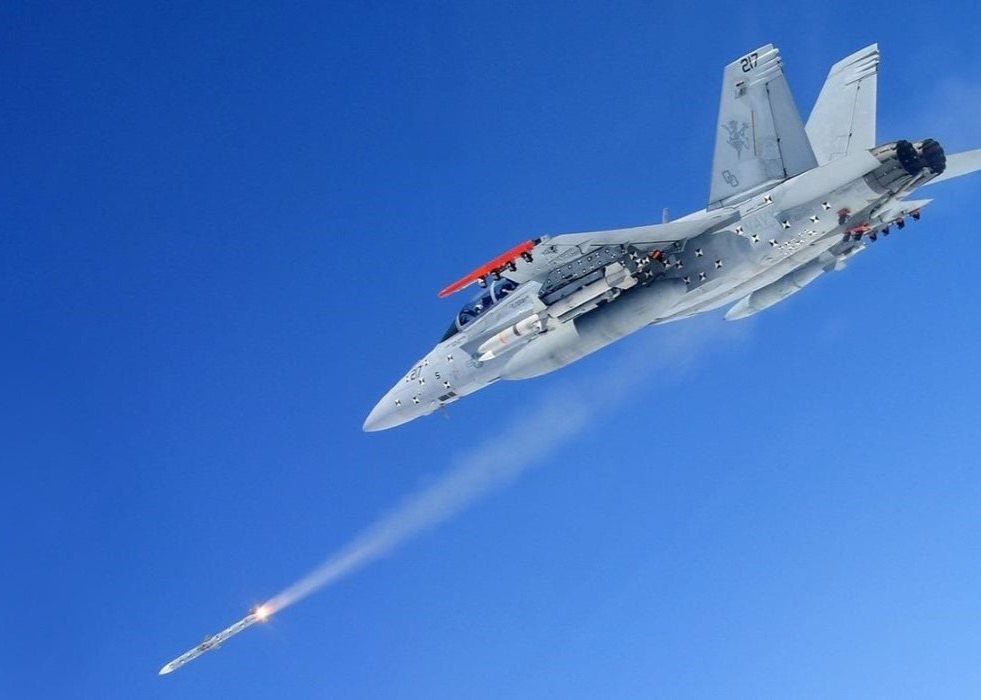
The United States has authorised Australia to acquire 400 AIM-120 Advanced Medium-Range Air-to-Air Missiles (AMRAAM) missiles with a total budget of $1.04 billion through Foreign Military Sales (FMS). The deal includes 200 AIM-120C-8 and 200 AIM-120D-3, as well as full logistical support and software components.
According to the Defence Security Cooperation Agency (DSCA), the agreement intends to improve Australian air-to-air combat capacity and safeguard its fleet of aircraft against current and future Western Pacific threats.
The notification was formally sent to the U.S. Congress on 9 April 2025.

Scope of the deal
In addition to the missiles, the deal includes containers, support equipment, spare parts, consumables, repair and return support, software delivery and support packages, classified publications, technical documentation, and associated transportation and logistics services. Engineering and technical assistance from both U.S. government entities and RTX Corporation, the prime contractor based in Tucson, Arizona, will also be provided.
No offset agreements have been announced in connection with this transaction.
Strategic implications
The acquisition might indicate Australia's specific plan to strengthen the Royal Australian Air Force (RAAF) in reaction to increasing security issues in the Indo-Pacific area. In future air combat situations, the improved range and targeting capabilities of the AIM-120D-3 type are anticipated to offer a notable benefit.
AIM-120C-8 vs AIM-120D-3: Key differences
|
Feature |
AIM-120C-8 |
AIM-120D-3 |
|
Range |
~105 km |
Estimated 160–180 km |
|
Data Link |
One-way |
Two-way for mid-course updates |
|
Navigation |
Inertial (INS) |
GPS-aided INS |
|
No-Escape Zone |
Standard |
Expanded |
|
Off-Boresight Capability |
Standard |
Enhanced |
|
Software Upgradeability |
Limited |
Includes F3R architecture for future upgrades ( form, fit, function refresh) |
|
Speed |
Mach 4 |
Mach 4 |
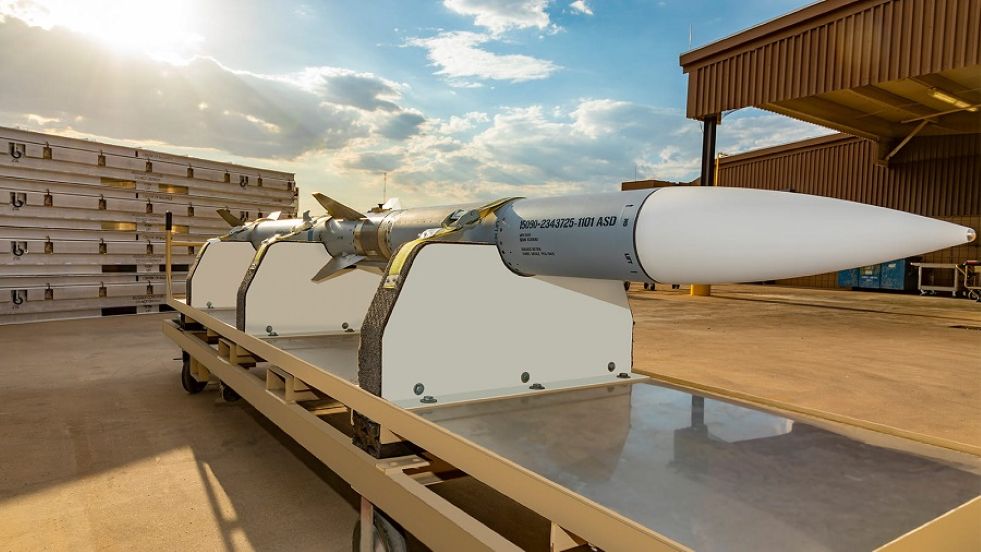
The AIM-120D-3 model incorporates advanced avionics and extended reach, giving it approximately 50 per cent more range compared to earlier variants. The system provides pilots with GPS navigation and high off-boresight targeting capabilities, which enable them to attack targets with improved precision and flexibility.
The approval demonstrates the continuing defence partnership between the U.S. and Australia while showing their mutual dedication to preserve aerial superiority in hostile airspace.
The AIM-120D-3 variant selection by Australia makes sense because it provides triple the range of the AIM-120C-8. The D-3 variant stands out because it includes advanced off-boresight capability which addresses current air combat threat realities.
The feature provides better performance than previous models, AIM-120C-5, C-7 and C-8, but lacks the speed of short-range infrared-guided missiles such as the AIM-9X.
Multiple operational considerations led developers to integrate this capability into a beyond-visual-range (BVR) missile.
Complex engagement scenarios and dispersed targets
Modern air combat increasingly involves multi-directional and high-speed threats beyond the frontal radar arc. In such scenarios, being able to engage targets outside the nose cone at launch is vital. High off-boresight capability ensures broader engagement geometry.
1. Compatibility with two-way datalink and mid-course updates
2. Real-time updates upon launch are made possible by the two-way datalink of the AIM-120D-3. High off-boresight capability is both possible and tactically useful as this lets the missile be launched at broader angles and yet change its flight path mid-course.
3. Alternative engagement angles against electronic countermeasures
4. When adversaries employ radar jamming to deny frontal locks, engaging from oblique angles becomes a strategic necessity. Extended launch envelopes provide pilots with flexible engagement solutions, increasing survivability even in BVR scenarios.
5. Engagement of stealth and low-observable targets
6. Against aircraft with low radar cross-sections—such as the Chinese J-20 or Russian Su-57—detection windows are shorter. Pilots may not always have time to achieve traditional head-on locks. A broader firing cone helps counter this limitation.
The AIM-120D-3's enhanced off-boresight capabilities are meant to offer more variable launch geometries, larger target envelopes, and increased efficacy against nimble or low-observable platforms, not for close-range dogfighting. This capacity becomes more crucial in the framework of network-centric warfare and rising regional dangers, such as China's growing fifth-generation jet force. Australia's purchase of the D-3 version is thus a reasonable move to support its deterrent stance.
Author: Özgür Ekşi