The new production facility of BAE Systems will have a space reserved for the upcoming multi-role HVP ammunition to be used in various cannons.
BAE Systems Director of Naval Guns & Ammunition Tate Westbrook, speaking to Naval News during SNA2025, stated that a certain amount of ammunition could be produced. Westbrook added that the production can be ramped up depending on requests from the Army and Navy.
The new facility of BAE Systems under construction will have a space specifically reserved for the production of multi-role HVP rounds.
HVP is a high-speed guided round developed by BAE Systems as a common ground for navy and army cannons. HVP can be fired by 127 mm Mk45 naval guns and 155 mm army howitzers with railguns envisioned for future use.
The common round is housed inside sabots, depending on the gun type, which separate upon exit. HVP rounds feature a design lowering the wave drag with a sharp form and actuated fins for guidance to be provided by outer sensors.
For naval use, HVP is being offered as an extended-range option for ASuW and a low-cost alternative for countering cruise missiles, UAVs, and ballistic missiles. These rounds have no onboard seekers or propulsion units and have a rather simple form in terms of manufacturing, which are likely to result in significantly lower costs than a typical air defence missile. The range figures are 74 km for Mk45 Mod 2 and 93 km for Mk45 Mod 4 naval guns. Mk45 family is anticipated to remain in use for the next decades, with the delay in developing a full-sized railgun for warships. The range figure projected for the railgun is 185 km due to the possibility of far higher muzzle velocities.
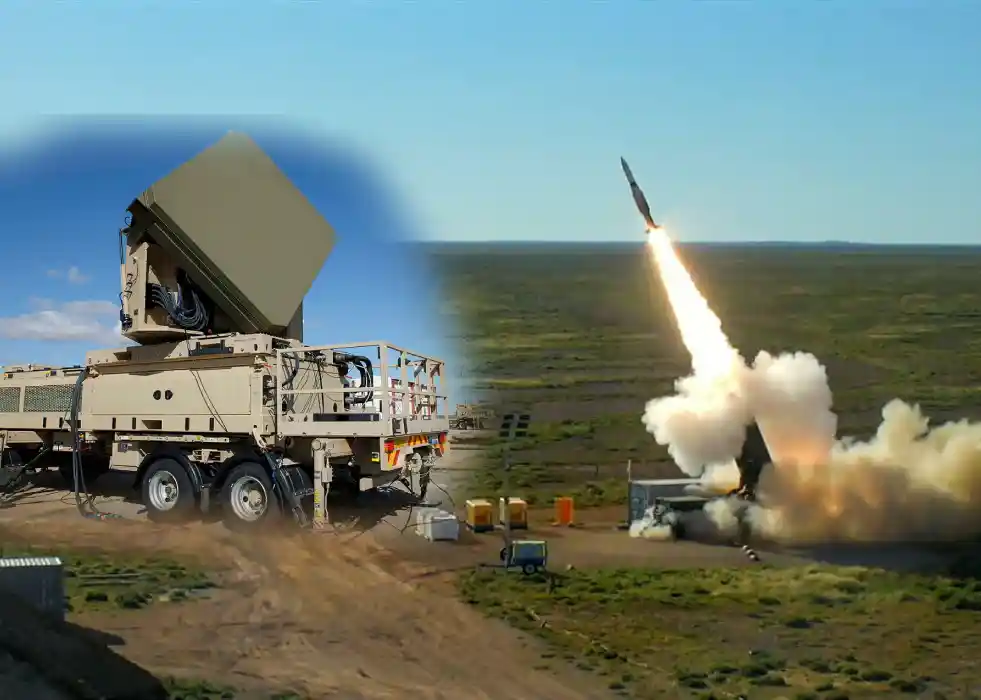
The Army is rather interested in the air defence capabilities of the HVP round and intends to utilise them with the MDACS air defence artillery. $66 million in funding was requested for the rapid prototyping of MDACS towards the end of 2024. Multi-Domain Artillery Cannon System (MDACS) combines a 155 mm cannon, HVP, and Multi-Function Precision Radar (MFPR) to perform air defence like a SAM but with higher capacity.
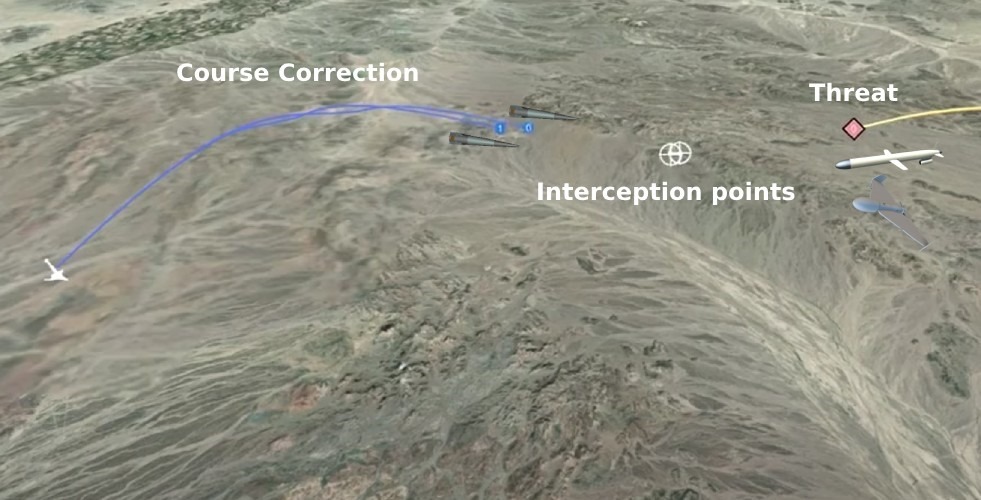
After MFPR acquires the target and the cannon is fired, the radar provides the guided round with course corrections to intercept the target through aerodynamic controls.