The ceremony that took place on the 28th of October marks an important day for the future of the Turkish Armed Forces’ mechanised units with the delivery of the first ALTAY MBTs off the production line and the opening of BMC’s Ankara Production Complex to perform production in different areas. BMC CEO Fuat Tosyalı made the following statement regarding the ALTAY MBT delivery and the new complex:
“We will produce the new ALTAY Tank using our domestic and national capabilities at the BMC Ankara Production Complex, which ranks among the top 5 globally and top 3 in Europe in terms of production capacity and technological intensity. With our industrial identity and accumulated expertise, we set out asking how we could contribute to this highly important and critical project for our country. Today, as we inaugurate the BMC Ankara Tank and Next-Generation Armoured Vehicles Production Facilities, we are also delivering the first New ALTAY Tanks to the Turkish Armed Forces.”
Up to this point, the ALTAY programme has had to endure significant challenges such as re-organisation due to contractor change and sanctioning of initial batch engines from Germany. However, the delays ended up partially converted to an advantage with a major update on the first production configuration, T1, dubbed New ALTAY. New ALTAY introduces some of the features previously planned for T2, such as improved armour package and multi-spectral (RF+IR) camouflage mesh.
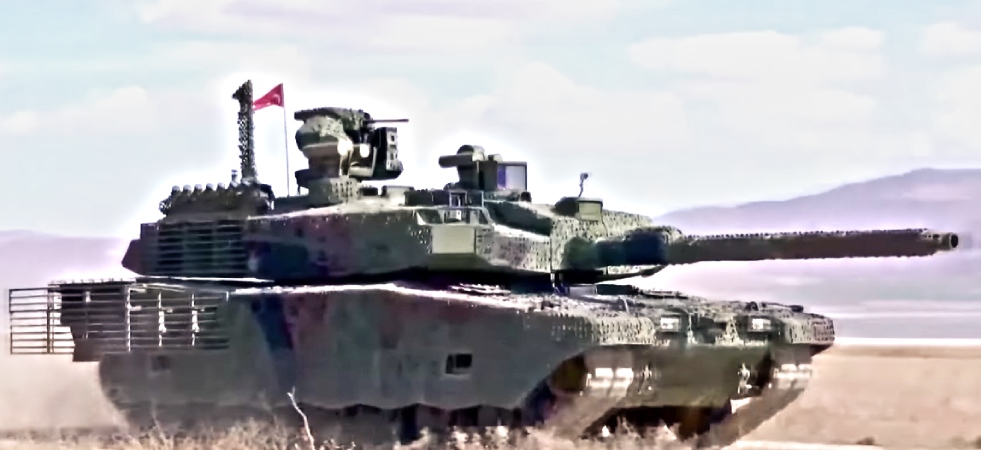
In addition to this, it can be said that other changes are present, based on the observations of what an average Western bloc MBT experiences when subjected to the conditions of the war in Ukraine. Up to this point, the biggest threats to MBTs were regarded as ATGMs and on-par MBTs. However, kamikaze/munition-dropping UAVs with their low cost and availability in field conditions proved to be far bigger of a concern. One change based on these observations can be given as the addition of C-UAS capabilities to the AKKOR APS.
However, some features remain to be added, such as laser-guided ATGM integration. Ultimately, ALTAY T3 is still on the table with considerations for a larger calibre main gun (130 mm, 140 mm...), unmanned turret, encapsulated crew, and UAV/UGV integration.
Upping the Game in Armoured Vehicle Production
BMC’s Ankara Production Complex, set up in a 4.05 km^2 zone, is split into Tank and New Generation Armoured Vehicle Production Facility and BMC Power Facility.
The facility has the capacity to produce eight ALTAY MBTs and ten ALTUĞ AFVs per month. However, the facility can be adapted for different vehicles’ production as well. This means, at maximum output, the facility can pump out 96 ALTAY MBTs and 120 ALTUĞ AFVs per year. ALTUĞ AFV has been selected for the 35mm Turreted New Generation Vehicles Project of the SSB, which will introduce ALTUĞ 8x8 IFVs fitted with the SARP 100/35 (Formerly KORHAN) turret from ASELSAN.
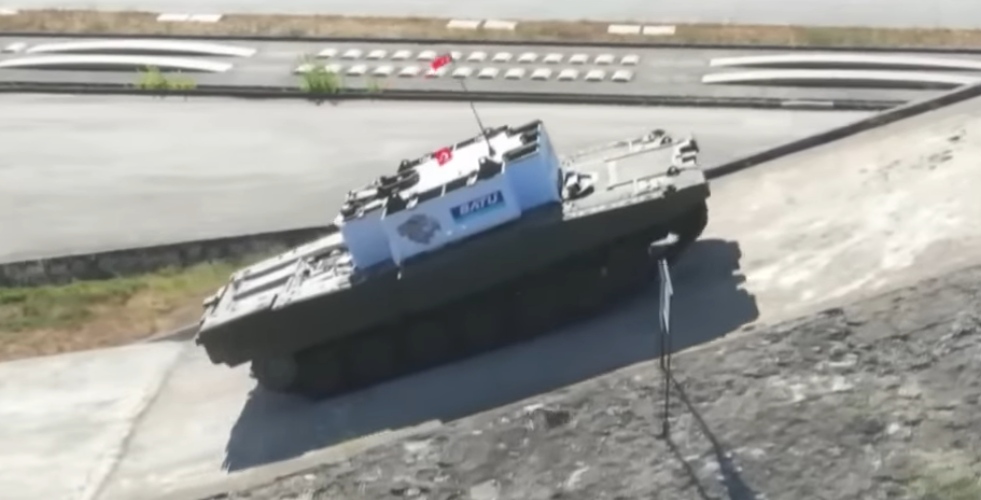
Serial Production Capabilities for BMC Power
The Ankara Production Complex, aside from expanding the production capacity significantly, also opens more room for BMC Power to produce the needed indigenous engines for not only ALTAY but also others like ALTUĞ AFV and FIRTINA SPG.
In addition to ground vehicles, BMC Power is also on the road to becoming a supplier of marine diesel engines, with its sights set on USVs and patrol vessels. LEVEND (Marine configuration of AZRA 600 hp diesel engine) is known to be integrated on the MARLIN USV. At the same time, the more powerful MAVİ BATU will power patrol vessels () or act as a generator for larger ships (Like MİLGEM).
BMC Power’s diesel engine projects currently include:
- TUNA: 400 hp, 4x4 armoured vehicles
- AZRA: 600 hp, ALTUĞ AFV
- UTKU: 1000 hp, FIRTINA 155 mm SPG and 40-ton class combat vehicles
- BATU: 1500 hp, ALTAY MBT
- MAVİ BATU: 1407 hp, Future vessels for the Turkish Coast Guard (Propulsion) and MİLGEM (Generator)
- LEVEND: 600 hp, MARLIN USV
Author: Kaan Azman
Editor:Özgür Ekşi