FNSS will attend the SAHA EXPO International Defence and Aerospace Exhibition, which will be held at the Istanbul Expo Centre between 22 and 26 October.
FNSS will showcase TEBER II 30/40 RCT integrated PARS ALPHA 8x8 New Generation Armoured Fighting Vehicle and Marine Assault Vehicle (MAV), which is in service with Turkish Naval Forces.
PARS ALPHA 8x8 incorporates platform design and technologies to enhance mobility, survivability, durability, situational awareness, and life support systems, pioneering revolutionary solutions in new-generation armoured warfare.
Its 8x8 all-wheel drive, ride-height control, and all-axle steering system offer mobility in any weather condition. The hydro-pneumatic suspension with adjustable ride height enables persistent cross-country agility, enhanced by a turning radius optimised for confined urban warfare.
The vehicle also offers performance and reliability with its extended operational endurance, covering 5000 km of cross-country and on-road drive without any need for field maintenance. PARS ALPHA 8x8’s reduced logistics burden, increased mean time between failures (MTBF), and enhanced mission readiness elevate combat manoeuvres.
The new generation PARS ALPHA 8x8 comprises the integration of weaponry. TEBER-II 30/40 remote-controlled turret (RCT) is fitted with a 30mm dual-feed automatic cannon. The 30mm cannon can be replaced with a 40mm barrel by changing the recoil spring and forward feeder. This convertible weapon of choice enables the user to upgrade its firepower with minimum effort when and wherever required. A 7.62mm chain gun or MAG machine gun can be coaxially mounted and aligned with the main gun.
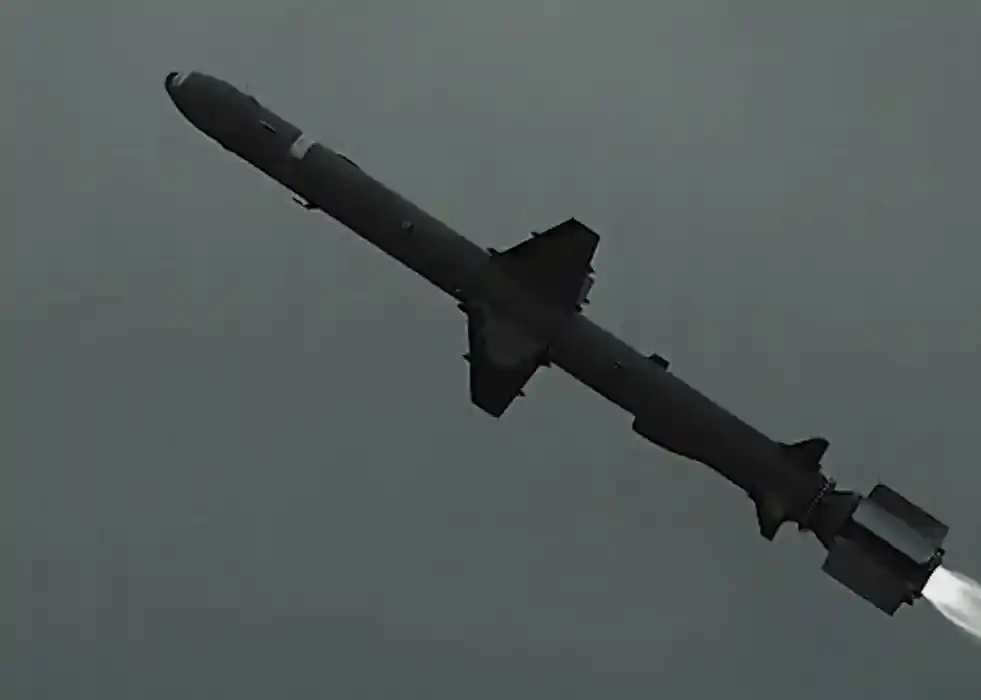
TEBER-II 30/40 RCT is also adaptable to use various modern anti-armour systems, such as Semi-automatic command to line of sight (SACLOS) and Automatic command to line of sight (ACLOS) guided missile types. TwATGMs, each ready to fire, are supported by an onboard fire control system. This capability enables diversified threat engagements with an effective range beyond km.
A high-elevation and low-depression 7.62 or 5.56mm independent overhead remote-controlled weapon system (ORCWS) is situated atop the turret. Its high elevation is used against threats on high ground in urban environments (buildings, roofs, etc.) and when encountering drones approaching from top angles. ORCWS is also used as the commander’s independent sight for hunter-killer capabilities.
Both the turret and RCWS are designed to engage multiple targets simultaneously from all directions. TEBER-II 30/40 RCT offers target tracking and two-axis stabilisation that allows firing on the move. In addition to TEBER-II 30/40 RCT, the vehicle can be fitted with various types of manned or remote-control turrets up to 120mm direct/indirect guns or weapon systems, 120mm mortars, air defence systems, and anti-armour systems.
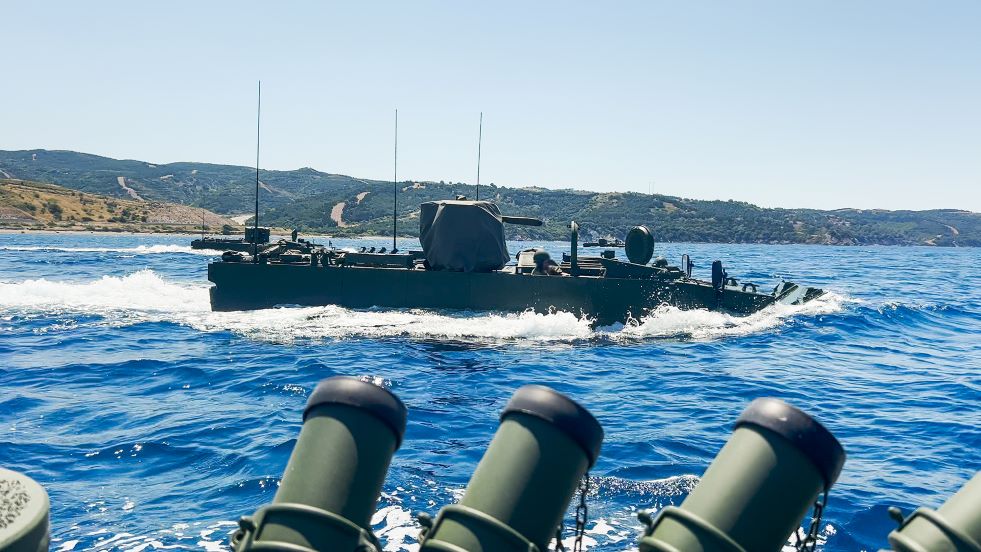
Marine Assault Vehicle is Now In Service with the NAVY
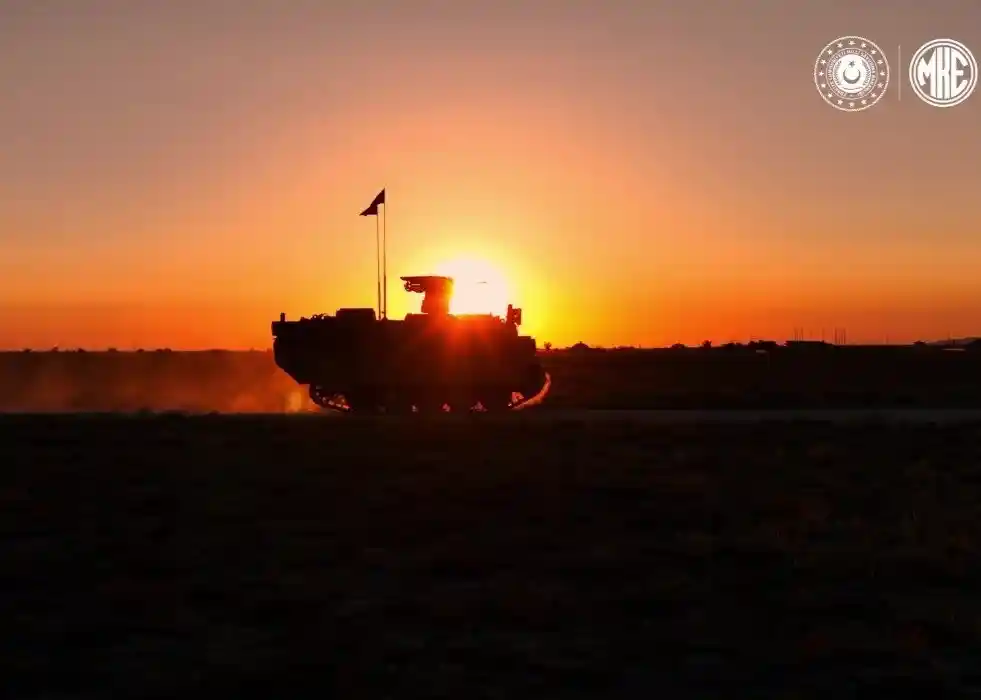
A Marine Assault Vehicle (MAV) is a vehicle designed to facilitate the rapid ship-to-shore movement of troops stationed on landing ships during the beach assault phase of amphibious operations. MAVs allow marine units to land under armour protection. From the moment they land on the beach, they provide fire support to troops disembarking from the vehicle, enabling them to reach their inland objectives after coming ashore.
Delivered to Turkish Naval Forces, MAV became the fastest amphibious armoured vehicle that the Turkish Armed Forces have in inventory. By balancing the land and sea requirements, MAV has all the features and capabilities of both a military land vehicle and a military marine vessel. This dual-role vehicle, by definition, offers high performance on both land and water operations.
MAV has higher ballistic and mine protection than its predecessors and is equipped with today’s most advanced mission equipment.
MAV is fitted with a CAKA Remote-Controlled Turret that can carry a maximum load of ready-to-fire rounds and provides ballistic protection. FNSS CAKA RWS features advantages such as a water-resistant structure, lightweight, better protection for the gunner, target acquisition, automatic target tracking, stabilisation, reliability, accuracy, and increased usable volume inside the vehicle.
The base vehicle can be configured in different variants such as personnel carrier, battlefield support, beach recovery, combat engineering and command post configurations.