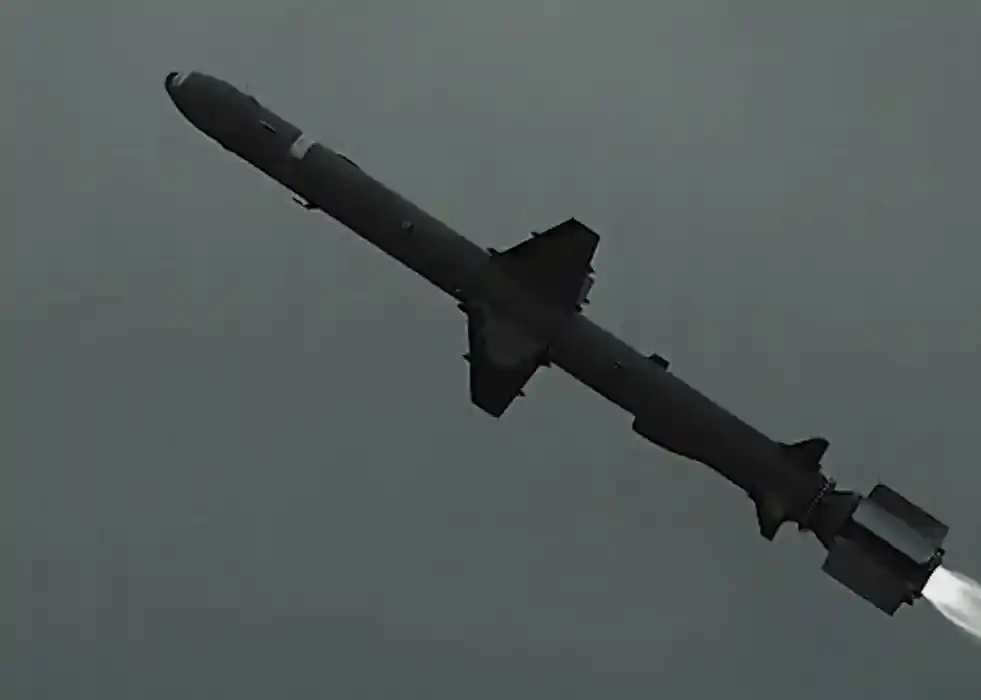
South Korean Hanwha Aerospace will use the anti-jam GPS of BAE Systems on K239 MLRS’s munitions to meet NATO demands of improved resistance against GNSS jamming.
Another move to improve the K239 MLRS that can fire a variety of rockets ranging from the 239 mm CGR-080 rockets to CTM-290 TBM has been to integrate the anti-jamming GPS receivers on the guided rockets produced by Hanwha Aerospace.
Hanwha is responsible for the development and production of munitions, whereas DAPA has developed the launcher, which can hold two pods (12 CGR-080 rockets or two CTM-290 TBM).
K239 MLRS’s first NATO customer is Poland, having jointly adapted the MLRS as Homar-K. The changes to Homar-K include the capability to use locally produced 122 mm rockets that are normally fielded on Grad derivatives. Romania and Norway might follow after Poland as the next NATO members to operate K239.
With some of NATO members’ GPS-guided munitions (GLSB, Excalibur...) encountering veer-offs because of Russia’s deployment of GNSS jamming systems against Ukraine, recent munition projects have started emerging with a requirement for resistance to jamming or alternative navigation methods (DSMAC, home-on-jam...). Thus, it can be said that Hanwha Aerospace, encouraged by its export success in Poland, is looking for ways to strengthen its position in the West in light of new requirements.
Author: Kaan Azman
Editor:Özgür Ekşi