By Kaan Azman
In recent years, developments for longer-range air-to-surface missiles for helicopters have been initiated worldwide. The ramp-up in threats against helicopters should be examined to understand why some countries are pushing for extended range. The MANPADS threat, which has existed for decades, has proliferated in the 21st century. Currently, shoulder-fired air defence missiles like FIM-92 Stinger and Igla are possessed in considerable numbers by even non-state actors. Such missiles can hit helicopters between six and eight kilometres away, which coincides with the range of ATGMs and unguided rockets, which comprise most of an attack helicopter’s arsenal.
Despite the advancements in countermeasures like warning systems, jammers, and flares, none guarantee a save, specifically against multi-spectral and IIR seekers. Additionally, ATGMs, some of which might be harder to detect by missile warning systems and impossible to fool by flares or jammers, also pose a threat in some cases. This has been demonstrated in Ukraine, where a crew of a Stugna-P ATGM shot down a Ka-52 attack helicopter by pointing the laser away in intervals not to alarm the laser warning receiver.

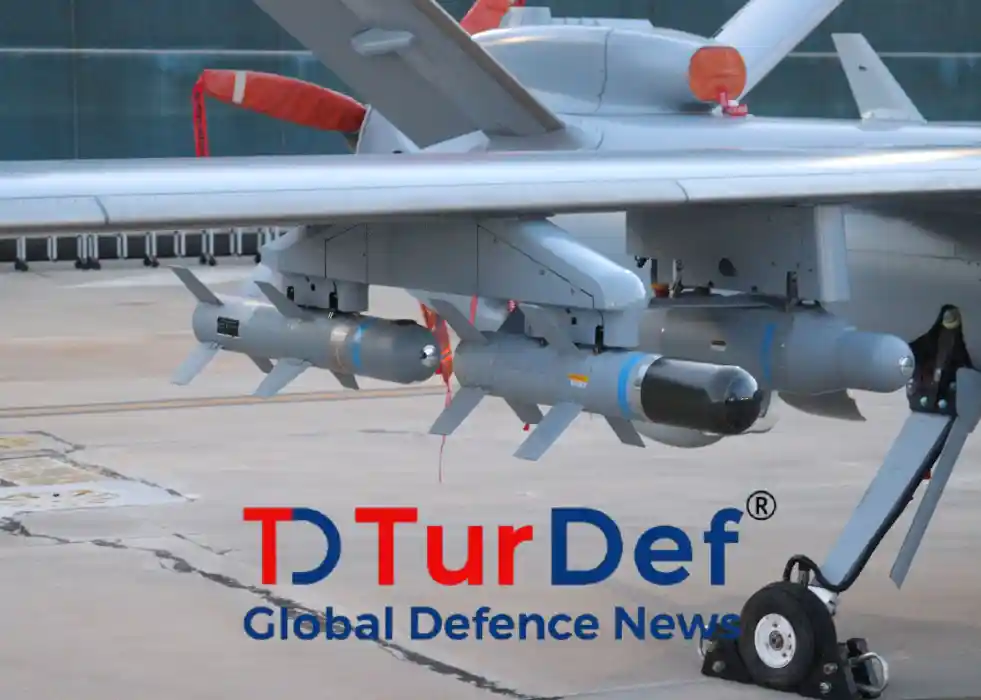
(JAGM MR)
This proliferation has given birth to a reaction in the form of beyond-visual-range missiles that can allow the helicopters to have a stand-off advantage, which somewhat diverges from the close air support role of these platforms. The U.S., Turkiye, and Russia are among the countries working on such solutions. The U.S.’s approach initially involved the integration of the Israeli SPIKE NLOS missile with a range of 50 km when launched from helicopters on AH-64 Apache. Later, a version of AGM-179 JAGM set to succeed AGM-114 ATGMs, JAGM-MR was tested. JAGM was a missile with Hellfire’s propulsion section and a new guidance package containing a hybrid Laser+mmW Radar seeker at the first stage. However, JAGM-MR with a new rocket motor offers a range of 16 km (Double of Hellfire’s) and a tri-mode seeker that adds IIR guidance for better target discrimination.

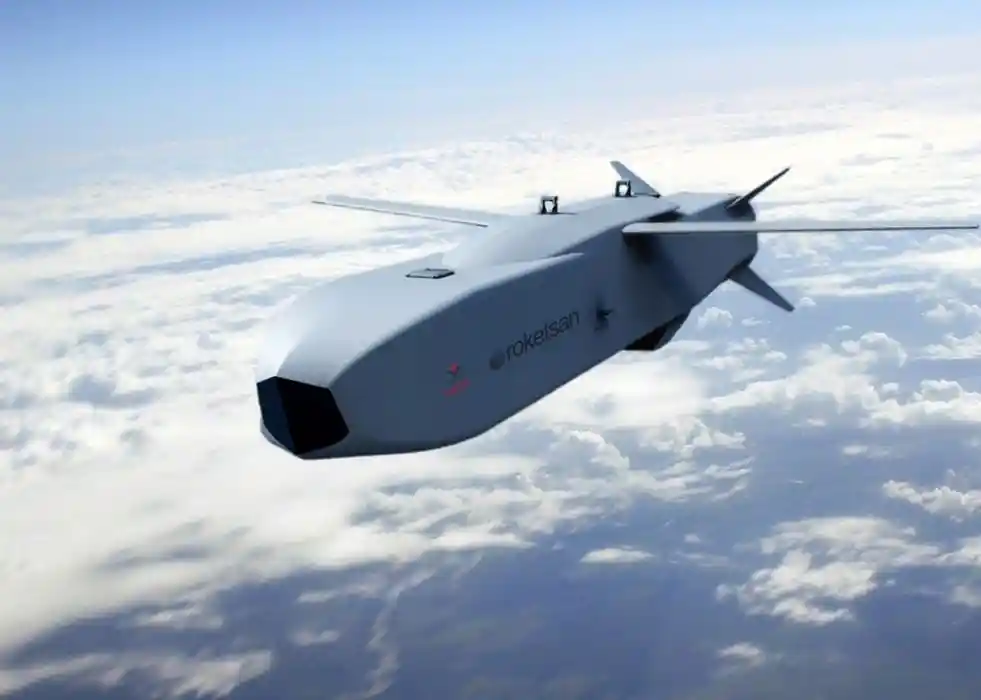
Turkiye is one of the countries facing MANPADS threats frequently in its operations against the terrorist organisations PKK and YPG. Neighbours with quarrels in possession of MANPADS systems can be added to the list as well. ROKETSAN is developing the UMTAS-GM family of missiles in two blocks to enhance the striking range of attack helicopters and other platforms using the baseline UMTAS missile. UMTAS-GM Block 1 includes a new rocket motor and enlarged fins for better gliding performance in line with SPIKE NLOS. Just like the baseline UMTAS, UMTAS-GM Block 1 will have laser-guided and IIR seeker variants, with the former test fired in 2023. The new missile can reach a range of 20 km when launched from helicopters. The next phase, UMTAS-GM Block 2, is a whole new missile with an even larger rocket motor and a TV+IIR hybrid seeker for all-time operation. The larger rocket motor will provide a range of 50 km when launched from a helicopter.
Russia is actively using the new Izdeliye 305 or LMUR air-to-surface missile against Ukraine in the ongoing war. The target set mostly consisted of buildings and armoured vehicles, and the continuation of the missile’s use is proof of its ability to keep a stand-off. This is more important for Russia as the country has suffered significant helicopter losses against Ukrainian MANPADS and, in some cases, ATGMs. The missile specifically developed for helicopters represents not only an increase in range of 15 km but also guidance technology with an IIR seeker and data link for Mi-28 attack helicopters and armed Mi-8 helicopters in service of FSB. Izdeliye 305 can be launched from single-rail or double-rail launchers.

(Russian LMUR/Izdeliye 305)
While other counterparts in terms of the range are usually carried in four-missile racks, the reason for the Izdeliye 305 to be carried in low numbers is its weight and size. While the longer range is highly attractive, especially regarding survivability, some requirements exist for using the missiles to the imagined effect. The biggest problem comes with reliable long-range guidance as these missiles have a range beyond visual, especially when a helicopter’s usual operating height is considered. Firstly, the helicopter has to know where its targets are before it can fire, and this becomes a problem at such ranges. Reconnaissance platforms like UAVs can locate and identify the targets for the missiles.

(CTech developing SATCOM solutions on helicopters for communication with UAVs and satellites)