Lockheed Martin, selected to develop a new missile for IFPC Increment 2, signalled the unveiling of its CUDA mini air-to-air missile for a new purpose.
The US Army has selected Lockheed Martin to provide a new missile to complement the interim AIM-9X missiles for its new IFPC Increment 2 short-range air defence system.
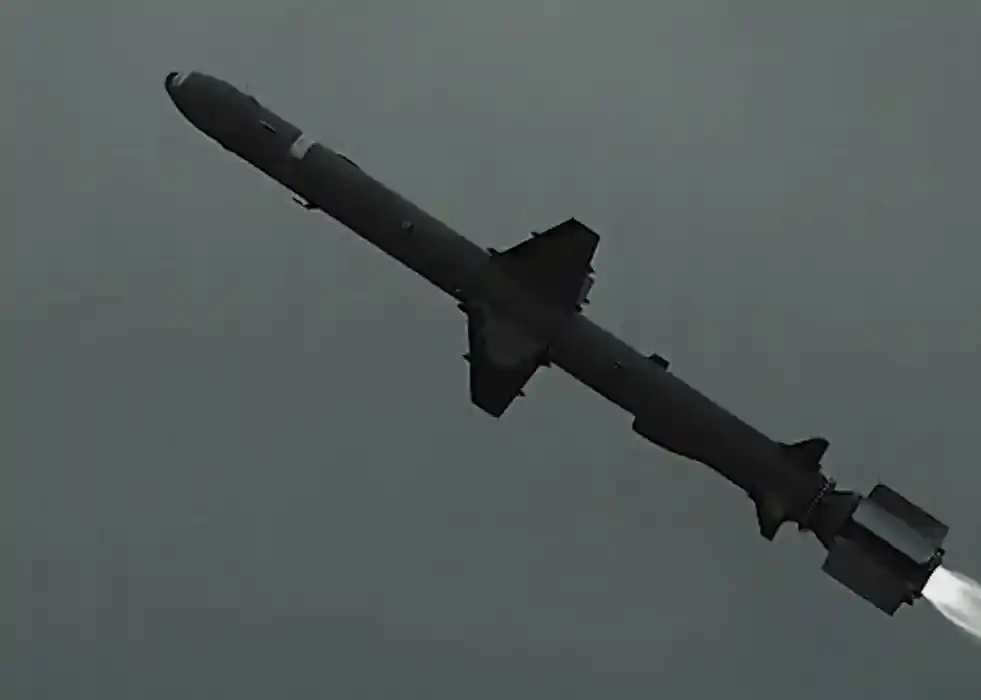
Lockheed Martin’s announcement of the contract with the US Army showed what appears to be an air defence adaptation of its CUDA mini air-to-air missile design that has been on the shelf for years.
CUDA was originally designed as a small-scale air-to-air missile to cover both WVR and BVR engagements, at half the size of AIM-120 AMRAAM longitudinally. To cover both WVR and BVR ranges, the design puts all the useful weight on fuel instead of fuel and a small warhead, going for hit-to-kill with full emphasis on kinematics.

In addition to fin-based controls, the design also includes thrusters similar to those used in the Patriot PAC-3 air defence missiles to increase agility.
The subject of guidance is unclear, but if a complement to AIM-9X is in question, one could expect RF-based guidance for the new missile to rectify shortcomings of AIM-9X's infrared-based guidance against targets of minimal heat signature (e.g. glide munitions).
CUDA’s maximised fuel load and thruster assist might end up as an optimised anti-munition solution that can be used to intercept both guided munitions and RAM threats while the legacy AIM-9X can be considered a more optimised solution due to the presence of a warhead to cause more damage to larger targets.
This would not be the first time Lockheed Martin going for a hit-to-kill air defence solution for short range either. The 0.72 m long MHTK missile, envisioned with high capacity per launcher, was also developed to counter RAM threats at extremely short ranges.
Author: Kaan Azman
Editor: Özgür Ekşi