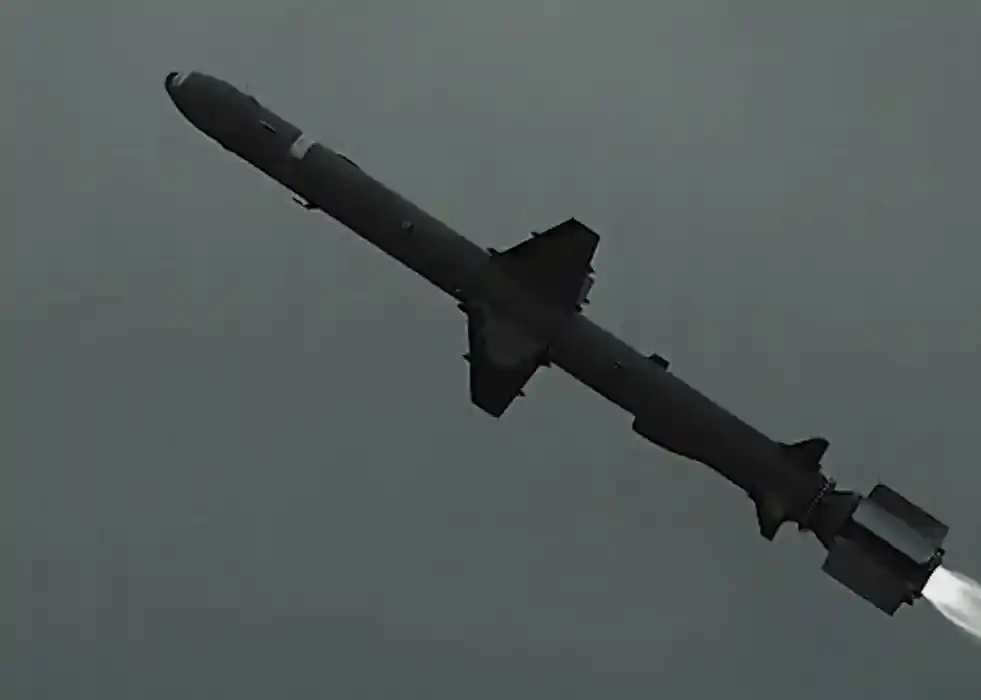
Lockheed Martin (NYSE:LMT) announced the completion of a firing test with the PrSM, Increment 2, incorporating a seeker for use as an anti-ship ballistic missile.
PrSM short-range ballistic missile succeeding the legacy MGM-140 ATACMS TBM with higher precision, longer range and doubled capacity, is being developed as a family of missiles for different purposes, and the next in line is an anti-ship ballistic missile (ASBM).
PrSM Increment 2 to allow HIMARS and M270 MLRS to engage warships for coastal defence has been demonstrated with its multi-mode seeker at a range of 350 km.
The multi-mode seeker is known to combine an IIR sensor covered by a fairing and passive RF sensors for bi-spectral detection. It can be said that passive RF sensors pick up a target from a longer range, while the IIR seeker with higher resolution identifies and locks on.
While in development, the missile was also offered to Australia as a new coastal defence effector, competing with the NSM cruise missile. While there has been a considerable leaning towards NSM due to its familiarity, a decision has not been made.
Compared to an anti-ship cruise missile, an ASBM of PrSM’s calibre has a considerably higher kinetic energy alongside the warhead as it has a high supersonic terminal velocity.
On the other hand, the high altitude flight path brings some challenges, including regular datalink feed at midcourse and earlier detection by the enemy ship compared to an anti-ship cruise missile.
Author: Kaan Azman
Editor:Özgür Ekşi