Makine ve Kimya Endüstrisi A.Ş. has qualifed the Modern Machine Gun (MMT) programme roughly 13 years after its launch, despite having already delivered the Millî/Modern Piyade Tüfeği (MPT) family in significantly shorter timeframes.
The MMT project dates back to 2012, when MKE was still operating under its former name, MKEK. The programme was publicly introduced at a ceremony in Kırıkkale attended by then-MKEK General Manager Ünal Önsipahioğlu and Undersecretary for Defence Industries Murad Bayar. At the time, officials stated that the Modern Machine Gun was expected to be ready by 2015.
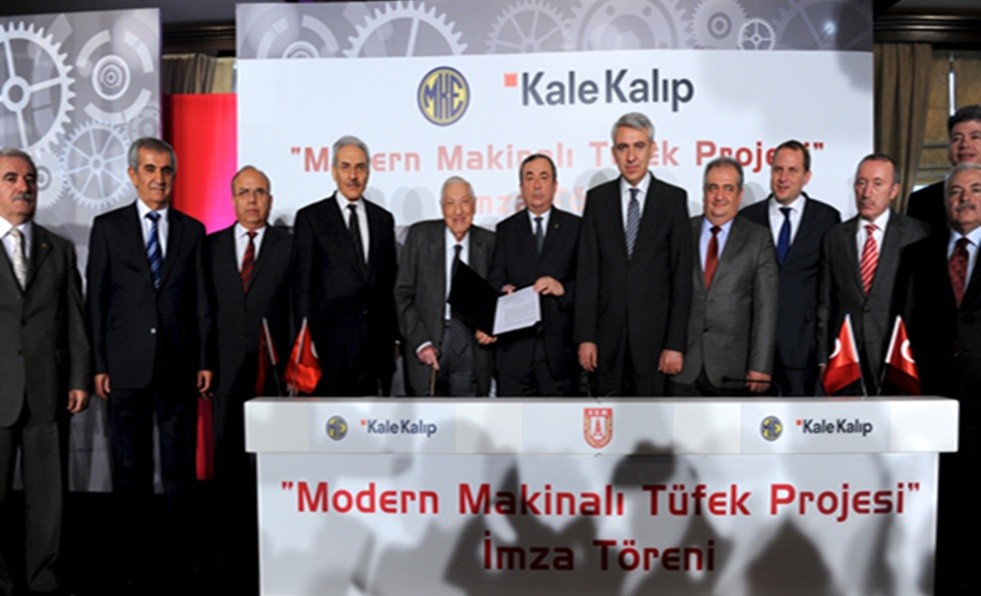
(Photo Credit: Defence Turkey)
That timeline was not met. In the years that followed, the programme progressed intermittently, with long periods showing little visible advancement. Development slowed repeatedly and, at times, appeared to approach a standstill. Only in the final phase was the process accelerated, allowing qualification activities to be completed in a relatively short period.
The MMT ultimately passed up to 250,000 firing cycles and successfully completed 40 separate NATO-standard tests. The qualification phase took less than twelve months to complete which showed that the program faced no testing or certification problems but instead faced delays because of its initial fast development pace. The system operates with 7.62×51 mm NATO ammunition while it provides continuous reliable fire.

The MMT weapon system weighs 8 kilograms while it can fire 750 rounds per minute continuously at targets within 1,000 meters range to fulfil Turkish Armed Forces battlefield suppressive-fire needs. Compared to many NATO-standard counterparts, it is positioned as a relatively lighter system, enabling limited integration with dismounted infantry alongside vehicle and emplacement use.
The rationale behind the MMT reflects the doctrinal distinction between infantry rifles and machine guns. Infantry rifles are designed as the individual weapon of a soldier moving with personal load equipment, prioritising reduced weight, ergonomics and controlled fire. They are magazine-fed, typically limited to 20–30 rounds, and are not intended for prolonged, uninterrupted firing. As distance from the combat zone increases, reducing the soldier’s carried load becomes increasingly critical.
Machine guns, by contrast, are designed to provide suppressive fire at the team level. Their purpose extends beyond hitting targets to fixing the enemy in position and enabling manoeuvre. This role necessitates belt feeding, allowing hundreds of rounds to be fired continuously without frequent reloads.
Technically, the MMT features a thicker, heat-resistant barrel designed to slow heat accumulation and delay cook-off risk. Cook-off refers to a condition in which an overheated chamber causes a round to ignite without the firing pin striking, potentially leading to uncontrolled firing even when the trigger is not pulled. The MMT’s quick-change barrel allows continued operation before such conditions are reached. The system uses a gas-piston operating mechanism with a rotating bolt and is engineered for reliable use across diverse and harsh environments.
In line with machine-gun doctrine, the MMT is configured not only for dismounted infantry support but also for integration on vehicle turrets, armoured platforms and fixed defensive positions. In these roles, weapon weight becomes secondary to fire endurance, ammunition capacity and durability. A six-position telescopic stock and an ergonomic layout support flexibility across mission profiles. Ammunition for the MMT is produced domestically at MKE-affiliated facilities using national resources.
Author: Özgür Ekşi