Ukraine claimed that a conventionally armed ICBM hit the Dnipro region as footage of multiple high-speed projectiles spread.
A new phase in the cruise/ballistic missile blow-trading between Ukraine and Russia has likely begun with a chain reaction of escalation.
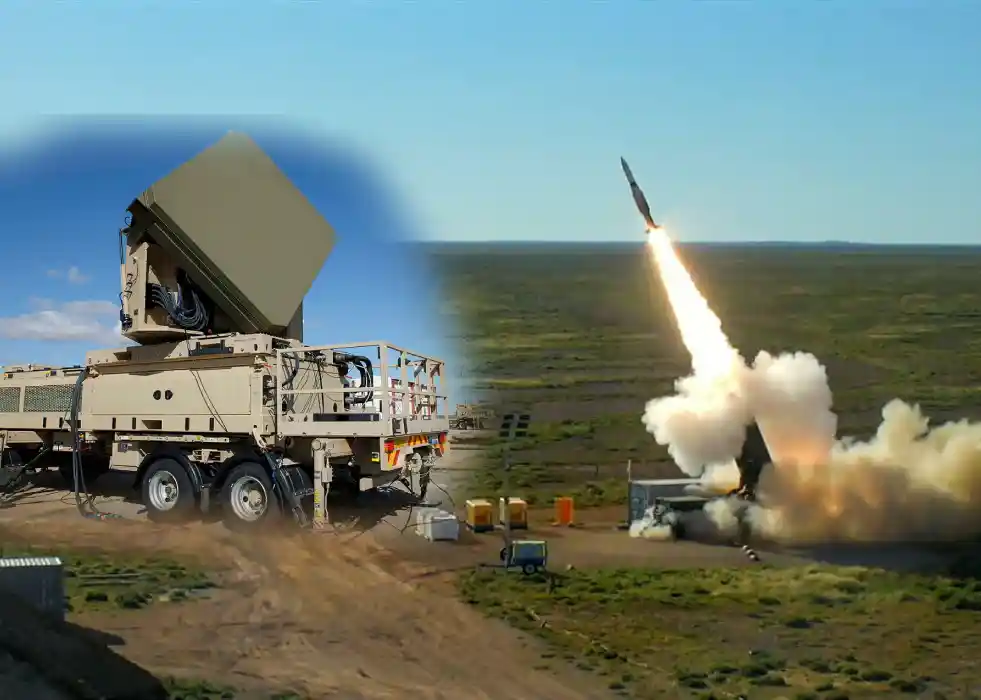
Following Ukraine's firing of MGM-140 ATACMS TBMs and British Storm Shadow air-launched cruise missiles at the Russian mainland, footage of what was claimed to be a conventionally armed ICBM hitting Ukraine's Dnipro region arose in social media.
The footage shows several projectiles consecutively descending at an extreme speed, with the heat clearly visible from far away before the explosions. This hints at a missile using Multiple Independent Re-Entry Vehicles (MIRVs), which carry the payload at extreme speeds (Mach 20-25) and temperatures. ICBMs and the shorter-ranged IRBMs utilise MIRVs.
The Ukrainian Air Force made the ICBM claim, but U.S. officials quickly refused the claim.
Due to the minimum range constraints and the near-vertical angle of approach, ICBM is implausible technically and politically. The launch of ICBMs and any other ballistic missiles intended to carry a nuclear warhead must be notified to avoid misunderstandings and escalations that might follow.
Hours after the reports, Russian President Vladimir Putin stated that further deployment of "medium and shorter range" missiles is up to the actions of the Ukraine/supporting countries (Referring to the use of ATACMS and Storm Shadow missiles to target Russian territory).
Pentagon Deputy Press Secretary Sabrina Singh stated that the missile was based on a Russian RS-26 ICBM in a briefing regarding the incident. More importantly, Singh confirmed that the U.S. was notified before the launch. While RS-26 is an ICBM, Russia might have modified the design to carry larger payloads with a range trade-off, including conventional ones. One example of such an application is ROK's Hyunmoo V IRBM, which can be configured with various warhead sizes depending on need.
IRBMs are the preceding class just before ICBMs, ranging between 3000 to 5500 km.
In any case, this would mark the combat debut of a ballistic missile above the SRBM regime (300-1000 km). Russia has made regular use of Iskander SRBMs, with Ukraine using U.S.-supplied ATACMS missiles as the response.
In a tactical sense, something as expensive and few as an IRBM is not cost-effective, especially when used with a conventional warhead. Such missiles are mostly taken as a part of nuclear deterrence, and they are more easily deployed than an ICBM.
However, considering the situation in Ukraine, Russia's use of an IRBM could be defined as a display of capability to deter the TBM/cruise missile aids from the West, with the business end being directed at the Russian mainland.