A ballistic munition fired from Iran and detected heading toward Turkish airspace after crossing Iraqi and Syrian airspace was intercepted over the Eastern Mediterranean by NATO air and missile defence elements, according to a statement released by Türkiye’s Ministry of Defence.
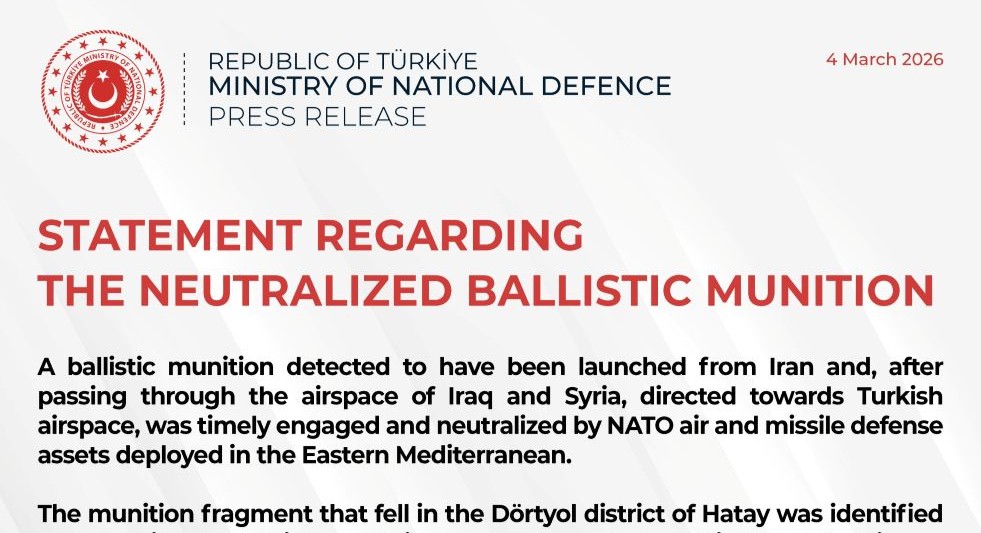
The ministry said the projectile was tracked after its launch from Iran and identified as approaching Turkish Aerospace after transiting Iraqi and Syrian airspace. NATO air and missile defence assets deployed in the Eastern Mediterranean engaged the threat in time and neutralised it before it could enter Turkish airspace.
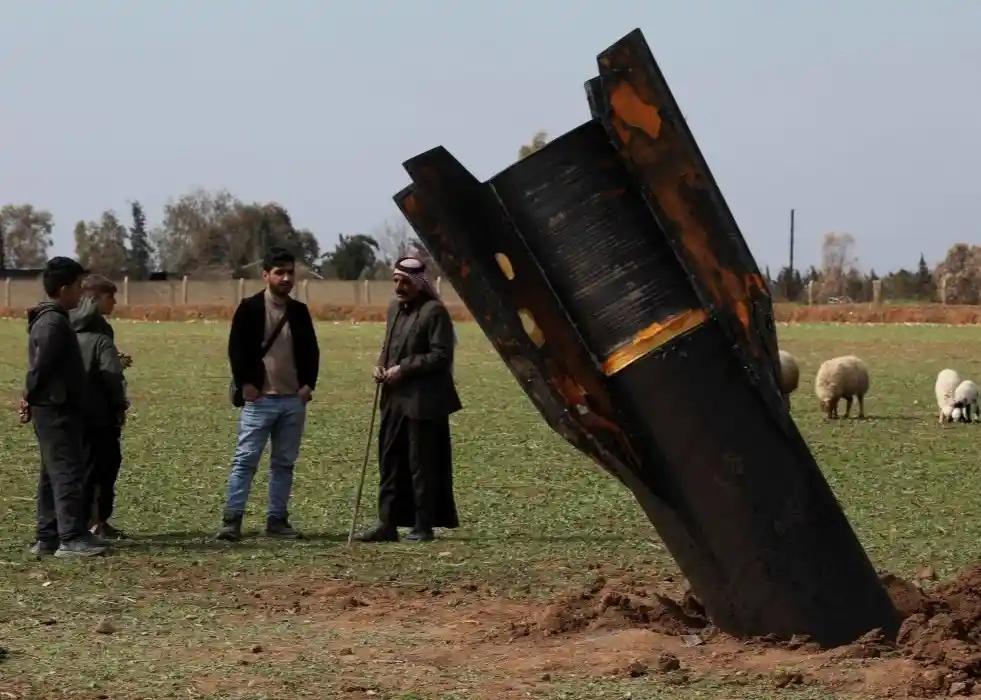
Debris that fell in the Dörtyol district of Hatay province was later identified as belonging to the interceptor munition used by the air defence system following the mid-air destruction of the threat. Authorities confirmed that no casualties or injuries occurred in the incident.
“All necessary steps to defend our territory and airspace will be taken with determination and without hesitation. We remind that our right to respond to any hostile act directed against our country remains reserved,” the ministry said.
The statement also called on all parties to refrain from actions that could further escalate tensions across the region, while confirming that consultations with NATO and allied partners will continue.
“Within this framework, we will continue consultations with NATO and our allies,” the ministry said, without indicating that Ankara has invoked consultations under Article 4 of the NATO treaty.
Currently, the only NATO ground-based air defence asset deployed on Turkish territory is a Patriot air and missile defence battery operated by Spain. The system is stationed in southern Türkiye as part of NATO’s Support to Türkiye mission, previously known as Operation Active Fence.
Given that the interception occurred over the Eastern Mediterranean, it is also possible that the interceptor was launched from a naval platform operating in the region. Alliance warships equipped with ballistic missile defence capabilities routinely patrol the area as part of NATO’s wider missile defence architecture.