Raytheon performed the first launch test for the ground-launched GBU-53/B Stormbreaker, using an inert round and a new rocket booster different from GLSDB’s.
The first test for the ground-launched variant of GBU-53/B Stormbreaker small-diameter bomb achieved an altitude of 20000 ft. Raytheon stated that the project came to the testing phase in 50 days, starting from the design phase.
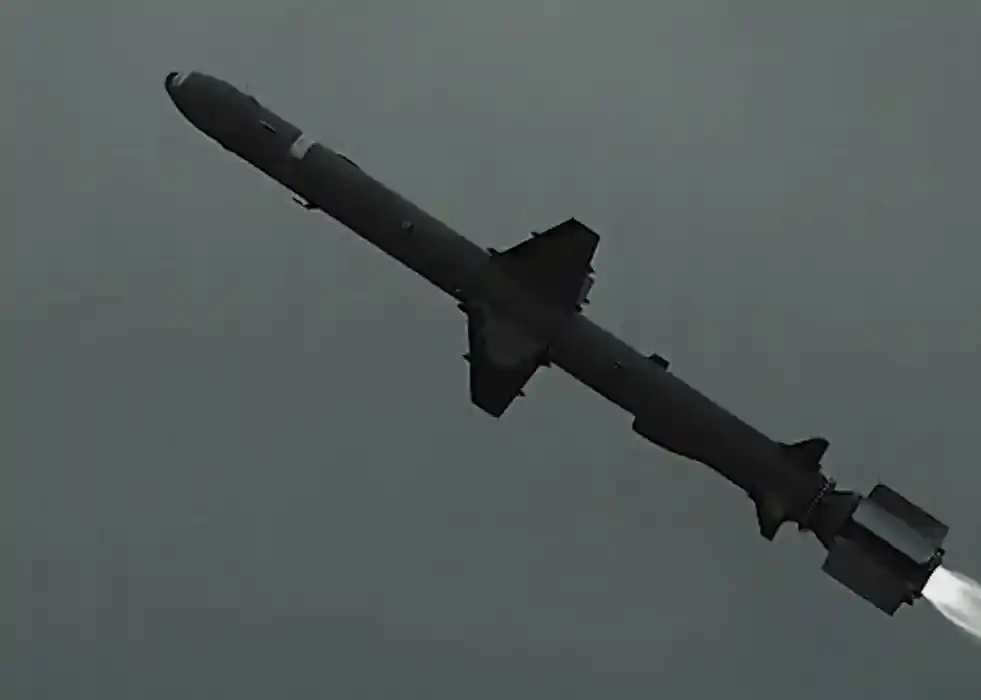
The images shared by Raytheon show an inert round that has a simple layout, which indicates that a test vehicle was used to observe flight characteristics and possibly telemetry at launch rather than the actual munition.
Raytheon’s notion of more tests to follow throughout the remainder of 2025 indicates firing tests using live rounds or at least seeker-fitted test rounds will be seen soon.
On the other hand, a rocket booster that is thicker compared to the M26’s rocket motor used on Boeing-Saab GLSDB is present.
Raytheon aims to provide a ground-launched bomb that can perform engagements in GPS-contested areas with the ground-launched GBU-53/B. This is thanks to GBU-53/B’s tri-mode (IIR+Laser+mmW Radar) seeker, providing autonomy in guidance at the terminal stage.
GLSDB, which uses the GBU-39/B SDB with GPS/INS guidance, was seen to be susceptible to GPS jamming during its field trip in Ukraine. This, coupled with the problems experienced with other GPS-guided munitions, has led to efforts focused on reinforcement in jamming resistance through new antenna technologies or adding alternative guidance modes.
Author: Kaan Azman
Editor: Özgür Ekşi