German Rheinmetall has announced the signing of a cooperation agreement with MBDA on a laser weapon for warships in the international market.
The firms aim to present a naval laser weapon within five to six years. The goal is to offer a low-cost solution against the rising UAV threats against ships experienced in maritime security operations in the Red Sea.
The warships taking part in the operations were regularly targeted by Houthi kamikaze UAVs supplied by Iran, and the absence of an optimised solution led to the usage of costly air defence missiles. Naval guns and helicopters armed with machine guns were employed as cheaper alternatives.
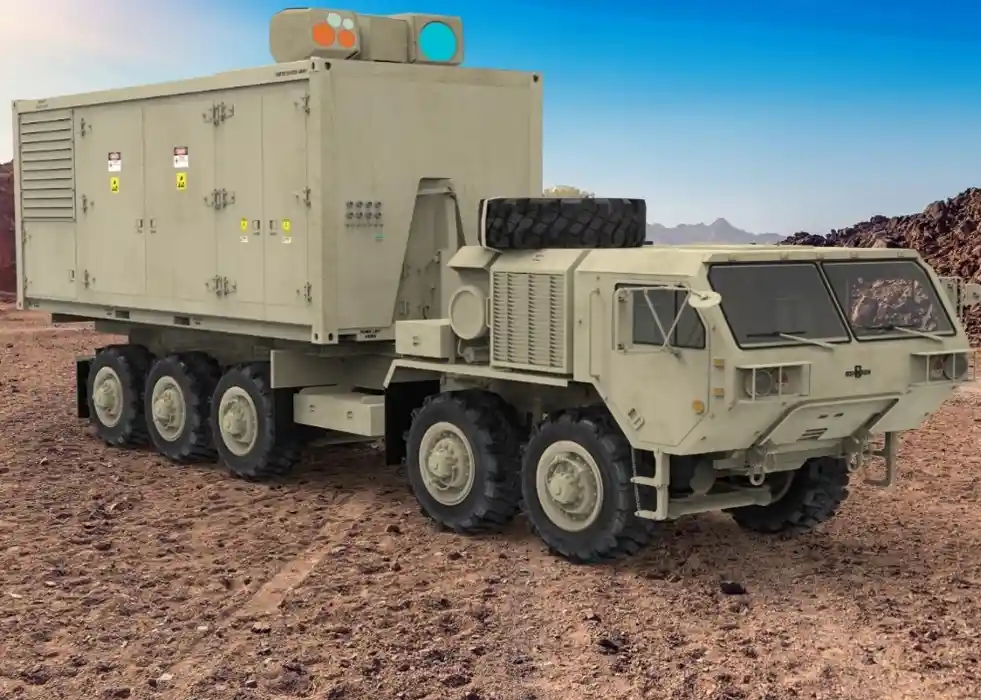
Germany has previously tested a laser weapon demonstrator in a container-like module onboard the Saschen frigate.
The main advantages of laser weapons in C-UAS include low firing cost and almost guaranteed hit probability upon target acquisition. However, power constraints limit these weapons' range to not more than one to two kilometres. The next steps for laser weapons are envisioned as C-RAM and missile defence with improvements in power output and sensor capabilities.