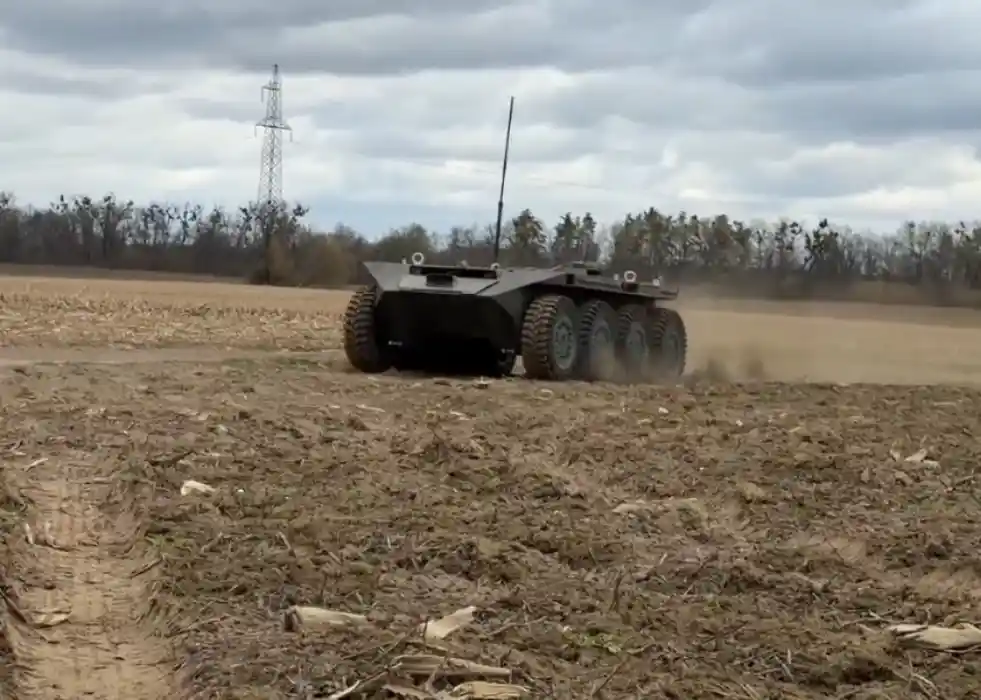
STM has unveiled several new unmanned platforms, including new UAV types and a large armed UUV under development on its multi-domain operation concept.
STM’s multi-domain operation concept involves a vast array of unmanned air and naval platforms. The rendering shared by STM includes a great number of new platforms.
The new platforms in STM’s rendering include:
-Large UUV armed with torpedoes
-Kamikaze USV
-Long-Range Kamikaze UAV
-Anti-Radiation Kamikaze UAV
-Small Fixed Wing Kamikaze UAV
-Interceptor UAV (Similar to STING used extensively by Ukraine)
Large UUV, Beyond NETA Family
The large UUV shown to be launching a torpedo can be described as a follow-up to the smaller NETA family of UUVs, with NETA 300 and NETA 1000 that are mainly intended for underwater ISR and ASW support.
It is no surprise that STM has embarked on a large armed UUV, considering the ground being laid by NETA and STM’s own submarine design experience.
It should be noted that there is no fully fleshed out CONOPS for armed UUVs due to the fact that even unarmed UUVs of considerable size and endurance are in their early stages of introduction, as well as underwater communication constraints. If implemented, such platforms can pose a considerable asymmetrical threat with torpedoes that can knock ships or submarines out of action if not outright sink them.
New UAV Types
It is seen that STM has embarked on not only going further in range with a long-range kamikaze UAV but also filling some gaps.
For example, interceptor UAVs have proven themselves to be easy to launch, control, and cheap to produce in large numbers, as Ukraine’s frequent use of such UAVs against Russia’s Geran-type kamikaze UAVs. Interceptor UAVs are considerably cheaper than missiles while having a better success rate and range compared to re-purposed machine guns/autocannons.
On the other hand, a fixed-wing anti-radiation kamikaze UAV, judging by the layout, would represent a rapidly deployable asymmetric threat against enemy radars close to the frontlines. Passive RF guidance coupled with possible automatic target recognition through optics can significantly reduce the operator’s workload.
Author: Kaan Azman
Editor:Özgür Ekşi