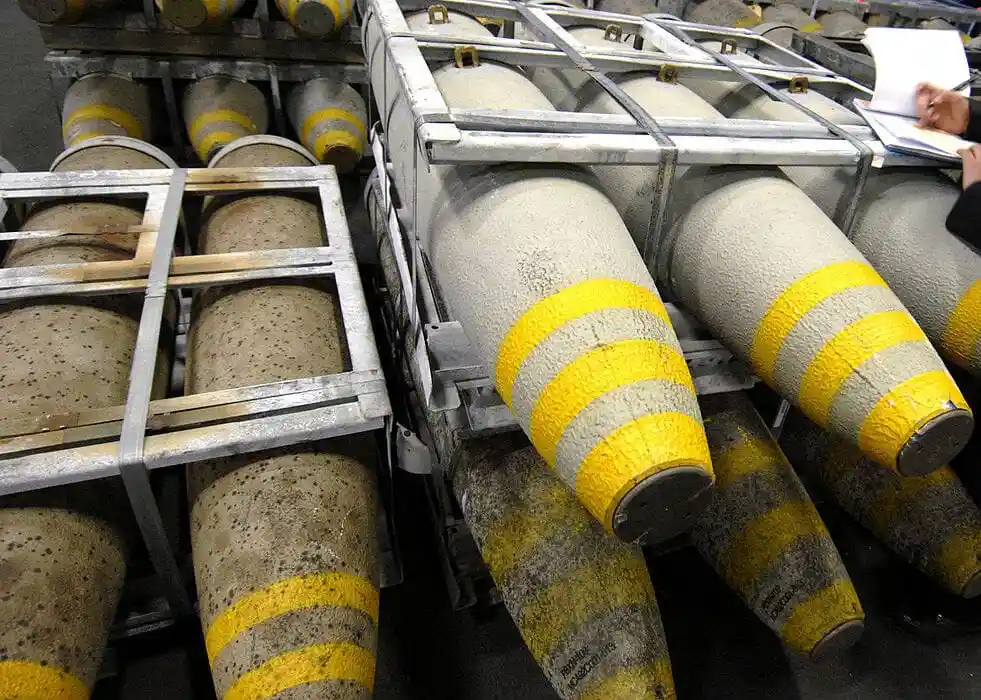
The United States has approved the sale of 12,000 BLU-110A/B general purpose bomb bodies to Israel in a package valued at approximately $151.8 million. The decision, announced by the United States Department of State, listed US-based Repkon USA as the principal contractor, prompting debate in Turkish and international media about the role of a Turkish-linked firm in the transaction.
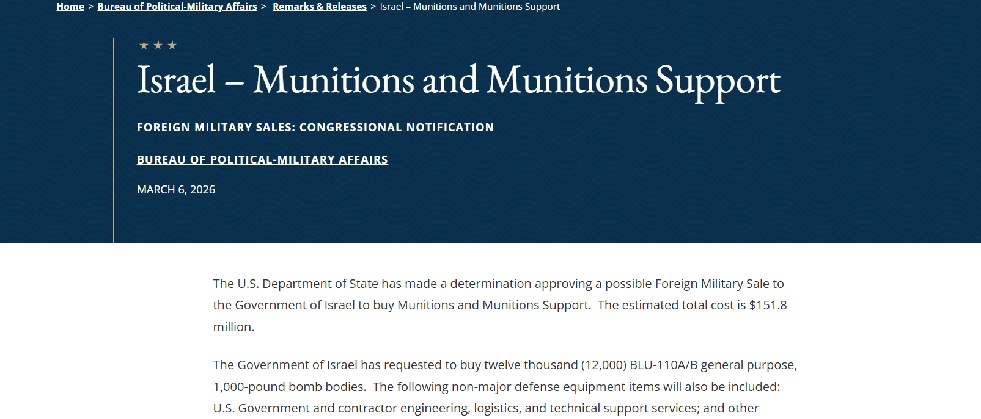
The sale was authorised under the United States’ Foreign Military Sales (FMS) framework, a government-to-government (G2G) framework through which the US government acts as the contracting authority and exporter. Under this model, defence companies sign contracts with the US government rather than directly with the foreign customer, while the export itself is executed by Washington.
According to the announcement, part of the bomb bodies may be transferred directly from the inventory of the United States Air Force rather than being newly produced. For the United States, 12,000 bomb bodies represent a relatively modest quantity, while for Israel the package constitutes a substantial operational replenishment, highlighting its operational significance for Israel.
Such transfers are typically used to meet urgent operational requirements, allowing the United States to supply munitions far more rapidly than waiting for new production batches while replenishing its own inventories through subsequent production contracts. The reliance on stock transfers also reflects broader pressures on US conventional munition production capacity following sustained demand from recent conflicts.
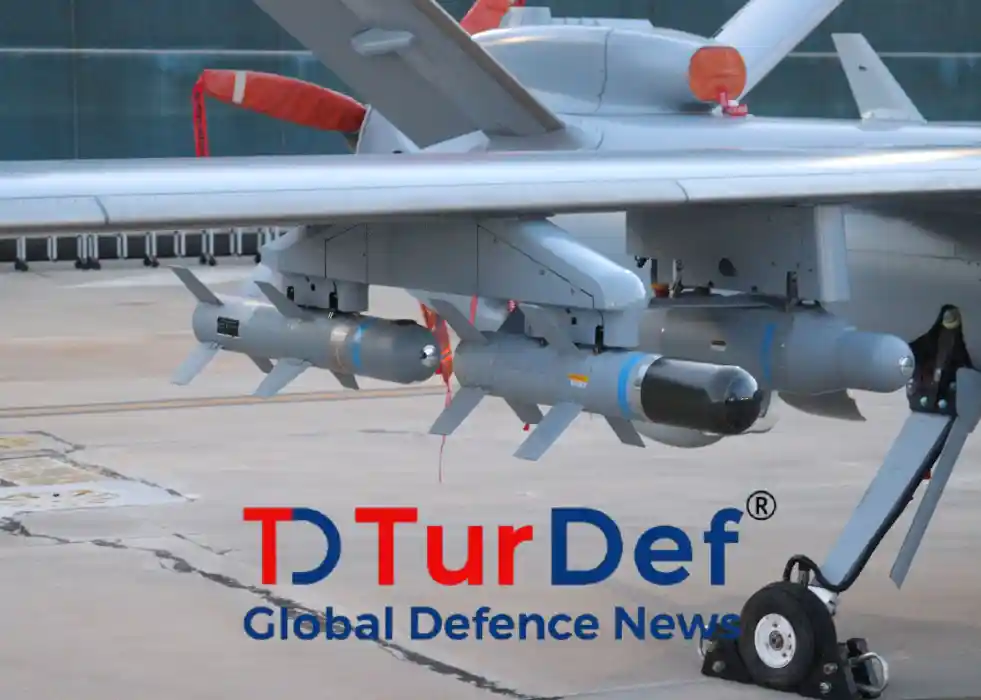
BLU-110A/B bomb bodies belong to the 1,000-pound class of general-purpose bomb casings derived from the Mk-83 family. When fitted with guidance kits such as JDAM, the bomb bodies become precision-guided munitions widely used in modern air campaigns.
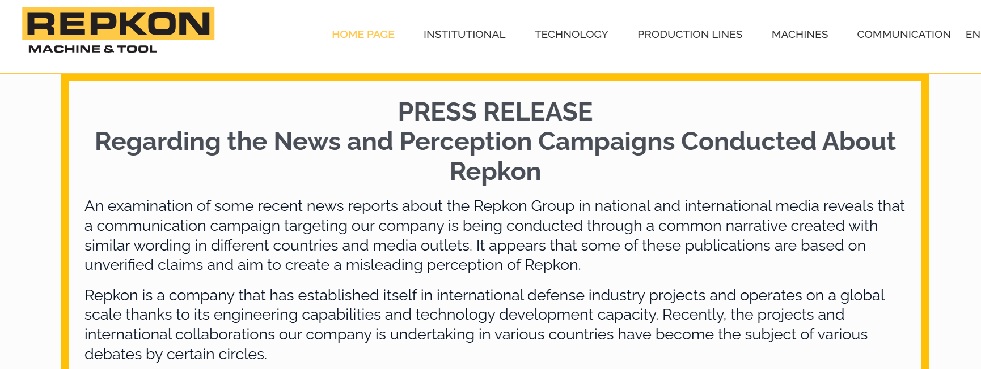
The listing of Repkon USA as principal contractor nonetheless sparked debate, particularly in Türkiye. Repkon Group issued a statement arguing that a coordinated narrative targeting the company had emerged in parts of the international media.
The company pointed to an article published by Greece-based Europost which described Repkon as a “Turkish Trojan Horse” within the international defence industry ecosystem. Repkon also denied claims of sales to Russia, noting that statements by Russian Foreign Minister Sergey Lavrov had instead referred to the company as part of the defence supply chain supporting Ukraine.
Repkon further emphasised that it had no role in requesting or deciding the US ammunition transfer and had not conducted any direct sales transaction related to the package. The company stated that it was closely monitoring publications containing what it described as false allegations and reserved the right to pursue legal action.
The episode also highlights the increasingly complex structure of the global defence industrial base. Turkish defence companies have expanded their international footprint in recent years through subsidiaries and joint ventures established under local legal frameworks in countries including Romania, Hungary, Italy, the United Kingdom and the United States.
As defence production networks globalise, the distinction between national companies and national policy positions is becoming increasingly blurred. The debate surrounding the BLU-110 sale illustrates how globalised defence supply chains can generate political and media controversies even when transactions are conducted through government-to-government mechanisms.
Author: Özgür Ekşi