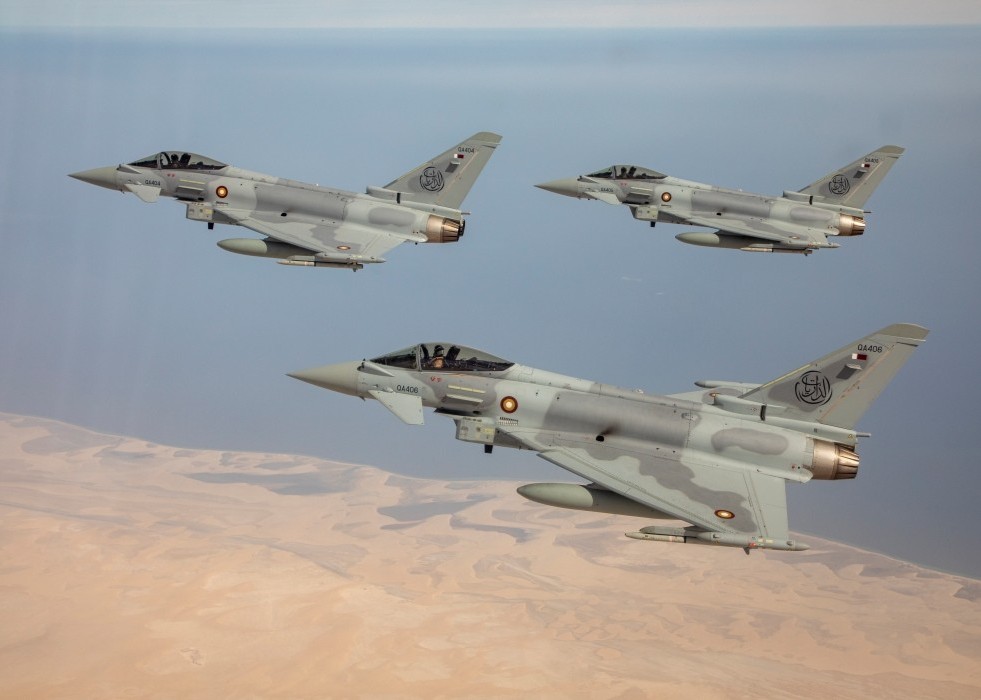
Turkiye will acquire 44 Eurofighter Typhoon jets under a UK-led agreement, including 24 used aircraft from Oman and Qatar and 20 new builds featuring advanced avionics and weapons integration.
Turkiye has signed an agreement with the United Kingdom to acquire a total of 44 Eurofighter Typhoon fighter jets, 24 of which will be second-hand, with the UK signing on behalf of Qatar and Oman. The deal was concluded during the visit of UK Prime Minister Keir Starmer, who came to Ankara at the invitation of President Recep Tayyip Erdoğan.
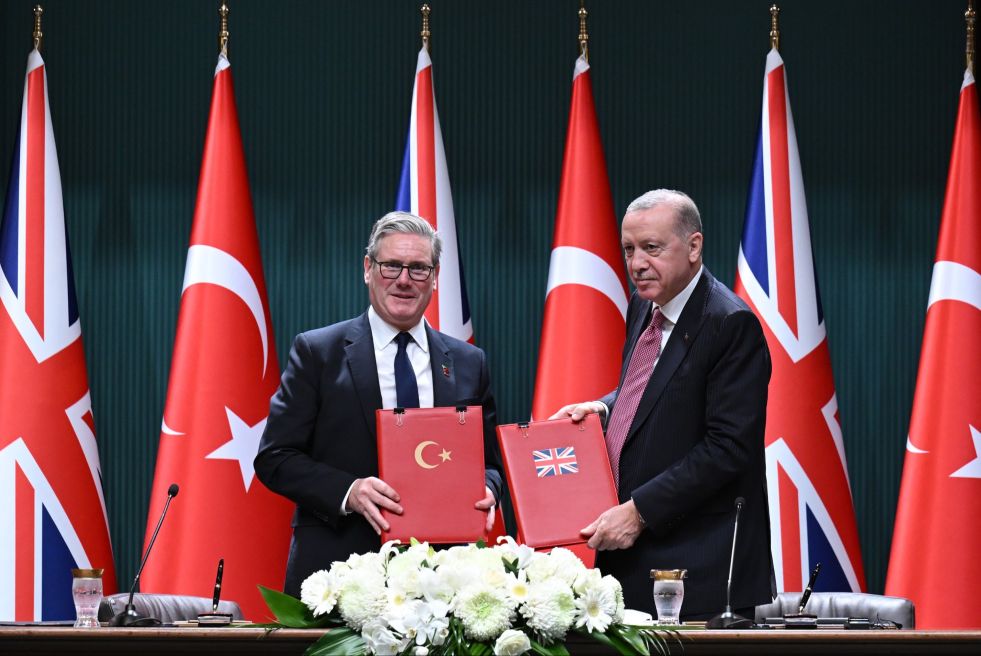
TurDef understands that, since the United Kingdom is the sole export authority over Eurofighter sales to Türkiye, the agreement effectively comprises three sub-contracts. Under the deal, Türkiye will procure 12 used aircraft each from Oman and Qatar, while 20 brand-new Typhoons will be manufactured in Warton. The cost of the new aircraft is estimated at £8 billion, while no figures were disclosed for the used jets.
According to Downing Street, the £8 billion announced by Prime Minister Starmer represents the upper limit of Turkiye’s total package cost. This sum covers not only the 20 new aircraft but also MBDA-supplied weapons, pilot training, spare parts, and integration services. Within this framework, £5.4 billion emerges as the initial contract value, while BAE Systems’ £4.6 billion share represents only its portion of the total.
Turkish Minister of National Defence Yaşar Güler briefly commented on the second-hand aircraft, confirming that 12 aircraft will come from Oman and 12 from Qatar. He noted that the Omani aircraft will undergo maintenance prior to delivery, while the Qatari jets are expected to arrive in early 2026.
Meanwhile, the 20 new Typhoons to be built in the United Kingdom are scheduled for delivery starting in 2030. Although the variant and radar type have not been confirmed, the late delivery timeline raises expectations that these aircraft will be Tranche 5 models equipped with the ECRS Mk2 AESA radar. Normally, Typhoons are delivered within 18–24 months, but neither Tranche 5 nor the Mk2 radar has yet entered serial production despite the fact that Germany has recently signed an agreement with Airbus.
Royal Air Force of Oman originally ordered its Typhoons in 2012, before the AESA radar era. As a result, its aircraft—though classified as Tranche 3A—are equipped with the CAPTOR-M Doppler radar used in earlier Tranche 1 and 2 models, resulting in notably reduced radar performance.
Qatar’s Typhoons, also Tranche 3A, feature the early-generation ECRS Mk0 AESA radar. Compared with the widely adopted Mk1, the Mk0 is known for its older technology and limited cooling capacity, resulting in reduced performance.
Due to developments in avionics, the total number of new aircraft in the planned fleet has been reduced from 24 to 20. Türkiye had initially considered acquiring 40 new Typhoons, but it now appears the country will adopt a hybrid model. One squadron will comprise 20 aircraft with advanced avionics, while the other will follow NATO’s conventional operational doctrine.
In line with NATO standards, a full operational squadron is typically structured around 18 operational jets, with 4–6 used for reserve or training and 2–3 under maintenance rotation.
Author: Özgür Ekşi
You can read more about its impact on Türkiye’s defence plans at this link.
You can read more about the fighters’ capabilities at this link.
You can read a comparison of the Eurofighter, F-15EX, and Rafale at this link.