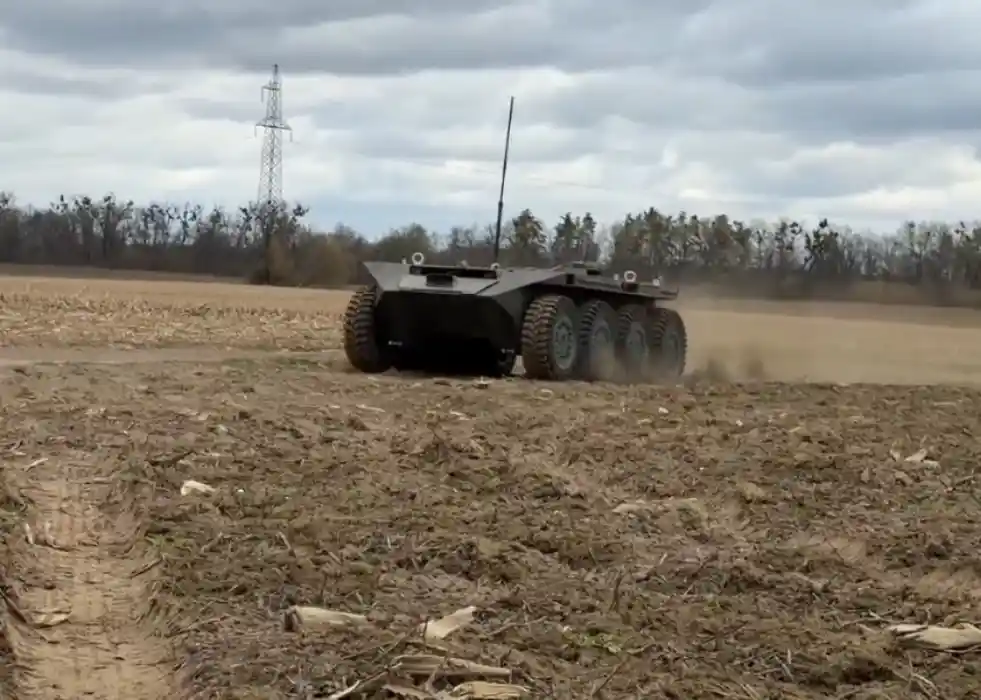
The US Army is planning to test the Long Range Fires (LRF) UGV based on JLTV with a single launcher for BGM-109 Tomahawk at the Balikatan 2026 exercise.
While the USMC gave up on LRF, a relative of the fielded NMESIS anti-ship missile-carrying UGV based on the JLTV 4x4 vehicle, the US Army seems to be interested in the unmanned launcher. Naval News reported that the US Army will test the LRF at the Balikatan 2026 exercise to be held in the Philippines.
Currently, the US Army operates the Typhon containerised VLS to launch both Tomahawk and SM-6 missiles with four cells. While the firepower is significant, Typhon, using a heavy trailer carried by a 8x8 truck, puts limitations on mobility.
USMC dropped the LRF due to it not falling in line with high mobility on land, but the standards of the US Army might differ in this regard, considering the limitations of Typhon mentioned earlier.
While LRF is not an off-roader to the same degree as NMESIS, using two NSM anti-ship missiles that are lighter in total, it can get into narrower places and climb steeper hills that Typhon's carrier truck can not.
Mobility matters aside, LRF being a smaller platform can be translated to easier concealment or deployment in unexpected locations to launch surprise attacks.
The plans of the US on the ROUGE Fires platform are not limited to NMESIS and LRF. Recently, a new configuration with a single GMLRS guided artillery rocket pod was shown. These pods can also house two PrSM ballistic missiles with a range of 499+ km.
UGVs having entered service with smaller duties such as MEDEVAC, mine laying, and rarely fire support to infantry; have a potential to evolve towards strategic positions with the advantages provided by autonomy and remote command.
Author: Kaan Azman
Editor: Özgür Ekşi