The US Department of War announced a contract valued at nearly $5 billion for the Coyote series of interceptor UAVs for C-UAS, and fixed/mobile launchers.
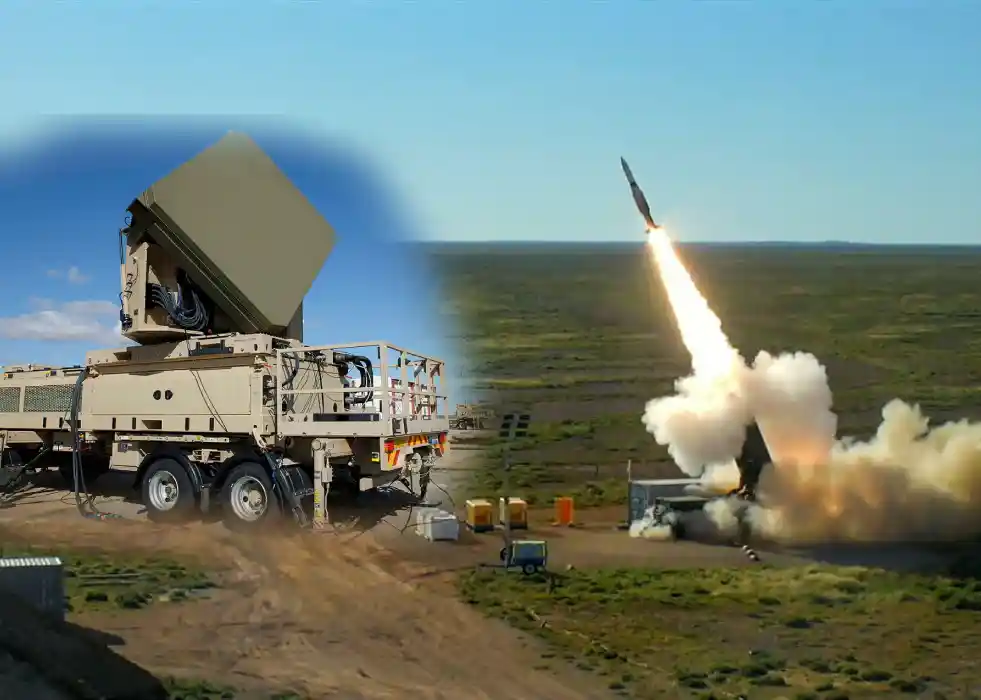
The contract covers the delivery of Coyote interceptor UAVs’ kinetic and non-kinetic versions, fixed launchers, mobile launchers, and Ku-band KuRFS radars. According to the contract valued at $5.039 billion, the deliveries will be completed in 2033.
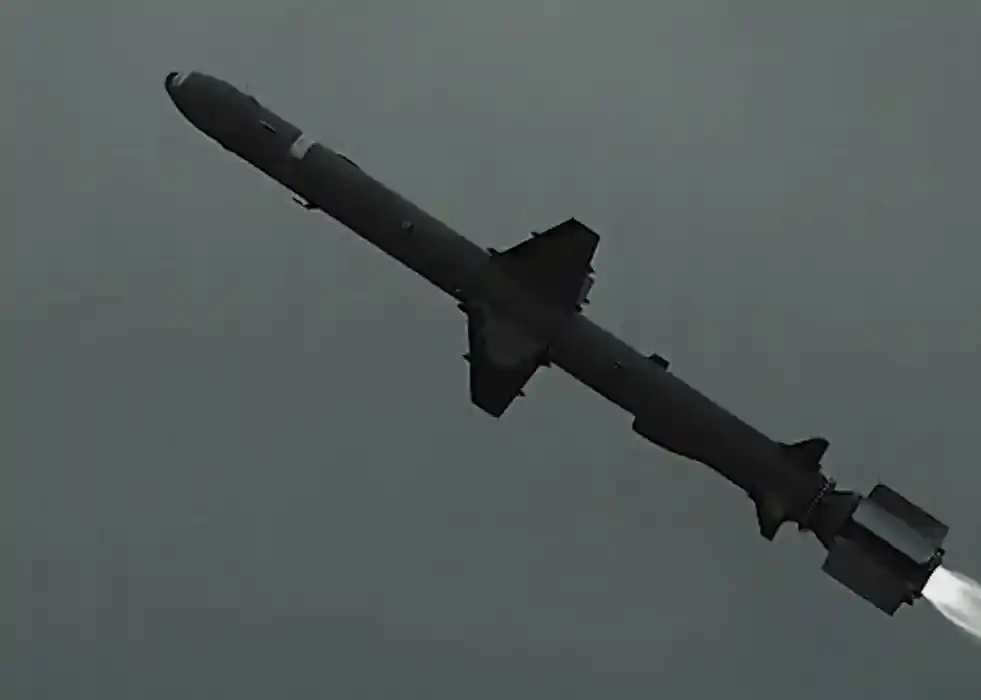
Coyote family has two interceptors for C-UAS missions: Coyote Block 2 with a turbojet engine and the propeller-driven Coyote Block 3 with a HPEM warhead that is reusable.
Whereas Coyote Block 2 with a turbojet engine providing high speed and mmWR seeker acts closer to a missile against larger UAVs, Coyote Block 3 with an HPEM warhead is intended against masses of smaller UAVs, which have more fragile circuitry.
The launchers, also named LIDS, are available in palletised (FS-LIDS) and mobile configuration (M-LIDS). FS-LIDS has no onboard radar and uses the KuRFS AESA radar on a separate platform. On the other hand, M-LIDS carries its own KuRFS radar, and the Coyote Block 2 interceptors are carried on Moog’s RIwP turret, which also has an M230LF 30x113 mm chain gun capable of using proximity-fuse ammunition.
In addition to the US Army, the US Navy is in the process of incorporating Coyote interceptors on its warships. Previously, an Arleigh Burke-class destroyer was seen with what appears to be a naval adaptation of the LIDS launcher. Anduril’s Roadrunner-M is also being studied as a shipborne C-UAS solution. Warships currently lack a dedicated and optimised solution against UAVs, as their legacy armament is either too cumbersome/short-magazine (Phalanx CIWS, 127 mm naval gun) or too costly (Air defence missiles). Interceptor UAVs with a small size, allowing easy fitting and having lower costs per unit compared to high-end air defence missiles, are viewed as candidates for the solution against the rising UAV threat alongside laser weapons.
Author: Kaan Azman
Editor:Özgür Ekşi