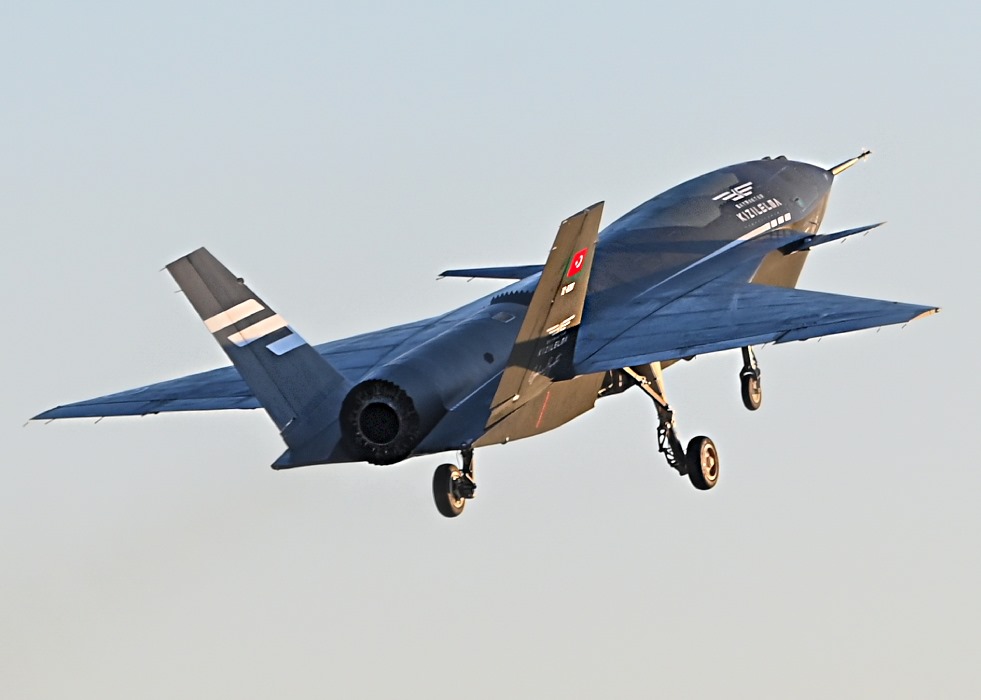
ASELSAN has confirmed that its MURAD 100-A active electronically scanned array (AESA) fire-control radar completed its inaugural flight on the Bayraktar KIZILELMA unmanned combat platform, marking a notable milestone in the radar’s cross-platform integration programme.
Built on an AESA architecture, the MURAD 100-A is designed to deliver agile electronic beam steering, simultaneous multi-target detection and tracking, and engagement support for both air-to-air and air-to-ground missions. The radar combines wide frequency coverage with GaN-based power amplification, sub-array digital beam forming and time-interleaved operation to provide the sensitivity and resilience required for contemporary aerial combat environments.
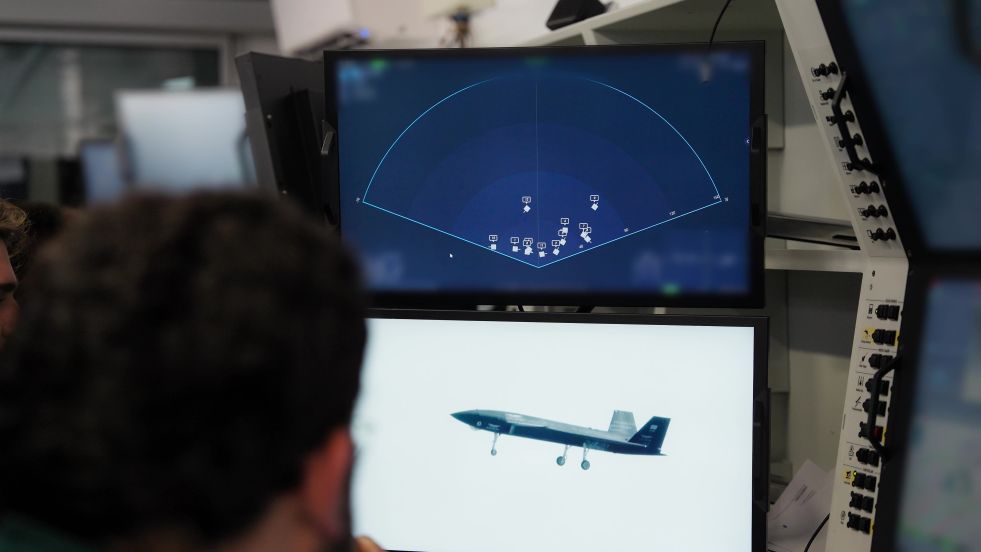
It can be understood from images that ASELSAN’s radar can track multiple contacts: on KIZILELMA the MURAD 100-A can simultaneously monitor up to 12 targets within a 10–70 NM engagement band. The radar’s total azimuth scan is noted as 140°, while its maximum search/scan range is around 160 NM — figures that position the sensor as a long-reach fire-control solution for both interception and stand-off engagement tasks.
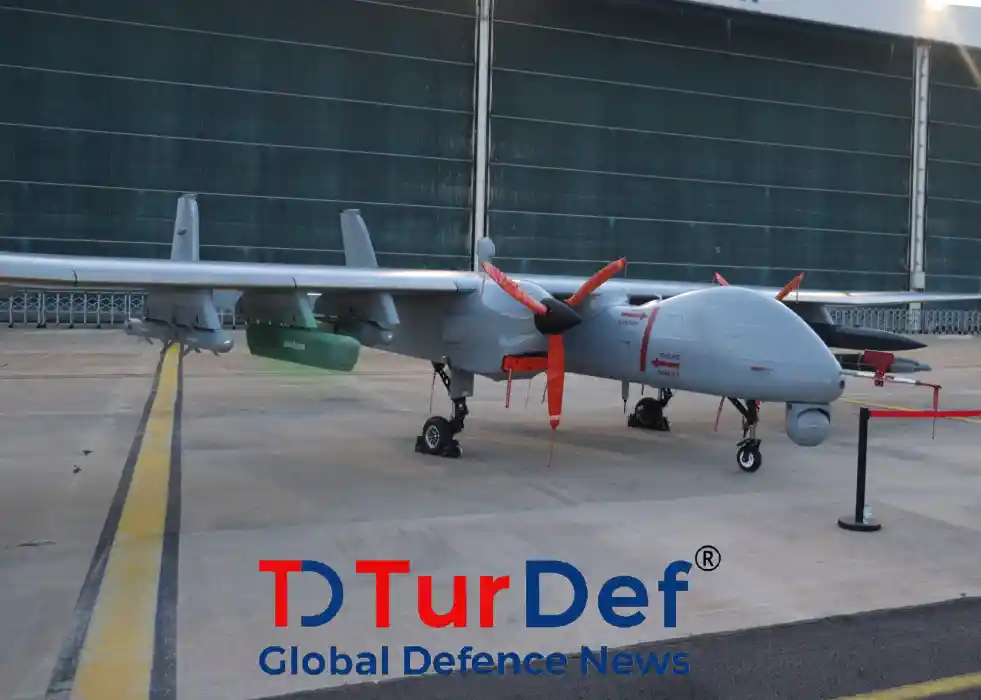
The radar’s first integration with a Turkish unmanned platform took place on the Bayraktar AKINCI, with aircraft trials beginning in February 2025 and a series of subsequent test flights that validated core radar functions. The successful KIZILELMA sortie demonstrates the system’s adaptability to differing airframes and operational envelopes — an important attribute for mixed manned-and-unmanned force architectures.
While MURAD 100-A is being used for now, ASELSAN previously disclosed its plans to develop MURAD 200-A as a KIZILELMA-optimised variant with low observability (Might include improvments on LPI) characteristics.
Notably, ASELSAN says the MURAD 100-A will also be used in the F-16 ÖZGÜR Modernisation programme, underscoring the manufacturer’s intent to field a common sensor suite across upgraded manned fighters and UCAVs. The ability to re-host the radar onto legacy fighters as well as new unmanned platforms reduces integration burden and supports coherent tactics across a mixed fleet.
By coupling precise target tracking with missile guidance functionality, the radar is intended to extend the engagement envelope of both missiles and the host platform, enabling stand-off prosecution of aerial and surface targets. The manufacturer also emphasises the radar’s simultaneous tasking capability, allowing it to maintain air-to-air searches while supporting air-to-ground targeting — a capability increasingly required in complex, congested battlespaces.
Technical features cited by ASELSAN include wide instantaneous bandwidth for enhanced detection performance across multiple bands, GaN amplifier stages to boost power and efficiency, and digital beam forming at sub-array level for finer control of beam shape and sidelobe management. Time-interleaved operation is used to support rapid switching between modes and to reduce latency when engaging fast-moving targets.
The MURAD family has been positioned by ASELSAN as a modular radar solution intended for a range of platforms. Its deployment on both AKINCI and now KIZILELMA — and its planned use on F-16 ÖZGÜR-upgraded aircraft — will be watched closely by regional and export customers interested in scalable sensor suites for next-generation unmanned combat aerial vehicles and optionally crewed systems. ASELSAN's focus on software-defined functionality also implies that it may be possible to make small changes to the hardware and add new mission packages without having to change a lot of hardware.
ASELSAN claims that more flight tests and validation work will continue to improve the radar's performance and make sure it is ready for use in the field.
As testing progresses, potential customers will be seeking final performance metrics, environmental qualifications and integration timelines ahead of any production or export decisions.
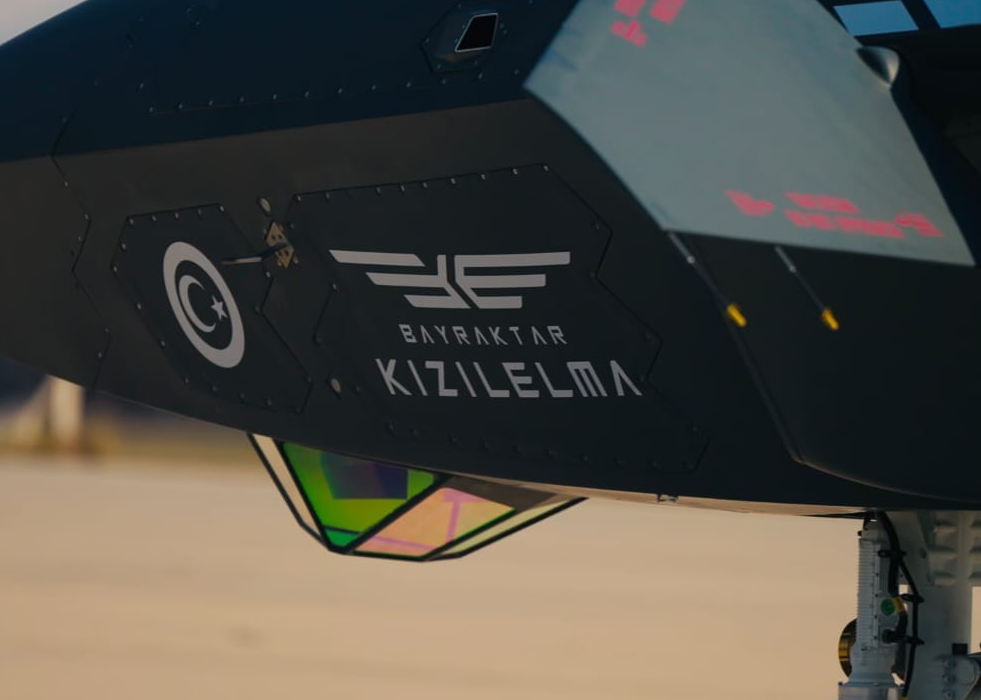
Another important detail from the test is the presence of TOYGUN-100 EOTS which will provide KIZILELMA with onboard engagement capabilities against surface and air targets through the high-resolution MWIR camera and laser designator. Munition tests with targeting done though TOYGUN-100 can be expected in near future for this reason. Tests of TOYGUN will be not only important for KIZILELMA but also KAAN fighter jet which is set to use a different variant of TOYGUN, TOYGUN-200, alongside the KARAT IRST.
Author: Kaan Azman
Editor: Özgür Ekşi