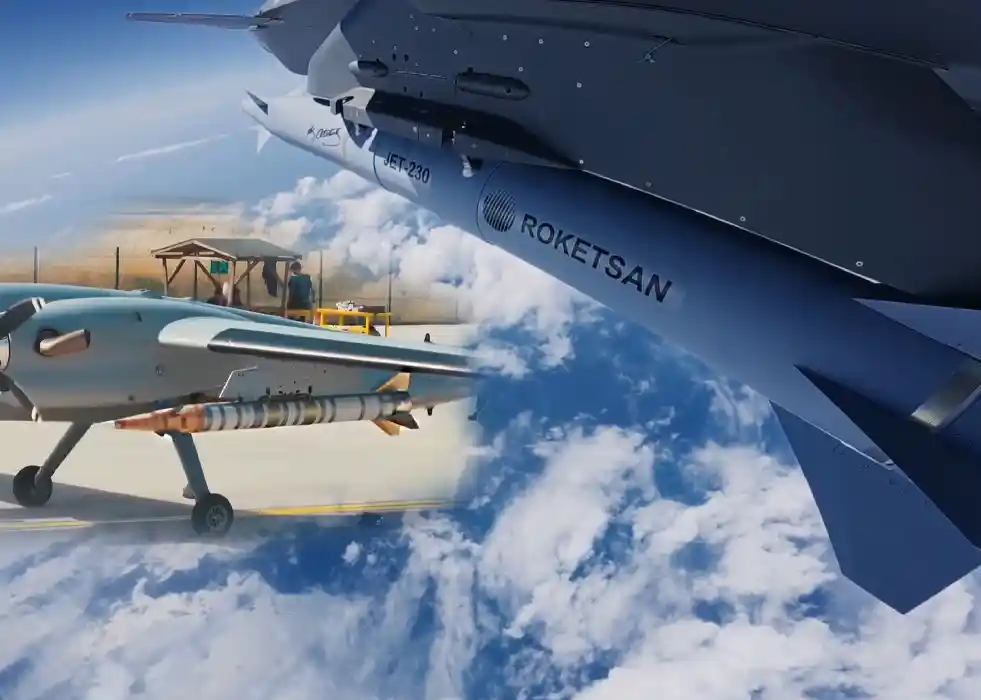
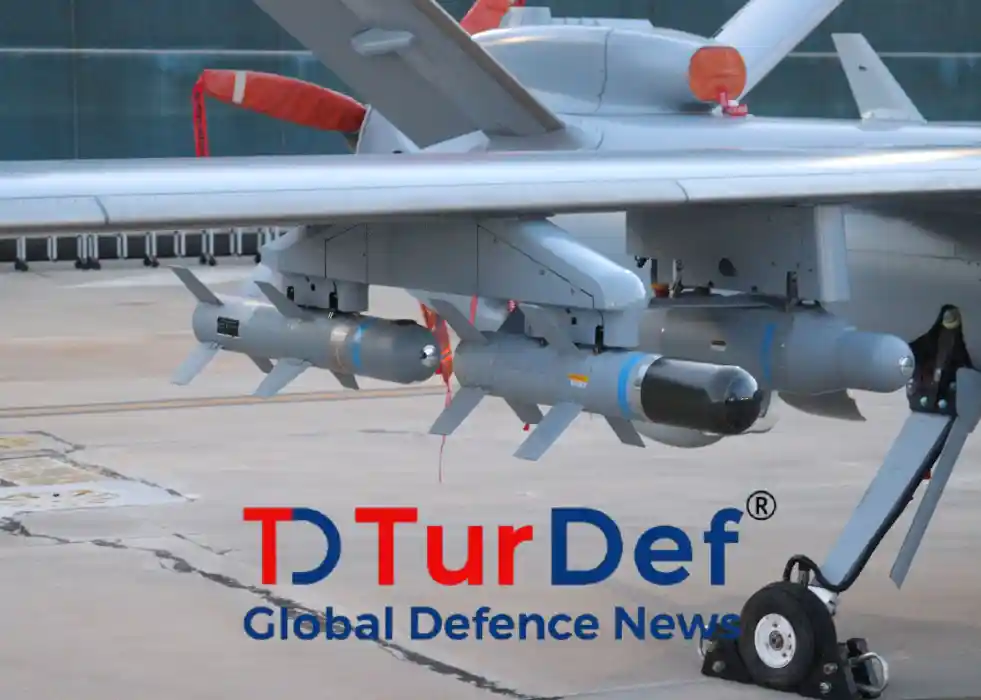
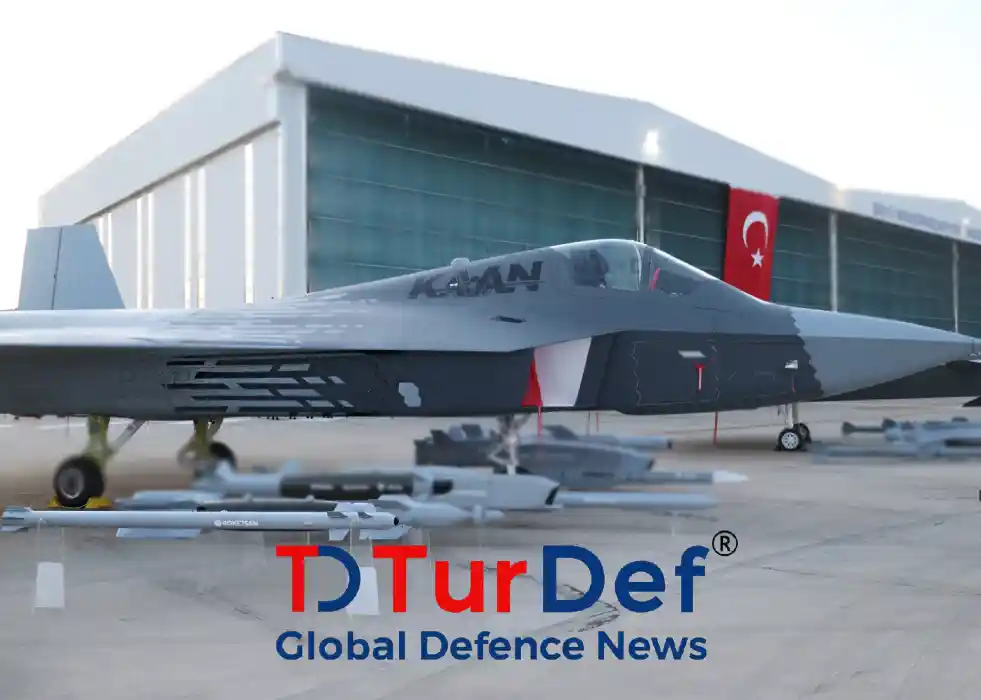
Kemankeş 1 jet-powered loitering munition’s test from Akıncı UCAV included the demonstration of air-to-air capability through a dive on a hovering target.
Kemankeş 1’s firing test from Akıncı UCAV not only marks the first firing test from the turboprop-powered UCAV but also the first demonstration of air-to-air use.
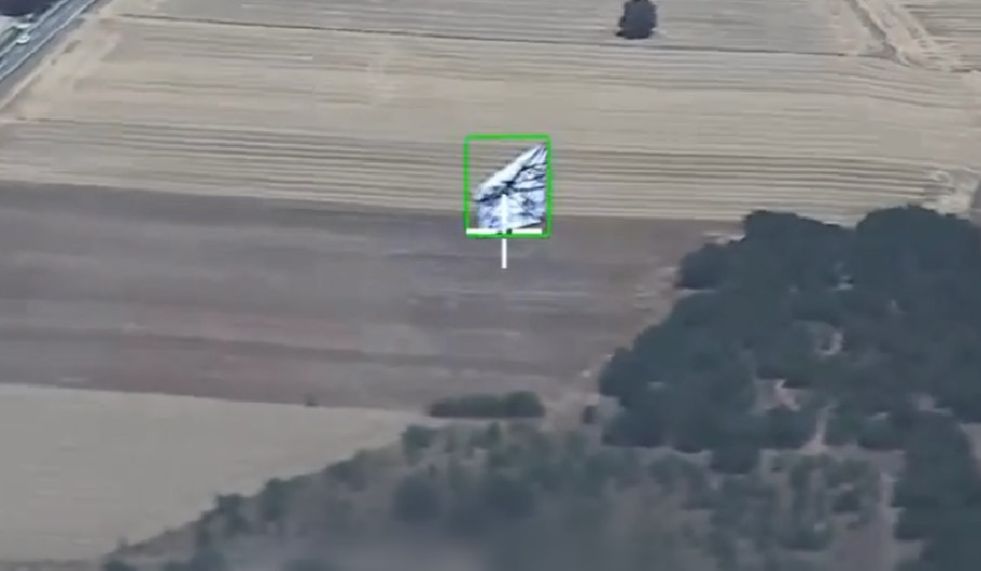
In the test, two Kemankeş 1 jet-powered loitering munitions performed simulated interceptions on targets carried by quadcopter UAVs.
Kemankeş 1, with a range of 150+ km and a warhead weighing 5 kg, is mainly intended against soft-skinned surface targets, especially those in contested environments. Additionally, the onboard gimbal optical system with laser rangefinder allows for alternative use as a deployable ISR asset.
Kemankeş 1 as Loitering Air-to-Air Missile?
The subject of loitering anti-air missiles powered by turbojet engines has been known to be in the works by several firms in the U.S. and Iran. Instead of reaching supersonic speeds, these new anti-air munitions mostly cruise at high subsonic speeds with turbojet engines and can loiter for a considerable time before engagement. The loiter capability can be used to deploy a salvo to form an aerial minefield where multiple missiles circle multiple sectors.
Such munitions would be especially effective against helicopters and up to tactical-level UAVs, considering their low top speed. Additionally, the lower speed gives a wider window to manoeuvre, which is advantageous against the less predictable flight patterns of VTOL aircraft.
Kemankeş 1 has growth potential in this direction mainly due to its versatile gimbal optical system with stabilisation and agility provided by its external layout. It could be described as a matter of providing the guidance system with new algorithms to allow the engagement of slow-flying aircraft.
This could turn platforms capable of carrying Kemankeş 1 into air defence assets in a rather unique fashion. Considering Akıncı being set to receive the MURAD 100-A AESA radar, the radar could be used for screening UAVs or helicopters and mid-course navigation of Kemankeş 1 towards the targets.
UAV-on-UAV Interception is Already Here
In the war between Russia and Ukraine, both sides have started employing kamikaze UAVs with layouts focusing on high speed due to the limitations of propellers to shoot down other UAVs.
Current examples include 'mothership' balloons or UAVs carrying high-speed kamikaze UAVs seen on the Ukrainian side; and hand-held launchers seen on the Russian side.
Compared to a modern MANPADS missile, these solutions are far simpler, easier to field, and more open to modifications.
Prior to this, FPV UAVs had been utilised to shoot down other UAVs and even strike USVs when the opportunity presented itself.
Author: Kaan Azman
Editor: Özgür Ekşi