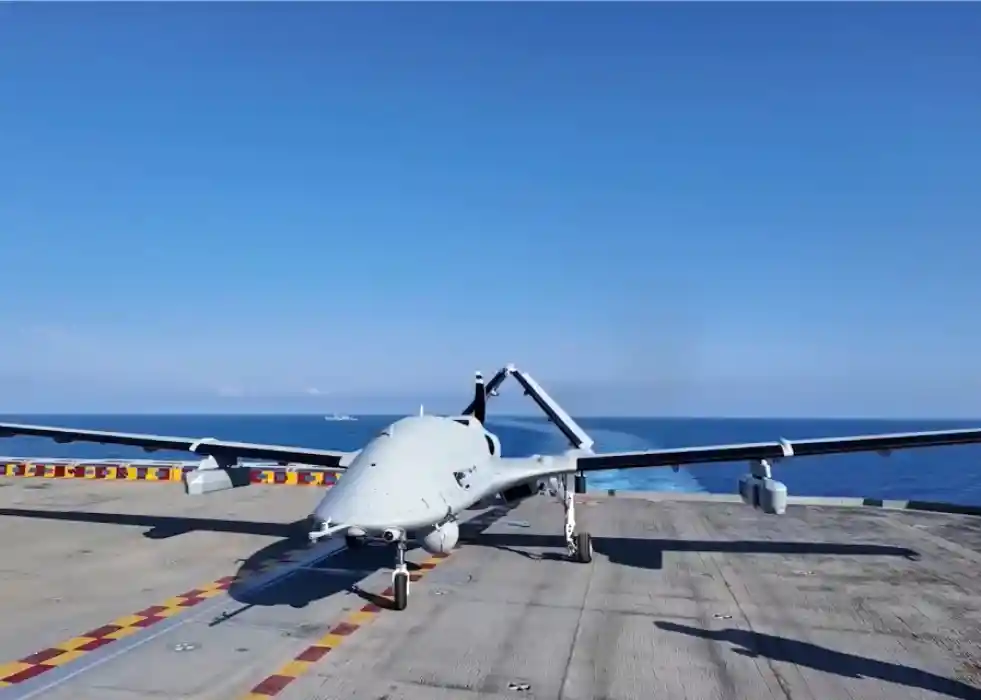
Bayraktar TB2T-AI, the new version of Bayraktar TB2 armed UAV, successfully recovered from a body-axial spin autonomously in the recent test.
One of the new capabilities brought by Bayraktar TB2T-AI’s new AI-based features can be observed in this test: dynamic flight path optimisation.
The AI capabilities of Bayraktar TB2T-AI include terrain-referenced flight for less GNSS dependence, automatic runway recognition, and dynamic flight path optimisations.
Bayraktar TB2 a Manoeuvre Testbed for Kızılelma?
This is not the first time Bayraktar TB2 (or rather the family) performed demanding manoeuvres in a test. Previously, Bayraktar TB2 performed a barrel roll manoeuvre autonomously, which is a type of aggressive manoeuvre to evade incoming missiles by a rapid change of orientation.
This, combined with the recent autonomous spin recovery test, hints at the possibility of Baykar using Bayraktar TB2 as a testbed for Kızılelma unmanned fighter’s manoeuvring algorithms.
This would not be a subject any alien to Baykar, considering the CTO Selçuk Bayraktar himself has an academic background involving aggressive manoeuvres of UAVs.
With the risks of such tests considered, especially if they are to be conducted on a platform like Kızılelma, which has just started its more rigorous tests in terms of flight capabilities, it would be better to start with an inexpensive and abundant platform like Bayraktar TB2.
Bayraktar TB2T-AI: Preparing for the Future
The new version of the Bayraktar TB2 armed UAV line keeps the same concept of a lightweight and cheap armed UAV with some capabilities approaching the MALE class of UAVs with several enhancements.
Firstly, the engine has been changed to a turbocharged one to improve power, which contributes to the maximum speed (Increased to 300 km/h), climb rate, and service ceiling (Increased to 30000 ft). Based on rule-of-thumb calculations, the engine is estimated to have a power output of 135+ hp.
Aerodynamic improvements have been made as well, which include winglets to reduce induced drag from the wings. Reduction of induced drag is among the primary ways to improve an aircraft’s cruise performance. It can be inferred that Bayraktar TB2T-AI has a longer endurance/range compared to the baseline version.
Lastly, three AI computers were added for improved navigation and a higher level of operational autonomy, as mentioned earlier. Measures against GNSS blackouts (Natural or intentional) and in-flight disturbances also contribute to reliability, which is a significant concern for UAVs starting from tactical class.
Author: Kaan Azman
Editor: Özgür Ekşi