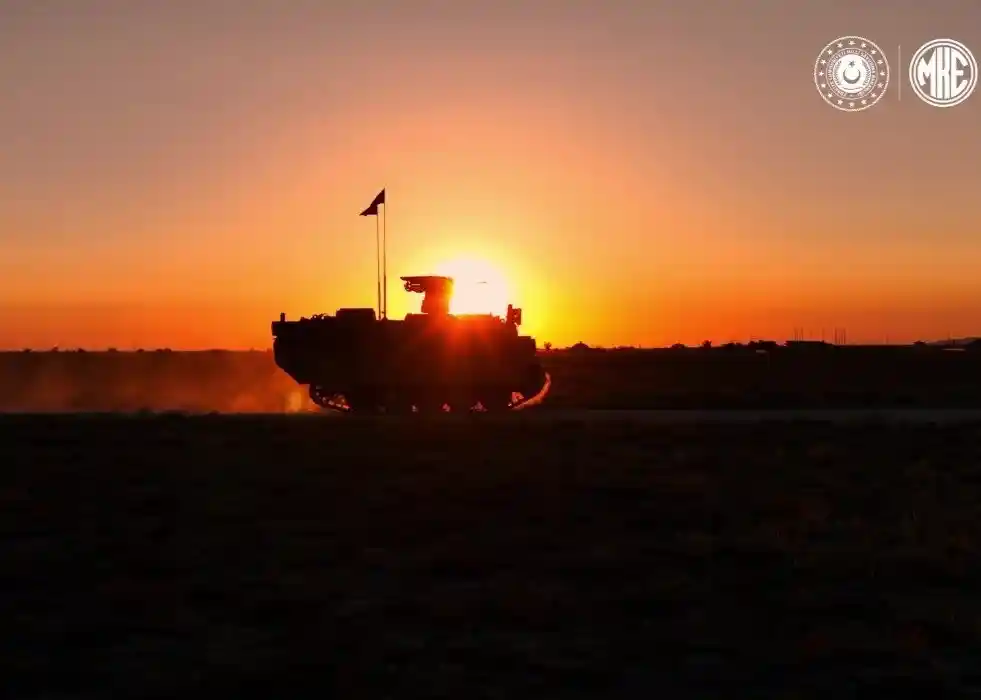
France ordered 530 Serval armoured vehicles under the SCORPION programme to modernise its Army. The deal, worth over €1 billion, will end deliveries by 2031.
The French defence procurement agency, Direction Générale de l’Armement (DGA), placed the order as part of its December 2024 procurement wave.
The Army’s capacity in air defence, counter-drone operations, and tactical communications will be improved by the Serval Appui SCORPION variants. These modern vehicles will replace ageing platforms like the Véhicule de l’Avant Blindé (VAB), which has been in use since 1974.
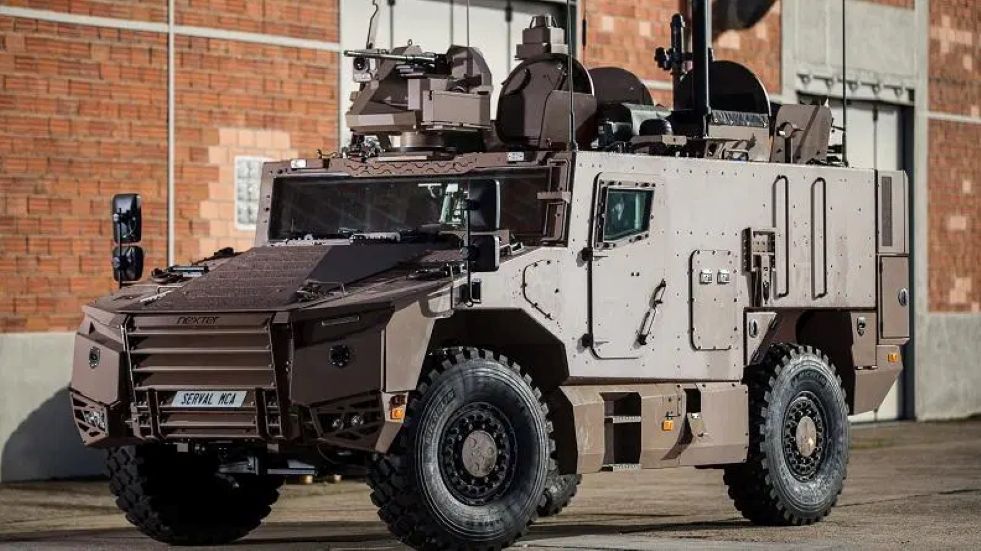
The Serval variants ordered include:
- Ground-Based Air Defence (DSA): Equipped with an MBDA Atlas-RC turret, enabling the launch of Mistral 3 short-range air defence missiles under armour protection.
- Counter-Drone Warfare (LAD): Featuring a KNDS France ARX-30 NEROD turret with a 30mm automatic cannon, radar, and a radio frequency detector to combat drones.
- Tactical Communication Nodes (NCT): Integrated with SYRACUSE IV satellite communications and radio-based systems for battlefield connectivity.
Key contributors include:
- KNDS France (Satory, Bourges, Roanne)
- TEXELIS (Limoges)
- MBDA (Plessis-Robinson, Bourges)
- CS GROUP (Plessis-Robinson, Toulon)
Serval in the SCORPION Programme
The VBMR-L Serval is a 4×4 multi-role armoured vehicle designed to operate alongside the Griffon 6×6 and Jaguar 6×6 within the SCORPION programme. The Serval can carry up to 10 troops and is integrated with the FÉLIN future soldier system. France plans to acquire 978 Servals by 2030, contributing to a modernised force structure that includes 1,872 Griffons and 300 Jaguars.
This latest order follows a previous 420-vehicle contract valued at €500 million, signed in February 2024. The Serval fleet will significantly enhance France’s operational flexibility, particularly in expeditionary and urban warfare scenarios.
The first deliveries are expected by the end of 2025, with full completion by 2031.