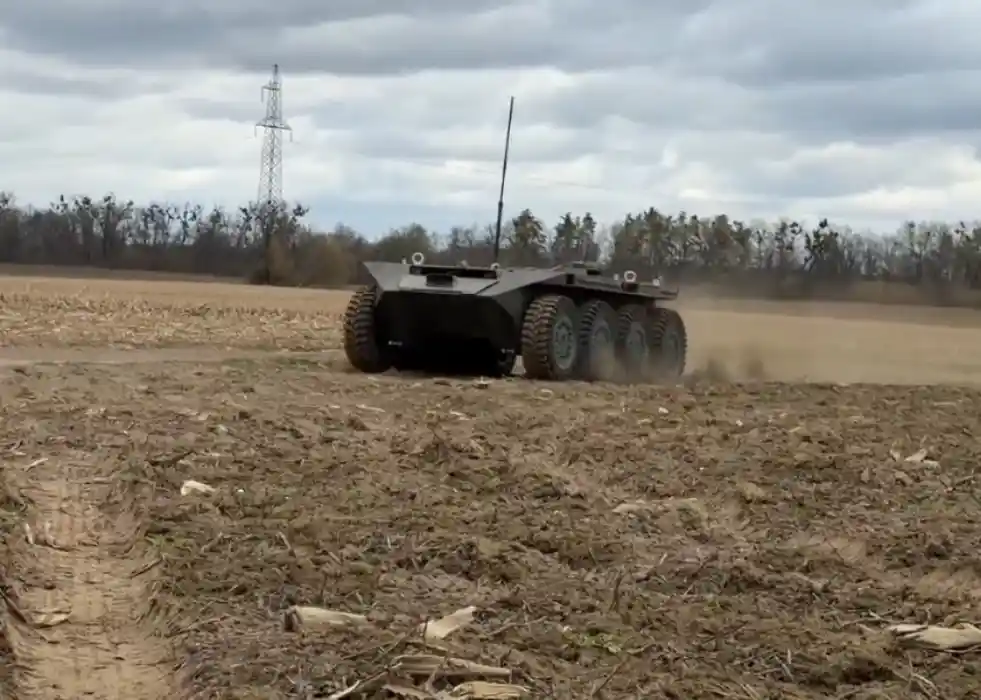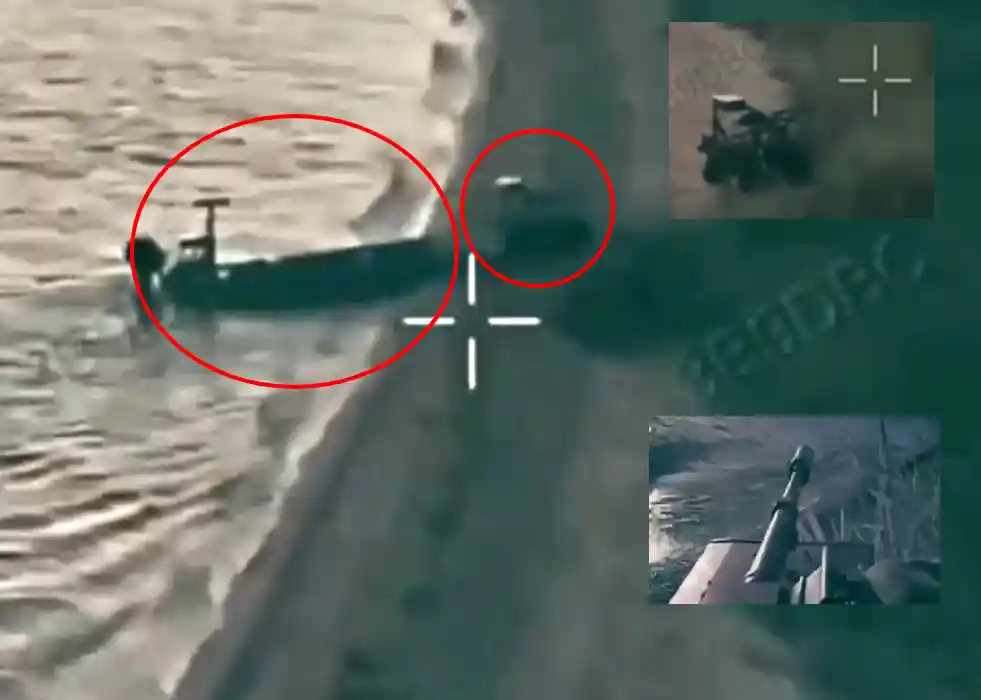
Ukraine brought together a landing USV and an armed UGV to form an unmanned amphibious assault force against Russian forces stationed on the Kinburn Spit.
The 123th Territorial Defense Brigade of Ukraine conducted an entirely unmanned amphibious operation against Russian forces holding the Kinburn Spit, which marks the first combat use of the rather exotic concept of coupling USVs with UGVs
It is seen in the footage that the USV, acting as the landing craft, parks at the shore to deploy the UGV armed with a machine gun. The USV might also be acting as a communications relay for the UGV. While this demonstration involved small-scale firefights, the functionality has been shown.
Using USVs with a layout mimicking a landing craft to deploy armed UGVs, when applied on a larger scale, can significantly reduce casualties, especially at the early stages of landing operations that involve a dense line of fire.
Even though an unmanned landing force might not make the same push as a full-sized conventional one, it still deals casualties, forces the defender to spend its resources, and even provides insights on enemy tactics.
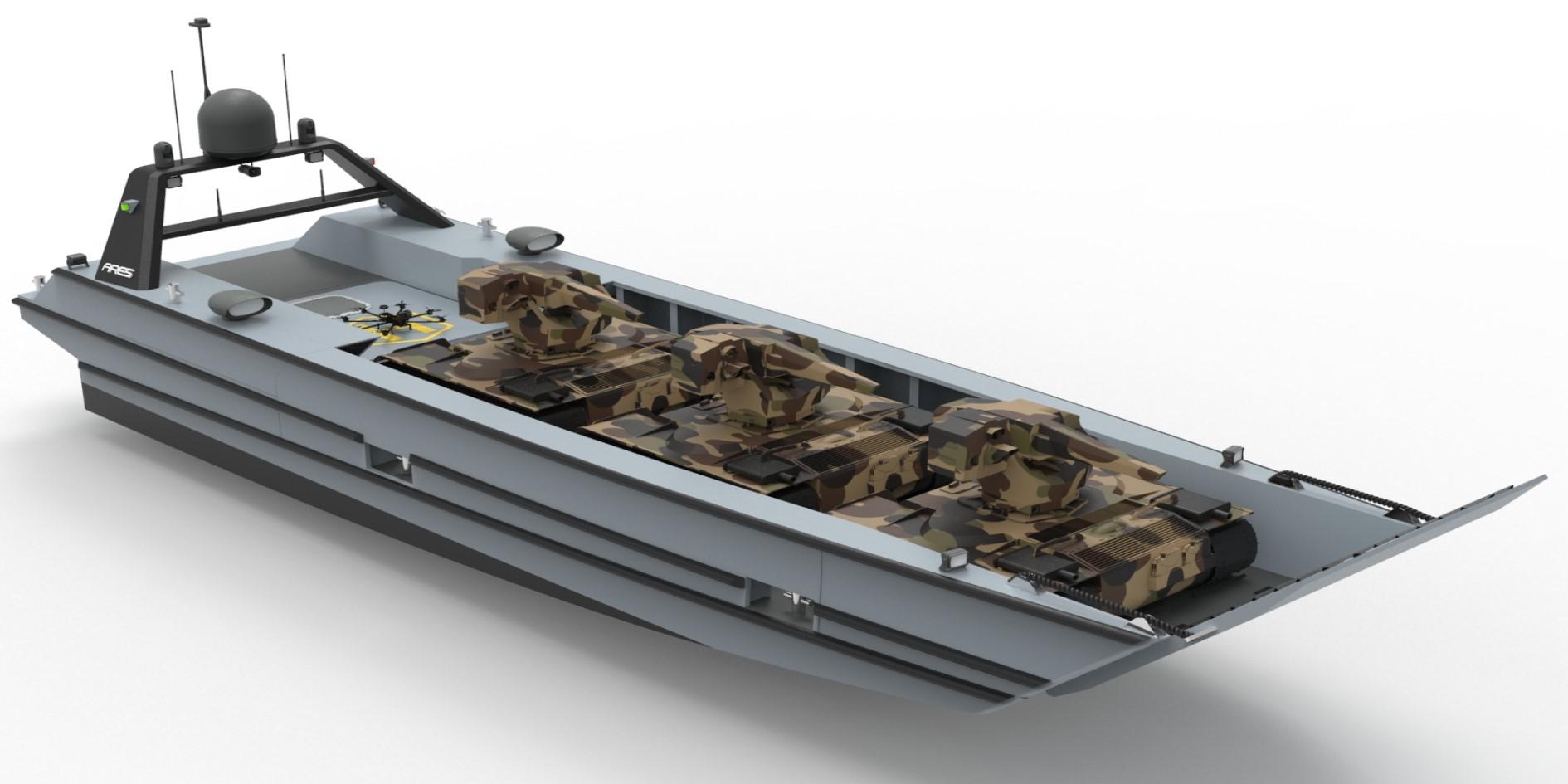
(Image: A Conceptual Design from ARES Shipyard for an Unmanned Landing Craft with UGVs and Scouting UAV)
On the other hand, unmanned landing forces can support the usual landing force to provide fire support or logistics delivery. The use of smaller unmanned platforms for support duties can reduce the manpower needed and reduce the area used inside the mothership.
Turkish ARES Shipyard is also known to have studied the “unmanned amphibious force” concept, as it previously posted a design for an unmanned landing craft carrying three medium UGVs and a multi-rotor UAV on the Türk Patent page of the Turkish MoIT. However, the idea has not proceeded forward, likely due to the priorities regarding the main variants of the ULAQ family.
Author: Kaan Azman
Editor: Özgür Ekşi