Berlin has awarded initial contracts to defence startups Helsing and Stark Defence, launching a strike drone programme that could reach €9 billion and signalling a doctrinal and industrial shift toward scalable, software-defined unmanned warfare.
Germany has initiated a major restructuring of its unmanned strike capabilities by awarding loitering munition contracts to domestic defence startups Helsing and Stark Defence. The decision marks the first phase of a programme that could reach approximately €9 billion. The initial agreements, approved by the Bundestag’s budget committee, are valued at roughly €536–540 million and are split evenly between the two companies.
German officials have made clear that this represents only the beginning of a broader procurement effort. The scale of the programme reflects Berlin’s intent to establish loitering munitions as a permanent and scalable component of Bundeswehr combat capability, particularly as Germany expands its forward military presence along NATO’s eastern flank.
The systems being acquired are designed to provide German forces with organic precision strike capability against armoured vehicles, artillery systems and other high-value battlefield targets. Loitering munitions combine surveillance and strike functions in a single platform, allowing forward-deployed units to independently detect, track and engage targets without relying on higher-echelon fire support. These capabilities are expected to play a key role in supporting the German brigade permanently stationed in Lithuania, where distributed strike assets can significantly enhance operational responsiveness and survivability.
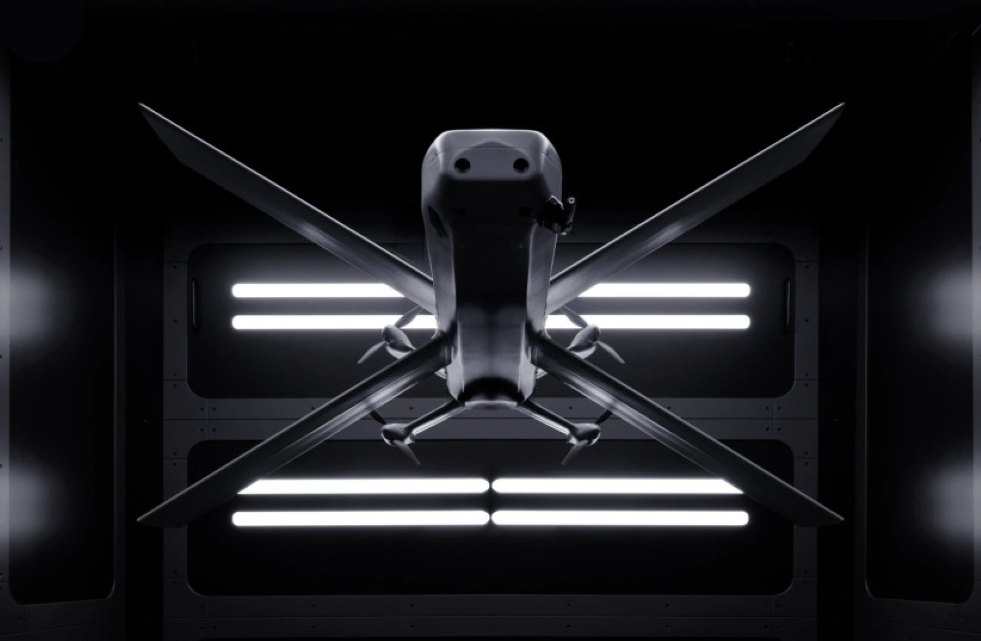 (Helsing's HX-2 AI)
The two selected startups represent distinct but complementary approaches to unmanned strike warfare. Helsing is developing the HX-2 loitering munition, an artificial intelligence-enabled strike drone designed to operate within networked combat environments. The system incorporates software-defined architecture, enabling rapid updates, sensor fusion and AI-assisted targeting functions. Helsing’s business model is centred on developing autonomy software and artificial intelligence layers that enhance battlefield decision-making and targeting efficiency, with the drone platform serving as a vehicle for deploying these capabilities.
This approach represents a broader technological shift within the defence industry, where software and autonomy are becoming as strategically important as the physical platform itself. Helsing’s model closely mirrors that of US defence technology firm Anduril, which builds autonomous systems around proprietary artificial intelligence and software architecture rather than treating the hardware platform as the primary source of value. In this emerging model, the autonomy software stack defines combat capability, while the drone itself functions as a deployable node within a wider networked warfare system.
A key strategic advantage of this approach lies in the development of sovereign autonomy capability. By controlling the artificial intelligence and autonomy software layer domestically, Germany retains full authority over how targeting algorithms operate, how systems are upgraded, and how operational data is processed and integrated. This reduces dependence on foreign software providers, ensures operational independence, and allows capabilities to evolve rapidly in response to battlefield requirements without external technological constraints. In future conflicts, the ability to modify autonomy software quickly may prove as decisive as the physical performance of the platform itself.
This shift forms part of Germany’s broader military transformation launched under the €100 billion special defence fund approved following Russia’s invasion of Ukraine. That historic initiative marked a turning point in German defence policy, enabling accelerated investment in advanced capabilities ranging from missile defence and digital infrastructure to next-generation command-and-control systems. The loitering munition programme represents one of the first major efforts to translate that funding into sovereign, software-defined combat capability.
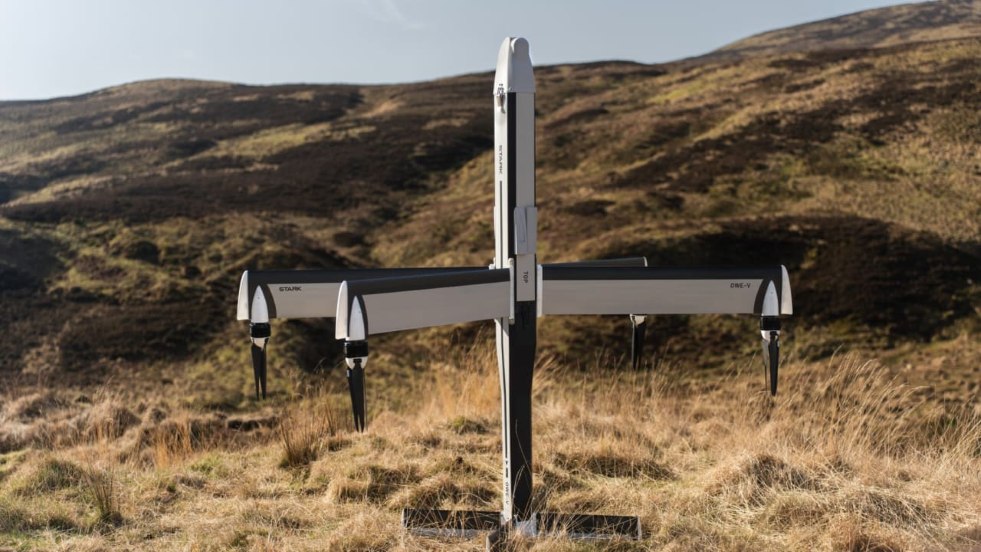 (Stark's Virtus VTOL)
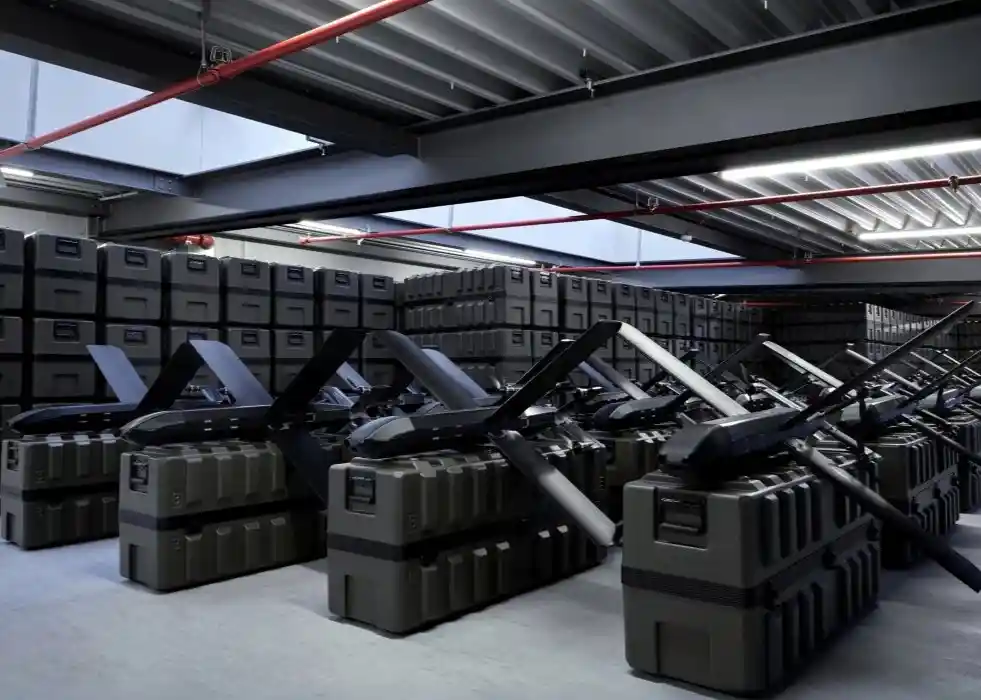
By contrast, Stark Defence is focused on scalable production of its Virtus loitering munition platform, designed for rapid manufacturing and deployment in large numbers. The Virtus system is optimised for operational flexibility and cost-effective production, enabling German forces to deploy loitering munitions at scale. Stark’s business model emphasises hardware scalability and production efficiency, supporting the requirement for large inventories of attritable unmanned strike systems capable of sustaining operations in high-intensity conflict environments.
Together, the two companies reflect Germany’s attempt to balance software-driven capability development with scalable production capacity. While Helsing represents the integration of artificial intelligence and autonomy into strike operations, Stark Defence provides a pathway toward rapidly expanding inventory and operational availability.
Beyond its operational impact, the decision also reflects a significant political and doctrinal shift. For decades, lethal unmanned aerial systems were highly controversial in Germany, constrained by post-war strategic culture and ethical concerns surrounding remote warfare. Armed drones were debated extensively before eventually being authorised, and their acquisition remained politically sensitive. The decision to procure loitering munitions at scale marks a clear break from this earlier restraint, driven largely by lessons drawn from recent conflicts, particularly the war in Ukraine.
Germany’s largest defence contractor, Rheinmetall, had also competed for the programme and was reportedly seeking to secure a contract worth approximately €300 million. The company had positioned its loitering munition portfolio, including systems developed in partnership with Israel’s UVision, as a mature and readily deployable solution. However, Rheinmetall was not selected in the initial phase, highlighting a deliberate effort by German authorities to accelerate capability development by engaging emerging defence technology firms.
The war in Ukraine has played a decisive role in reshaping German defence planning. Low-cost, mass-produced loitering munitions have demonstrated their ability to destroy armoured systems and impose disproportionate costs on adversaries. German defence planners are now prioritising systems that can be produced in large numbers, rapidly upgraded and integrated into network-centric operational architectures.
Germany’s decision to launch a programme potentially worth €9 billion represents not only a major procurement effort, but also a structural shift in military doctrine and defence industrial strategy. By combining artificial intelligence-enabled strike systems with scalable production models and adopting a software-centric approach exemplified by companies such as Helsing, Berlin is positioning loitering munitions as a central pillar of its future combat capability and as a key element of its contribution to NATO’s forward deterrence posture.
Author: Özgür Ekşi