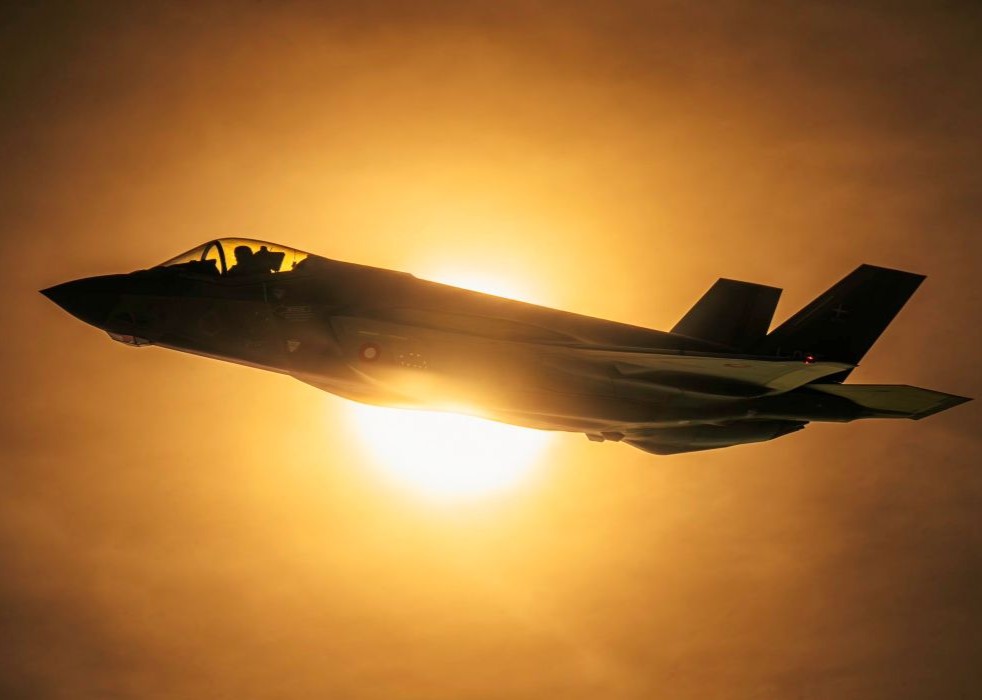
Iran’s Islamic Revolutionary Guard Corps (IRGC) claimed that a US F-35 Lightning II fighter jet was hit by Iranian air-defence systems during a combat mission over Iranian territory.
According to a statement released by the IRGC, the aircraft was engaged by Iranian air-defence systems over central Iran during the early hours of the morning. Iranian officials stated that the fighter jet sustained heavy damage and that its final status remained unclear.
US Central Command (CENTCOM) confirmed that an F-35 conducted an emergency landing at a US base in the region after sustaining damage during a combat mission. CENTCOM spokesperson Tim Hawkins stated that the aircraft landed safely and that the pilot’s condition was “stable.” The statement did not clarify whether the pilot had sustained injuries or whether the damage resulted from enemy fire.
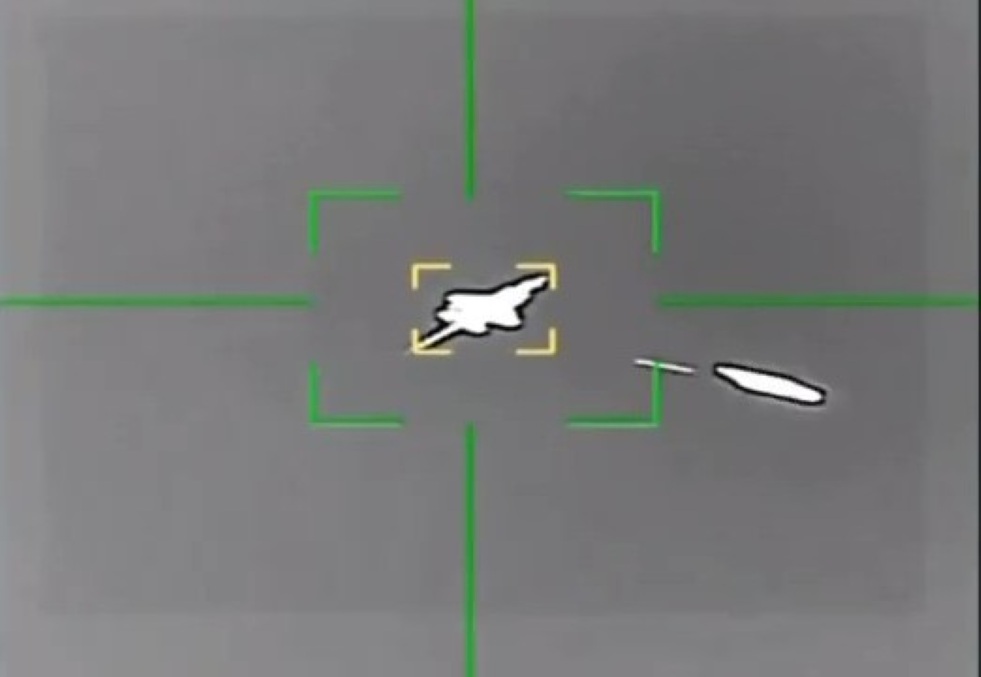
Iranian media outlets also circulated thermal camera footage allegedly showing an aircraft being engaged by an air-defence missile, although the authenticity of the footage has not been independently verified.
If confirmed, the incident would mark the first known case of an F-35 Lightning II sustaining combat damage during an operational mission.
The incident reportedly occurred amid the ongoing regional escalation between Iran, the United States and Israel.
Iran’s air-defence systems
Iran operates a layered air-defence network combining Russian-supplied systems with domestically developed platforms.
The most capable confirmed system in Iranian service is the Russian-supplied S-300PMU-2, delivered in 2016 and designed to intercept aircraft, cruise missiles and certain ballistic targets at ranges of around 200 km.
Alongside the S-300, Iran fields its indigenous Bavar-373 long-range air-defence system, which entered operational service in 2019. The system uses Sayyad-4 interceptor missiles and is designed to engage aircraft, drones and ballistic targets at long ranges.
Iran also operates several medium-range systems forming additional layers of its air-defence network. These include the Khordad-15, Talash and 3rd Khordad systems, which rely on the Sayyad missile family and are designed to counter aircraft, drones and cruise missiles.
Some defence outlets and analytical reports have suggested that Iran may have tested or received Russian S-400 air-defence systems in recent years. Several foreign media reports claimed that Iranian forces conducted a field test of an S-400 battery near Isfahan in 2025, although these reports have not been officially confirmed.
Iranian officials have publicly rejected the claim that Tehran seeks to acquire the Russian system. Davood Sheikhian, Deputy Commander of the IRGC Aerospace Force, stated in both November 2024 and October 2025 that Iran had not requested S-400 systems from Russia.
Iranian authorities instead emphasise their domestic capabilities. Officials have repeatedly argued that the Bavar-373 air-defence system is more capable than the S-400, stating that Iran therefore has no operational requirement to procure the Russian platform.
Together, these systems form the backbone of Iran’s layered air-defence architecture designed to protect critical infrastructure and military facilities across the country.
Author: Özgür Ekşi