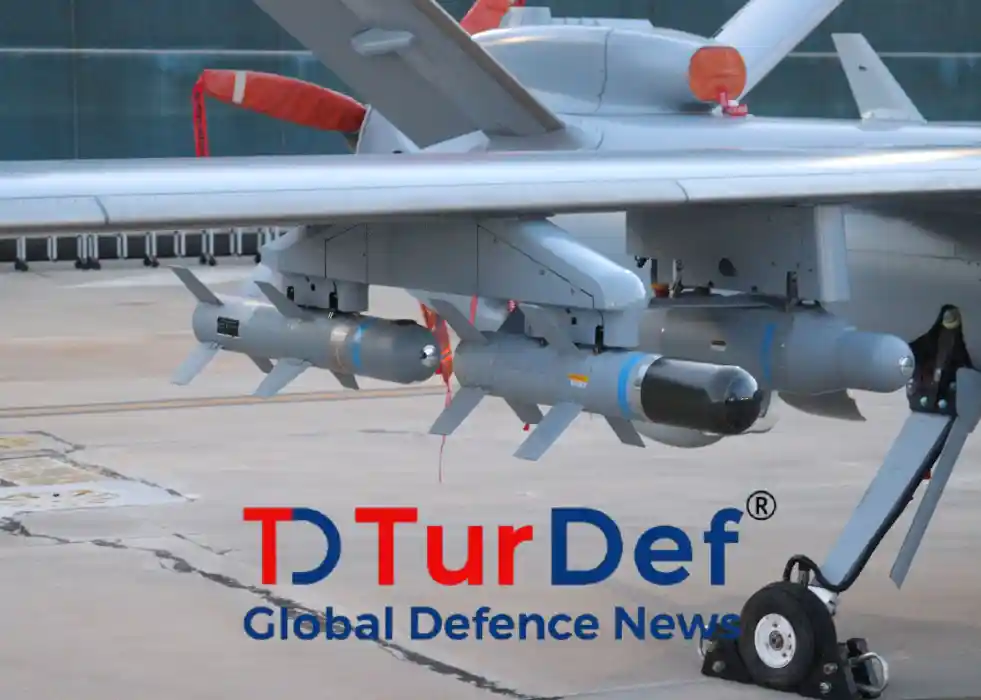
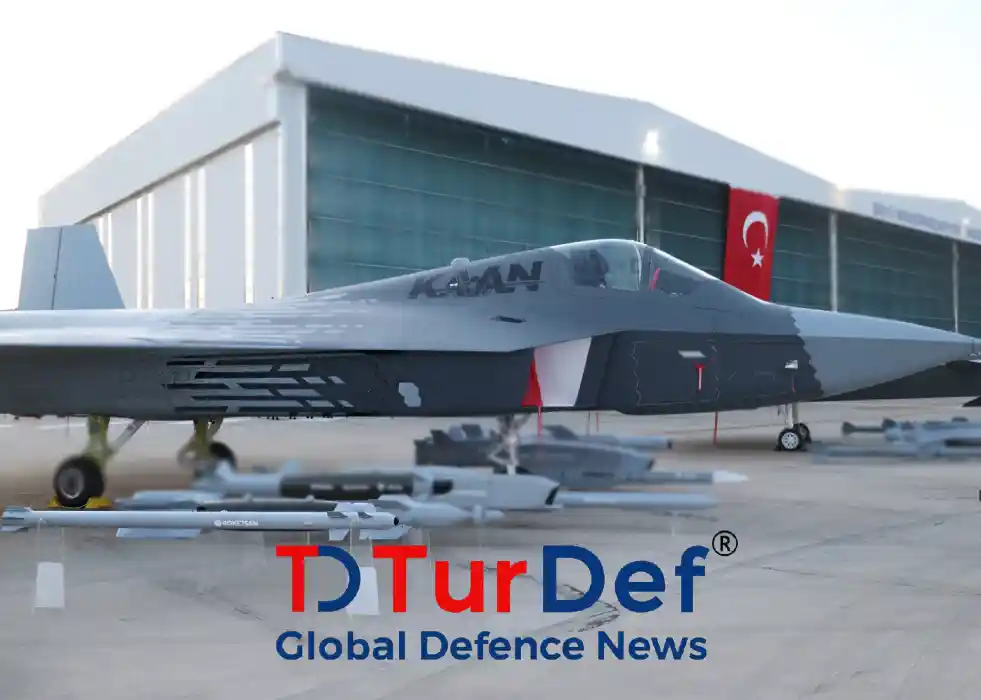
Leonardo CEO Roberto Cingolani stated that various alternatives like unmanned versions of trainers and Baykar’s Kızılelma are being evaluated as loyal wingman.
During the Paris Airshow, Roberto Cingolani gave information regarding the possible routes for the Italian Air Force’s future fighter jets being developed under the GCAP programme.
Defense News reported that three options are on the table: Unmanned M345, unmanned M346, and Kızılelma of Baykar, which has launched its joint venture with Leonardo.
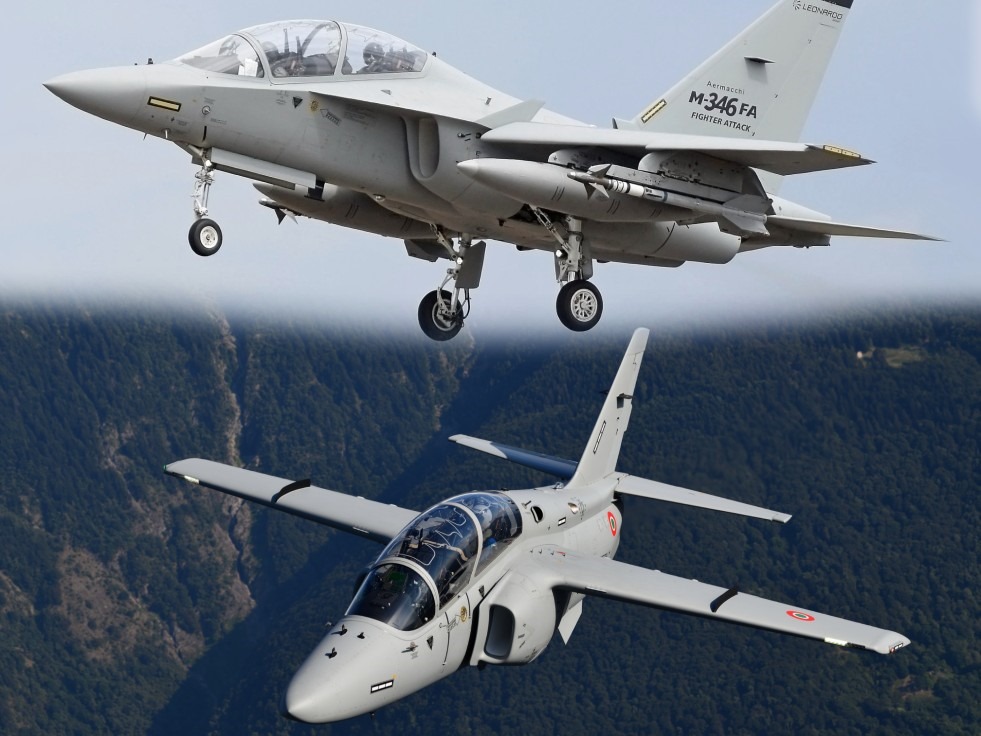
Trainers Converted to Loyal Wingman
Leonardo’s single-engine M345 trainer is something between advanced trainers and turboprop-powered basic trainers. The trainer -powered by an FJ-44-4M turbofan engine with 15.4 kN of thrust- can carry 1000 kg of armament, reach a speed of 780 km/h, and perform manoeuvres up to 7 g.
The more advanced M346, with two F124 non-afterburning engines putting out 57.6 kN of thrust in total, can reach high subsonic speeds and carry a payload of 3000 kg. Additionally, M346 supports the integration of radars.
Considering the flight performance of the upcoming fighter, it is safe to say being able to keep up in this regard is an important parameter. Additionally, the loyal wingman should be capable of carrying sensors and weaponry of a grade that can give the controlling fighter an edge.
While M345 is significantly cheaper than M346 due to its design, it is equally underwhelming in terms of sensor/weapon provisions and flight performance. Thus, it can be expected that M345 will be the first option to be dropped out.
Converting proven trainers into loyal wingman would involve changes other than an autonomy kit. For example, the space opened by the absence of pilots can allow for more fuel capacity to increase the range.
Kızılelma
Kızılelma, having performed its maiden flight towards the end of 2022, is continuing its tests with the third and fourth prototypes, which are fitted with afterburning turbofans and have a range of design optimisations in terms of RCS and aerodynamics.
The unmanned fighter has been listed as a potential area of cooperation with Baykar by Leonardo and pointed out as a candidate by Cingolani when the LBA Systems JV was announced.
High agility provided by canard-cropped delta wing configuration, provisions for multiple sensors (AESA radar, missile warning system, IRST, and EOTS), internal weapon bays, and low-observable outline make Kızılelma a candidate that diverges less from the fighter’s characteristics.
Currently, Kızılelma exists in single-engine configuration, with Baykar working on a larger twin-engine variant to bring the flight performance closer to a full-scale fighter jet.
Which Option is Better?
Considering the advantages and disadvantages, the M345 can be considered the cheapest and quickest option with the least room for growth, while the M346 is more generous in terms of the latter. Both options leveraging existing platforms would have cost advantages compared to a platform development from zero.
On the other hand, Kızılelma, with its low observability features and room to mount a diverse range of sensors, conforms to a larger degree when it comes to flying alongside a fighter with said features on a higher scale. However, it should be kept in mind that Kızılelma is a relatively new platform that is continuing its tests.
The approach of the Italian Air Force to its future loyal wingman’s traits should be followed closely, as it will be what gives the best guess regarding which option will be picked.
Cingolani stated that the GCAP allows countries to decide on their UAVs independently.
Author: Kaan Azman
Editor: Özgür Ekşi