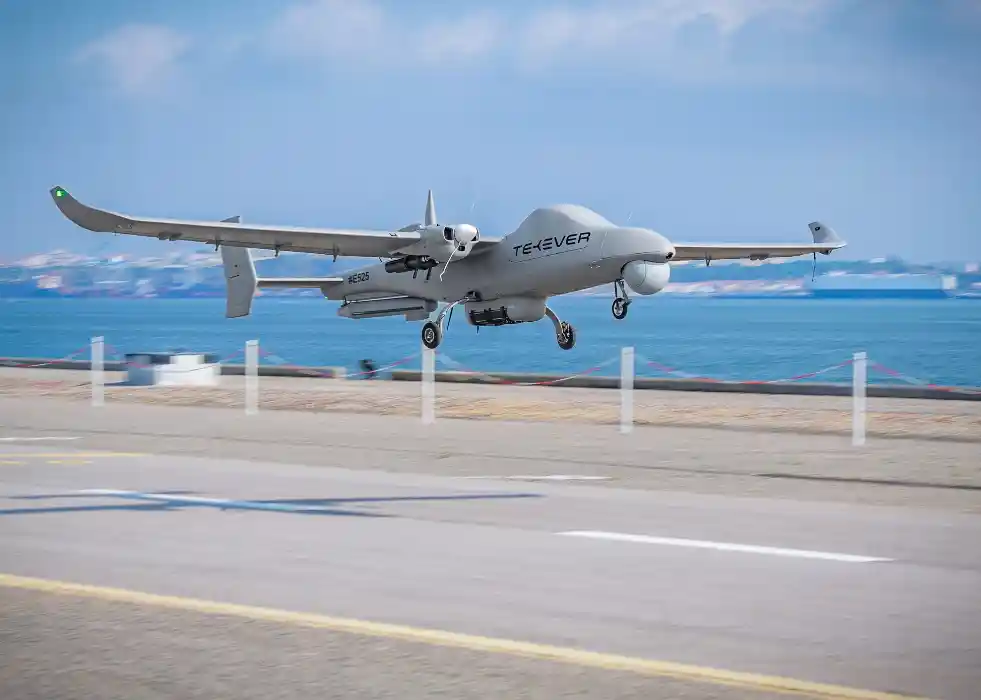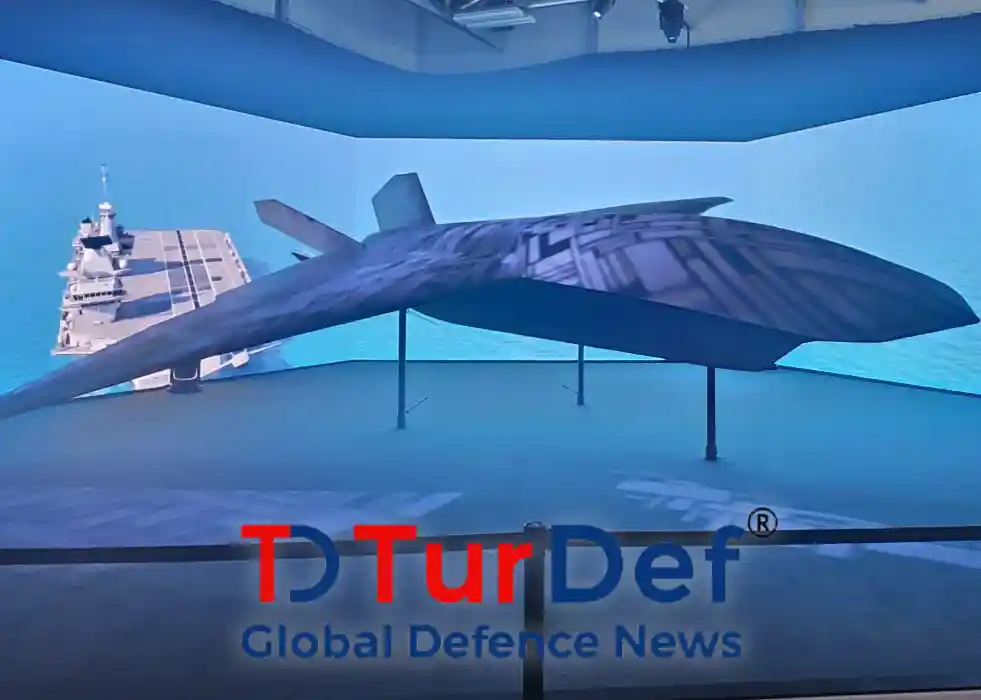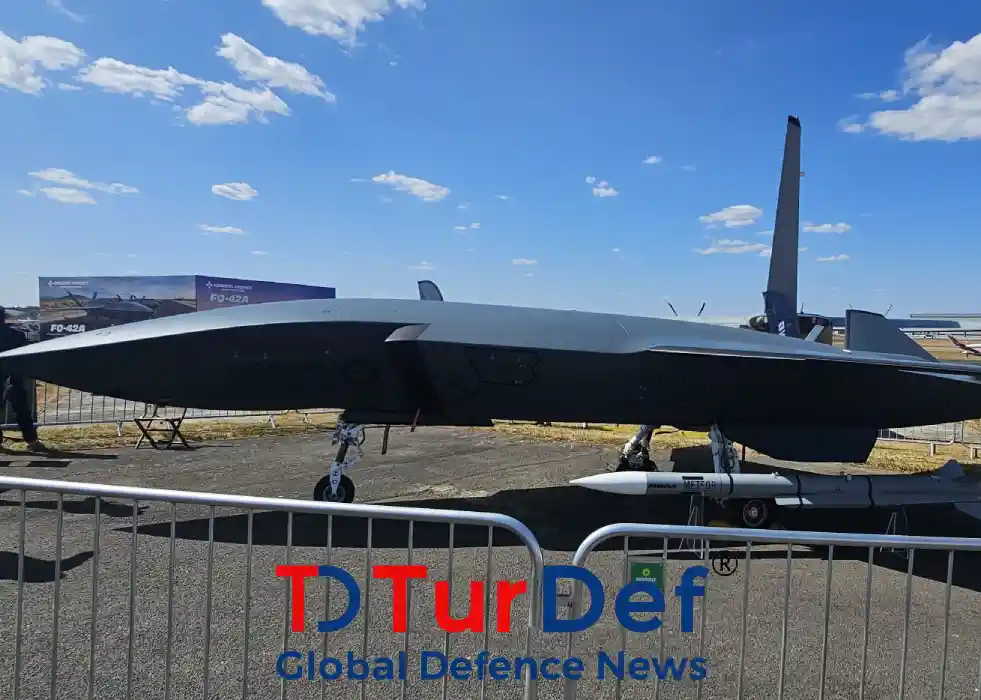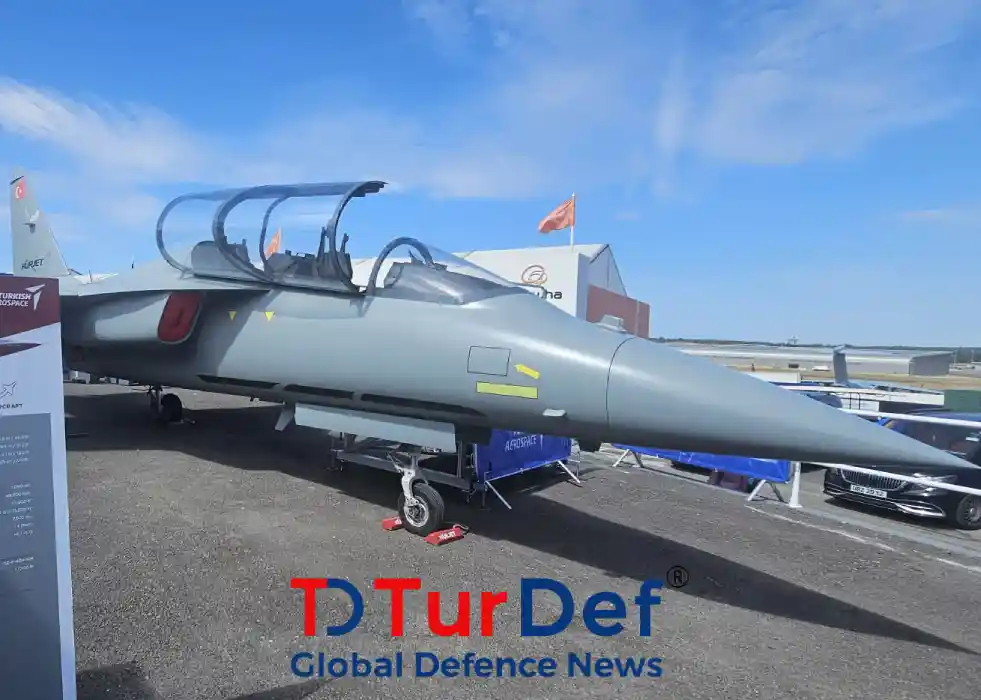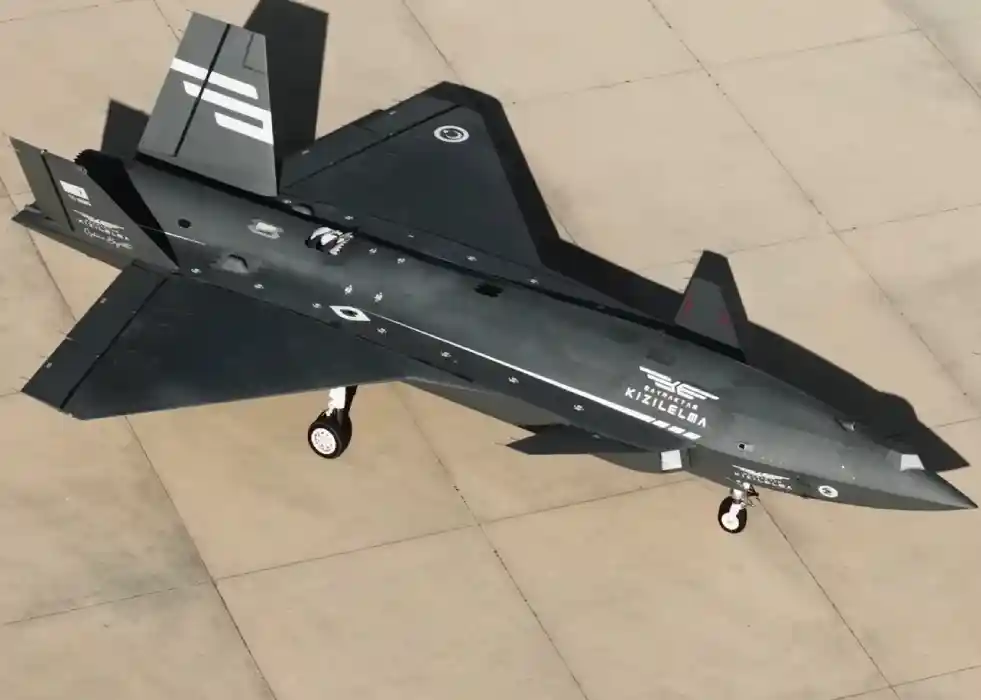
ASELSAN’s KARAT 100 IRST integrated on Baykar’s KIZILELMA unmanned fighter tracked an airliner simulating an opportunity target at a distance of 110 km.
The recent KARAT test, as covered by ASELSAN’s monthly brief (a-Bülten), saw performance validation by tracking an airliner at a distance of 110 km. This range is in line with the average instrumented range for other fighter-based IRST systems.
KARAT is among the three main sensors for KIZILELMA, alongside MURAD 100-A AESA radar and TOYGUN EOTS. The IRST system, developed with low observability in mind, features a low RCS aperture and the capability to provide midcourse guidance for air-to-air missiles through tracking like a radar.
KARAT is also set to be used on the KAAN fighter jet (More capable KARAT 200 variant) and ANKA-III stealth UCAV.
In addition to aircraft, ASELSAN has developed the PİRİ 100 IRST for ship use, which consists of three trainable sensor units to allow tracking of multiple targets. I-class frigates, Hisar-class OPVs, and TCG Anadolu (L400) LHD are the ships using the shipborne IRST.
IRST sensors for fighters are used as complements to radars, especially against low RCS and less-emitting targets. Passive operation also renders these sensors impervious to radar warning receivers and other ESM systems. Most fighter jets employ IRST sensors in an integrated manner, while some IRSTs are available as pods (IRST21 for F/A-18E/F Super Hornet).
Author: Kaan Azman
Editor:Özgür Ekşi