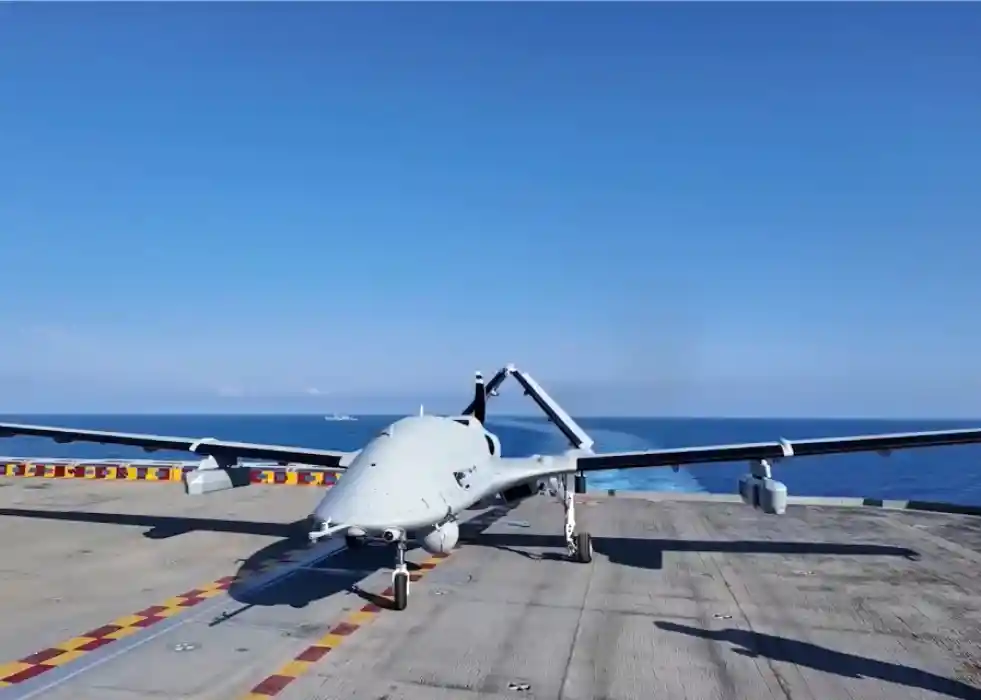
GA-ASI’s MQ-9B maritime patrol UAV participated in the RIMPAC 2024 naval exercise to support maritime ISR operations. MQ-9B UCAV’s variant, specialised for maritime patrol, has made another appearance in military exercises with its radar, SIGINT, and acoustic detection equipment.
MQ-9B SeaGuardian shared its observation data with warships and manned maritime patrol aircraft during the exercise. The payloads used in the exercise include SeaVue multi-function radar, SNC’s ESM system, and an unnamed acoustic tracking system. Sonobuoys are expected to be added to the UAV’s set of payloads with pods which were tested this year. Another instance of MQ-9B being used as an unmanned companion to warships and naval aircraft was at IPB-23. The exercise focused on MUM-T to conduct Cooperative ASW in the Southern California Offshore ASW range.
MH-60s dropped sonobuoys to locate a mobile training target during the two-day event. The target was correlated and located using the combined SeaGuardian and MH-60R teaming concept and tactical reports. The information was delivered to Commander, Task Force (CTF) 34 Theatre ASW Centre at Naval Station Pearl Harbour via the MQ-9B crew. The CTF then supervised a coordinated constructive “kill” of the simulated submarine using simulated torpedoes dropped by the MH-60s.
RIMPAC was a scene of another significant development in naval aviation, the XAIM-174B long-range air-to-air missile being tested from a F/A-18E Super Hornet fighter. The missile developed from the SM-6 long-range air defence missile used onboard Arleigh Burke-class destroyers is estimated to have a range far surpasses AIM-120D AMRAAM’s due to significantly larger rocket motor and seeker. XAIM-174B also marks the return of long-range air-to-air missiles to the U.S. Navy service since the retirement of F-14 Tomcat interceptors and its long-range AIM-54 Phoenix missile.