Greece’s attempt to portray NATO involvement in the “Orion 2025” Special Operations Forces exercise backfired after the Alliance removed its own Facebook post and admitted it had been published “in error.” The incident unfolded at a time when some influential member states within NATO had recently begun quietly signalling interest in bringing Greek Cyprus into certain cooperative formats. Greece sought to leverage this tendency for political advantage — but NATO ultimately left Athens stranded halfway.
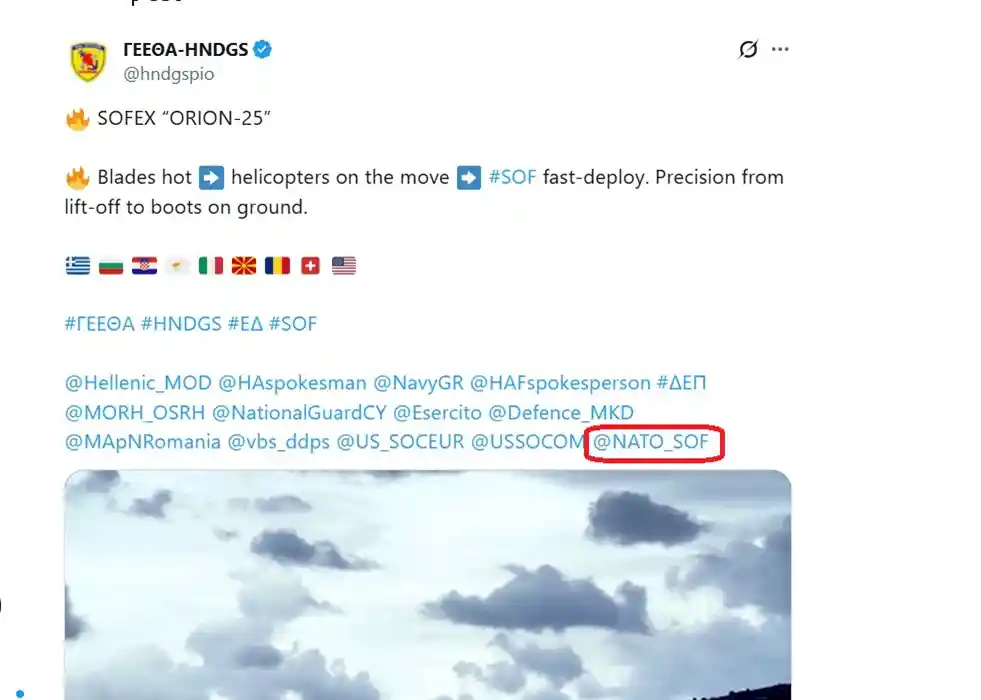
The exercise, organised by Greece and joined by Greek Cyprus, immediately placed a structural limit on any Alliance participation. NATO cannot take part in exercises involving Greek Cyprus, as Türkiye vetoes any NATO engagement that includes Greek Cyprus. Despite this, the Hellenic General Staff released a promotional video tagging “NATO SOF”, even though no NATO flag, no NATO personnel, and no NATO role appeared in the footage. The tagging created an impression of Alliance endorsement where none existed.

The confusion deepened when NATO SOF’s Facebook page also published photos related to the drill. Although the post did not explicitly state that NATO was participating, it suggested a level of involvement inconsistent with Alliance policy.
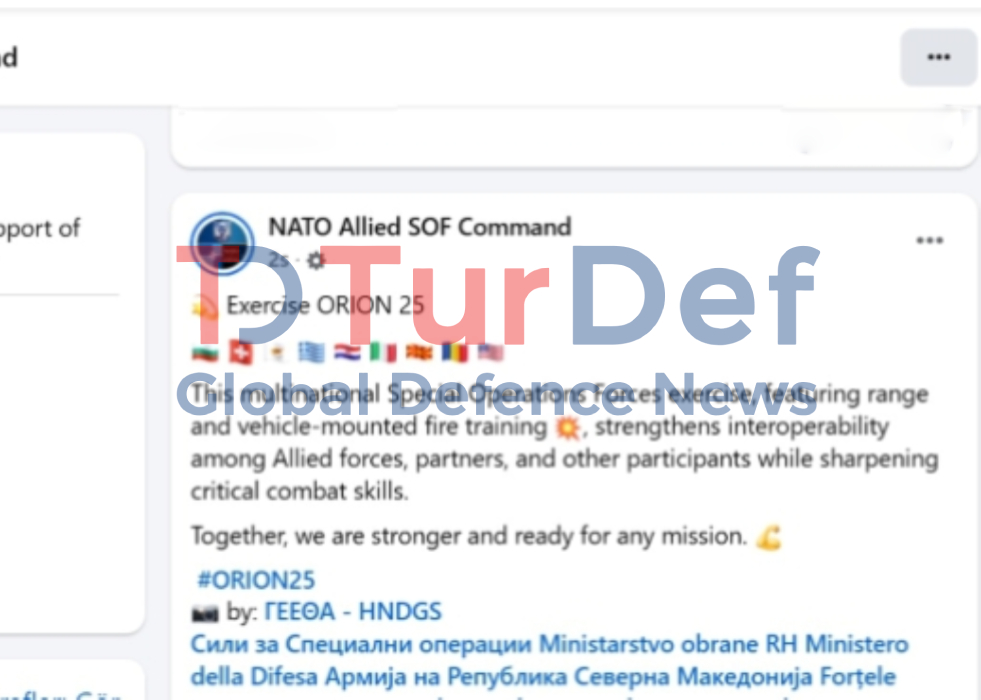
This prompted TurDef to formally seek clarification and submit the following question:
“Could you please clarify whether NATO SOF participates in the ‘Orion 2025’ exercise organized by Greece? Greek posts tag @NATO_SOF, but no NATO flag appears, SOF Facebook account shares the exercise.”
Shortly after this question was submitted, the Facebook post was quietly deleted, leaving NATO with exposed intentions over the mislabelled representation of the drill.
NATO later responded to TurDef with the following official statement:
“SOFCOM did not participate in the ORION-25 exercise. Allied nations sometimes tag SOFCOM on social media to help highlight NATO Special Operations Forces activities across the Alliance. Such tagging does not imply SOFCOM participation, but rather serves to promote Allied SOF professionalism, readiness, and collective strength. Similarly, SOFCOM may share or tag Allied activities to amplify visibility and reinforce NATO’s deterrence messaging.
In this particular case, a post referencing the ORION-25 exercise was published on SOFCOM’s Facebook page in error and has since been removed.”
NATO’s admission that the post was a mistake — and its swift removal — left Greece without the political narrative it attempted to construct. Rather than supporting Athens’ effort to position Greek Cyprus alongside NATO forces, the Alliance distanced itself entirely.
About ORION 25
The Greek-run Special Operations Forces exercise Orion 25 includes Greek Cyprus. NATO can't officially or unofficially help with, support, or take part in the practice because Greek Cyprus isn't a member of NATO and Türkiye blocks any NATO operation that includes it.
Why Türkiye Says No to Greek Cyprus in NATO Exercises
Türkiye's stance is in line with NATO's long-standing rules and the Alliance's neutral stance on the Cyprus issue:
Greek Cyprus is not a member of the Alliance, and adding it would make NATO's processes more political.
Greek Cyprus often blocks NATO and the EU from working together, even on issues that affect Türkiye's safety.
Letting Greek Cyprus take part in NATO activities would go against NATO's neutral position on the island's unresolved political status.
Because of these reasons, Türkiye always says no to Greek Cyprus's attempts to join NATO drills or share intelligence. The Orion 2025 debate is a vivid example of this.
Author: Özgür Ekşi
This exclusive article may be cited or reproduced with appropriate credit to TurDef.