Reports first surfaced in April 2025 suggesting that Russian forces had developed methods to control FPV (first-person-view) drones at ranges of hundreds of kilometres. The technical picture remained murky until August 2025, when analysed wreckage from downed systems revealed consumer-grade components — notably SIM cards and 4G/LTE modems — embedded in FPV airframes. That revelation clarified how Moscow’s teams were adapting commercial cellular infrastructure for battlefield command and control.
The use of civilian mobile networks is not incidental; it is central to the tactic. By routing drone command and video links over ordinary LTE networks, operators can mask military signalling behind ubiquitous civilian traffic and thereby reduce the effectiveness of dedicated electronic-warfare jamming aimed at military frequencies (2.4 and 5 GHz). In short, the battlefield is being reconfigured so that military effects ride on top of everyday communications infrastructure.
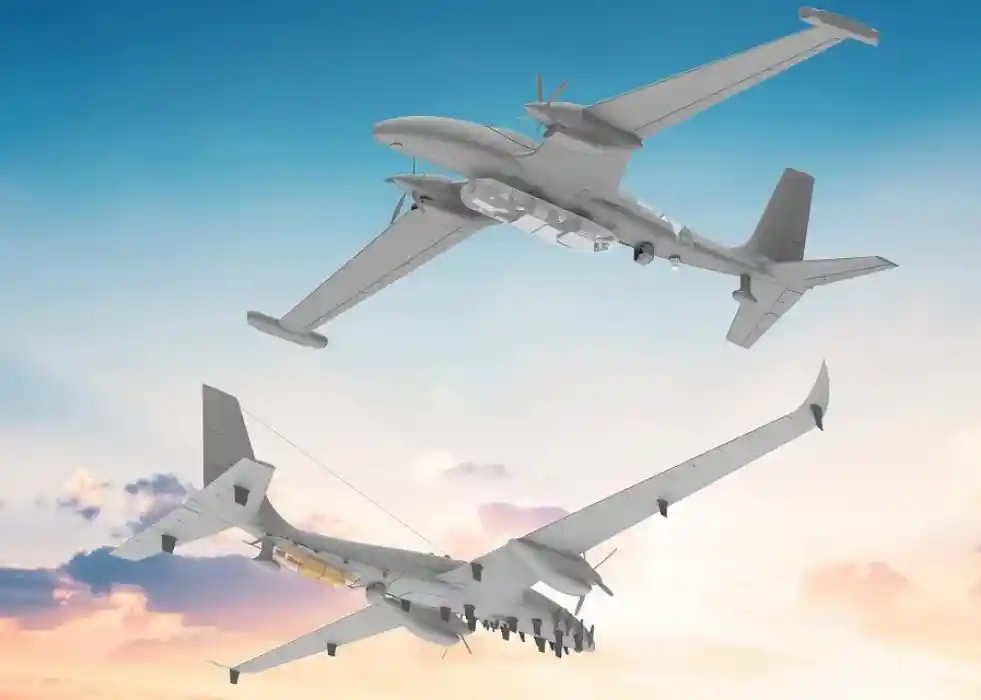
Ukrainian electronic-warfare specialist Serhii Beskrestnov — widely known as “Flash” — has provided the most detailed public account to date. Speaking to Ukrainian “united 24 media”, Beskrestnov describes an operational concept in which a modified “Molniya” carrier UAV transports two specialised FPV units into an area that retains stable mobile coverage. According to his account, the Molniya releases the FPV drones roughly five to ten kilometres from the intended target; operators, sometimes located far behind the front, then assume control through the mobile network.
Forensic examination of recovered wreckage in October 2025 supplied the hard evidence: exposed electronics that included LTE modules and SIM cards. Beskrestnov posted images and commentary on Telegram confirming these findings and describing the systems’ ability to maintain encrypted, high-bandwidth links over cellular networks — links that are significantly harder to deny with traditional jammers tuned to standard military frequencies.
A related line of reporting referenced a Russian project name, “Orbita,” allegedly used in experimental control systems. Limited Russian publications claim that developers demonstrated control of an FPV drone over a distance of up to 800 kilometres during test runs: the drone flew on a training ground near the occupied port city of Mariupol while the remote operator sat in Tula. Available descriptions suggest the flights were tests and that control was handed over to the distant pilot mid-flight by an on-site operator — a detail that may indicate lingering latency and reliability problems when routing real-time FPV video and control signals across long cellular links.
Operationally, the move to LTE-based control offers two principal advantages. First, it increases the effective standoff for FPV attack and reconnaissance devices by using commercial coverage that goes beyond line-of-sight radio ranges. Second, and maybe more crucially, it makes electronic-defeat tactics harder. Jamming a civilian mobile network in a city or semi-urban area is politically and technically difficult, because it entails targeting infrastructure that serves both military and non-combatant purposes.
This method of disguising military communications in civilian systems isn't new, but the size and complexity we've seen in the last several months are a big change.
Earlier in the conflict, Ukrainian forces themselves used concealment techniques for deep strikes, reportedly hiding attack drones inside ordinary cargo boxes to deliver effects far behind enemy lines; the new Russian adaptation is the inverse tactic: using civilian networks as a shield for offensive UAV control.
Author: Özgür Ekşi