Turkish Secretary of Defence Industries Haluk Görgün announced the upcoming SİPER-A and SİPER-4 air defence missiles aimed at countering ballistic missiles.
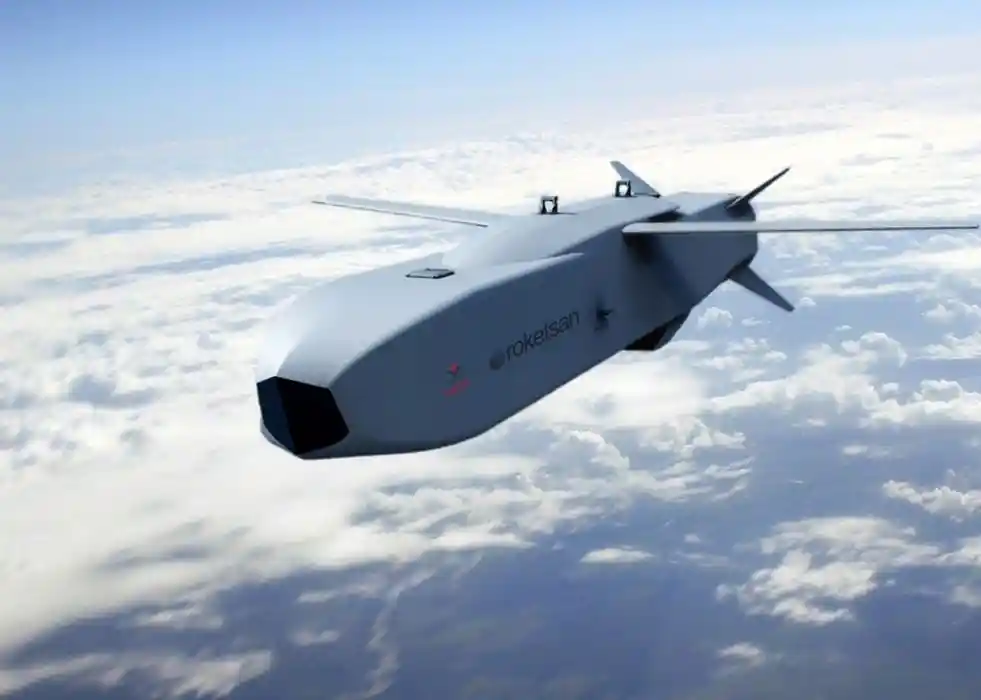
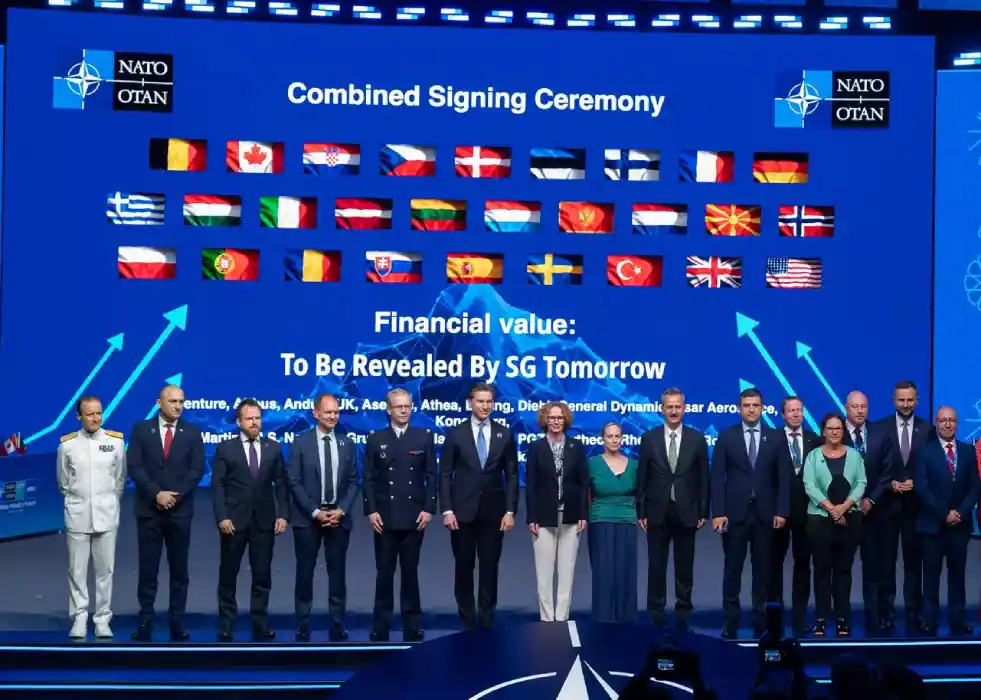
During the signing ceremony for the additional air defence systems’ procurement, signed between SSB, ASELSAN, and ROKETSAN, Turkish Secretary of Defence Industries Haluk Görgün announced SİPER-A and SİPER-4 as the new members of the SİPER line of long-range air defence missiles to counter ballistic missiles.
The recent interceptions of Iranian ballistic missiles over Turkish airspace have shed further light on the urgent need for dedicated ballistic missile defence assets that include missiles and a surveillance network consisting of long-range radars and possibly space-based sensors. SİPER-A and SİPER-4 are most likely intended to address this need as the next phases of the SİPER programme after SİPER-1 and SİPER-2 missiles that are targetted air-breathing and tactical missiles.
Atmospheric Terminal Defence with SİPER-A
According to Görgün’s statement, SİPER-A will work as the bottom layer in the anti-ballistic section of the Steel Dome architecture within the atmosphere, but at higher altitudes.
SİPER-A will feature an AESA RF seeker and "quick reaction" capability for high performance in its intended role of countering ballistic missiles at high altitudes.
It is understood from the description that a missile similar to PAC-3 CRI and PAC-3 MSE (in role) is under development, both of which use a hit-to-kill effect with a small warhead but thruster assist for high agility even at high altitudes up to 40 km and 60 km, respectively. Missiles of this type are capable of intercepting SRBMs and some of the MRBMs (With limited envelope) at the terminal phase.
TÜBİTAK SAGE, partnered with ASELSAN [BIST:ASELS] and ROKETSAN for the SİPER-2 missile, is known to have developed a prototype for manoeuvring thrusters intended for missile use previously. The prototype's tests were shown in 2021.
Upper Layer Coverage with SİPER-4
Haluk Görgün described SİPER-4 as being for "upper layer coverage", which hints at a missile that goes even higher to intercept longer-range ballistic missiles.
Starting from the MRBM regime, the interception begins to move towards exceedingly high altitudes and eventually beyond the Karman Line (100 km).
At that point, an air defence missile in the normal layout is no longer usable under such conditions, which has brought a new layout intended for upper atmosphere and exo-atmospheric interception at extreme speeds.
Anti-ballistic missiles like THAAD and SM-3 (Which was used to shoot down Iranian ballistic missiles over Turkish airspace) employ multi-stage propulsion that is richer in propulsion relative to overall size compared to air defence missiles to provide the needed push for extreme altitude and speed. After the booster(s) are jettisoned, the terminal stage begins with a kill vehicle that has no explosive but only thruster controls and a well-protected IR seeker. The kill vehicle, using thrusters and a sophisticated IR seeker, uses hit-to-kill, relying on the sheer kinetic energy of the impact.
Sensors for Ballistic Missile Defence
SİPER-A and SİPER-4 are not the only pieces that have to be brought into the table to establish a reliable ballistic missile defence capability for the Steel Dome. Due to high altitudes and long ranges involved, sensing and tracking ballistic missiles reliably requires a tight network of long-range radars and space-based sensors.
ASELSAN's recent radars for long range use are pointed in this direction, such as ALP 500-G (SEİRS) fixed early warning radar that will be larger, working regularly, and more potent compared to the ALP 300-G (TEİRS) S-band early warning radar currently in use and upper tier ALP 600-G (YİRAD, High Altitude Radar) early warning radar.
Alongside the radars, space-based sensors dedicated for missile defence are anticipated to join the air defence structure. ASELSAN has also expressed its interest in space-based interception with directed energy or orbiting kinetic kill vehicles as a concept for the longer term in its article on integrated air defence and the future threats.
Author: Kaan Azman
Editor: Özgür Ekşi