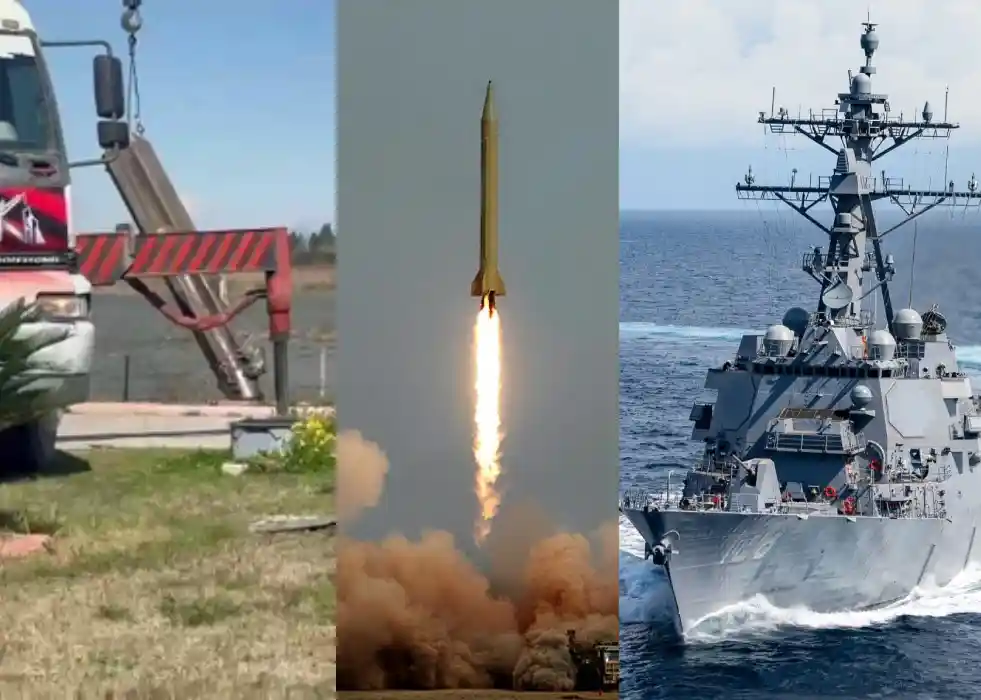
SM-3 anti-ballistic missile intended for midcourse interceptions in space was likely used to intercept the Iranian ballistic missile near Turkish airspace.
Turkish MoD announced the interception of an Iranian ballistic missile detected approaching Turkish airspace, adding that a piece of the interceptor landed in Dörtyol district of Hatay. It is unknown if the missile targeted Turkiye or a US base in vincinity. AFP reported that the missile did not target Turkiye but a base located in Greek Cyprus and possibly veered off-course, citing an ‘unnamed Turkish official’.
Shortly after the MoD statement, a photo of the interceptor section appeared on social media.
Initially, it was believed that a Spanish MIM-104 Patriot long-range air defence system was used to shoot down the missile. However, the photo changes the prediction towards a whole other place.
The rocket motor section, Mk104 solid fuel rocket, is a common one for SM-3 exo-atmospheric interceptor (Second stage booster) and SM-6 long-range air defence missile (Main engine) used onboard Arleigh Burke-class destroyers. The missile used for interception heavily depends on the Iranian ballistic missile’s type and phase. These missiles are mainly used by AEGIS-equipped destroyers of the US Navy, a fact not only leaving out Patriot but also supporting the claim of Greek Cyprus being targeted or more specifically US forces stationed there.
SM-3, as an exo-atmospheric interceptor with a hit-to-kill EKV, is generally used against MRBM to IRBM class missiles in their midcourse phase, where the target is in outer space. Due to its operating principle, SM-3 does not cover atmospheric targets.
On the other hand, SM-6 can perform terminal defence against ballistic missiles with high speed and a large warhead. It is known that SM-6 Block IA was tested against an MRBM target at its terminal phase. However, usage against ballistic missiles limit the range significantly.
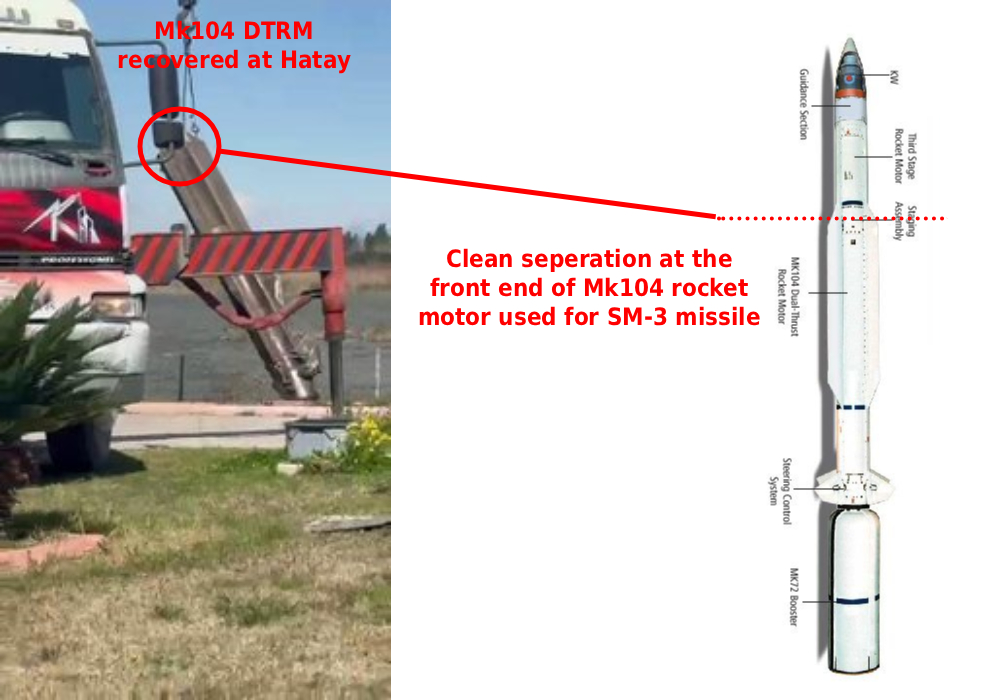
Considering recovered rocket motor’s front end that matches a cleanly separated SM-3 second stage booster and the constraints on SM-6's range for ballistic missile defence, SM-3 fired from a USN AEGIS-equipped ship intercepting the ballistic missile is the more likely possibility.
Author: Kaan Azman
Editor:Özgür Ekşi