Turkiye wants to reach hypersonic technology, Turkish Defence Ministry sources stated. This statement follows Erdoğan’s agreement to increase defence budget.
Recently, Iran hit Tel Aviv with hypersonic missiles, a city protected by Israel’s various anti-ballistic missile systems (Arrow 2, MIM-104 Patriot, David’s Sling...). This opens a new era in defence as it proves two things: Iran, a country under heavy U.S. sanctions, can reach it, so others have no excuse. A hypersonic missile is translated as a vulnerability to the other side, as the defence umbrella fails to protect.
Turkish President Recep Tayyip Erdoğan declared that Turkiye will increase its defence spending to 5% of gross domestic product (GDP) during the next ten years in accordance with NATO’s decision. Turkish MoD sources recently admitted that Turkiye aims to expand a layered air and missile defence network nationwide under the Çelik Kubbe (Steel Dome) concept. The source has not explicitly cited hypersonic threats, but the context makes their inclusion almost certain as it was stated after Iran’s hypersonic missiles hit Israeli cities.
On the other hand, MoD sources stated that Turkiye is investing in hypersonic, ballistic, and cruise missile systems. This means not only defence but also deterrence is being emphasised.
There are various ways to achieve hypersonic missile capabilities, and it is important to know which are closer to Turkiye on technological terms. In fact knowledge on one side gives advantage on other side too.
Hypersonic Boost-Glide Weapons
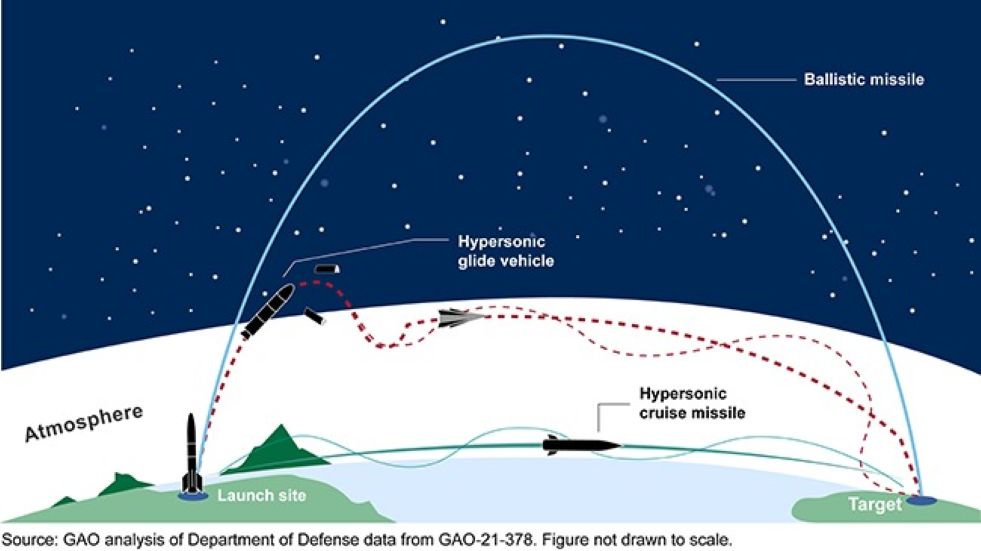
Hypersonic boost-glide weapons operate in a similar fashion to ballistic missiles at launch, but they strictly operate at extreme altitudes instead of performing the midcourse flight outside the atmosphere.
The booster section carries a specially designed hypersonic glider to high altitudes and, of course, extreme speeds. The hypersonic glide vehicle (HGV), upon decoupling, starts performing an unpowered flight at altitudes that are too high for endo-atmospheric and too low for exo-atmospheric anti-ballistic missiles to intercept at midcourse. The speed varies depending on the booster stage, as seen with the Avangard HGV carried by an ICBM reaching Mach 20 and the CHGB HGV carried by a smaller booster reaching Mach 5 to Mach 8.
Cenk ballistic missile’s layout seen from the unveiling suggests the presence of a manoeuvrable re-entry vehicle with its own set of fins (MaRV, Not to be confused with HGVs as their manoeuvres are mostly lateral in descent motion), which can be regarded as a step before HGVs due to manoeuvring capability at hypersonic flights, just to a lesser degree.
Hypersonic Cruise Missiles
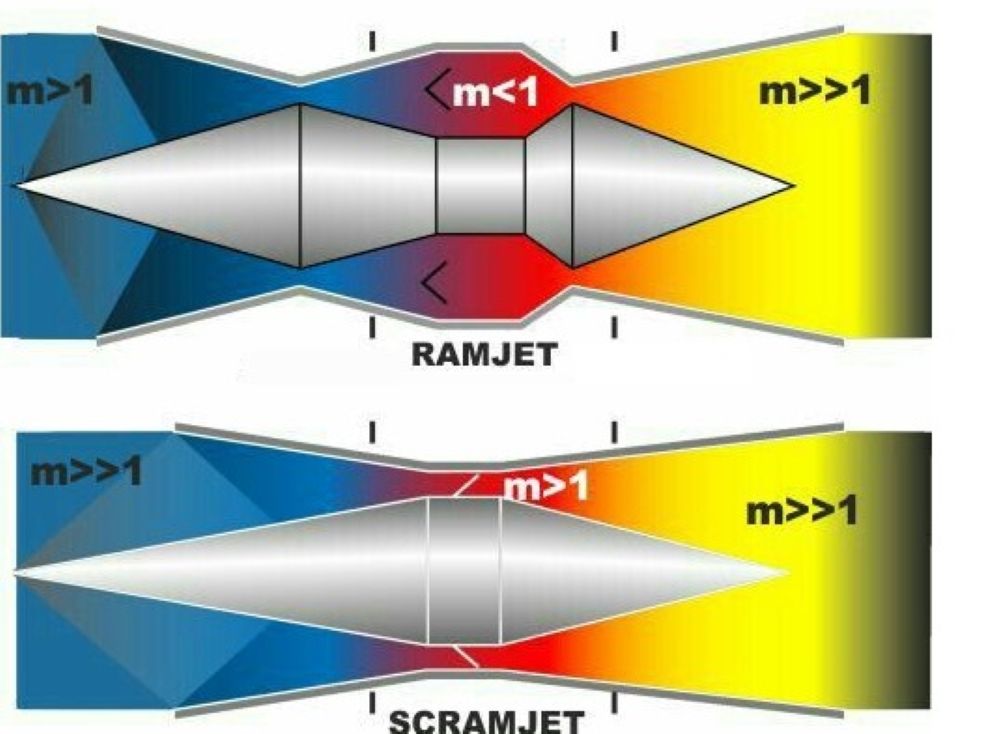
Hypersonic cruise missiles travel at high altitudes with more freedom of manoeuvring compared to HGVs, thanks to scramjets providing a regular source of thrust. These missiles often feature a form with a sharp nose profile to optimise shockwave drag and rely on wave-riding to generate lift (Using the pressure difference caused by shockwaves on an optimised profile). Such cruise missiles are seen as the future of strategic attacks on enemy bases and warships with extensive evasion and manoeuvring capabilities.
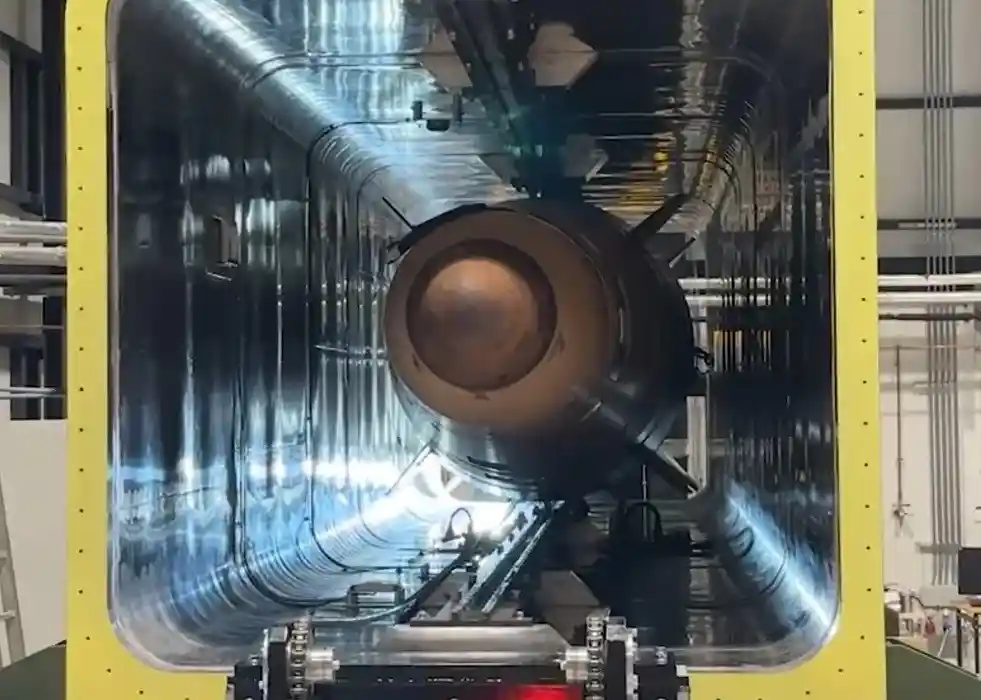
Gökhan ramjet-powered BVRAAM is an important step for Turkiye towards hypersonic cruise missiles as scramjets operate on the same principle as ramjets, with the difference being air at combustion chamber reaching supersonic speeds.
Aeroballistic Missiles
A simple way of achieving hypersonic weapons capability is to fire ballistic missiles from aircraft at high altitudes and maximum speed, as seen with Russia’s Kh-47M2 Kinzhal missile, which is based on the well-known Iskander SRBM.
Turkiye could take a similar course of action by adapting Tayfun SRBM, which reaches hypersonic speeds at midcourse for airborne launch by either modernised F-16s or F-4Es. This option represents the shortest route as it uses an existing weapon with minimal modification. However, such missiles, due to a large frame, are less agile than the other two types and have less flexibility in trajectory.
Authors: Özgür Ekşi and Kaan Azman
Editor:Özgür Ekşi