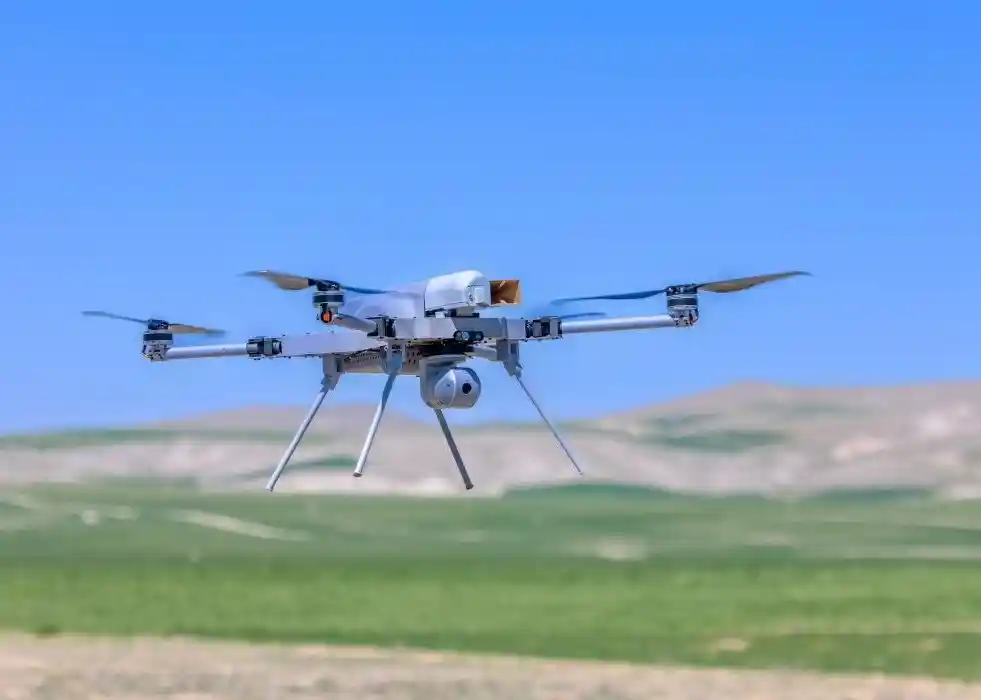
UK Ministry of Defence stated that British soldiers have successfully intercepted drone swarm attacks using directed Radio Frequency as radio wave weapon.
The United Kingdom has successfully tested a new Directed Energy Weapon (DEW) device disabling drone swarms using high-frequency radio waves. The test marks a new milestone in counter-Unmanned Aerial device (C-UAS) technology
Aiming targeting the electrical components of drones with radio waves, the Radiofrequency Directed Energy Weapon (RF DEW) was created collaboratively by the Ministry of Defence (MoD), Defence Equipment and Support (DE&S), and the Defence Science and Technology Laboratory (Dstl). Traditionally successful against single drones, the technology has recently shown its capacity to intercept UAVs concurrently, therefore addressing the rising problem of swarm assaults.

Low Cost and Yet Effective against UAVs
Emitting concentrated radiofrequency radiation, the weapon disturbs or destroys essential drone electronics, hence causing crashes or operational failures. Its per-use cost is almost small, so it is seen as a reasonably priced supplement to current missile-based air defence systems.
Over all test stages, British Army forces monitored, targeted, and killed more than 100 drones; they also destroyed two swarms of drones in different conflicts. The device showed efficacy against threats resistant to traditional electronic jamming and at distances of up to one km.
Particularly in Ukraine, the tests occur against growing employment of drone swarms in contemporary battle zones. UK Defence Intelligence claims Ukraine had over 18,000 drone threats in the last year, hence stressing the need of scalable and reasonably priced defences.
The evolution of the RF DEW fits the UK's more general defence upgrading plan. Starting in fiscal year 2025–26, the MoD plans to set aside at least 10% of its equipment acquisition budget for creative and new technologies under the "Plan for Change." By April 2027, this programme helps the government to grow defence spending to 2.5% of GDP, the biggest continuous rise in UK defence investment since the end of the Cold War.
Conclusion
The UK’s progress in RF-based DEW systems indicates a turning point in how modern armies could address aerial threats in the years to come as drone warfare shapes the battlefield more and more.
Author: Özgür Ekşi