U.S. Ambassador to Türkiye Tom Barrack said Washington expects to “soon” resolve the long-standing dispute over Ankara’s acquisition of Russian S-400 air defence systems, reiterating a message he has delivered consistently since late 2025.
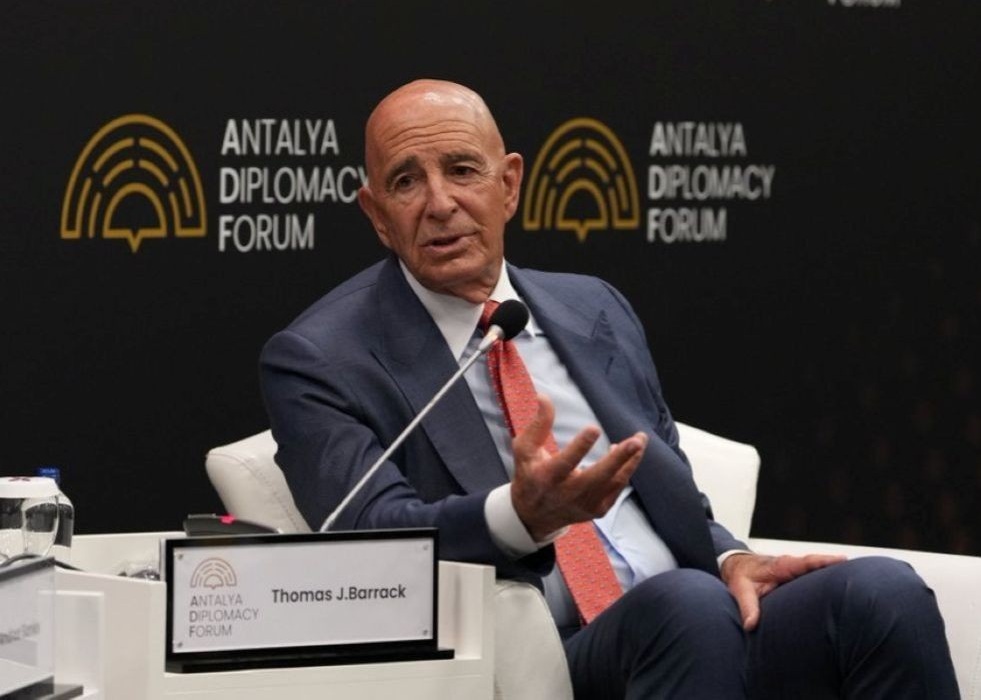
Speaking at the Antalya Diplomacy Forum on April 17, Barrack stated that from the perspective of U.S. leadership, Türkiye’s potential re-entry into the F-35 programme “is fine,” signalling that the issue remains politically negotiable despite existing sanctions.
Türkiye was sanctioned by the United States in 2020 under the Countering America’s Adversaries Through Sanctions Act (CAATSA) following its purchase of the S-400 system, a move that also led to its removal from the F-35 Joint Strike Fighter programme, where it had been both a procurement partner and an industrial contributor.
Barrack’s latest remarks do not represent a shift in official U.S. policy. However, they extend a consistent line of signalling that has evolved in tone over recent months. Shortly after his appointment in December 2025, Barrack emphasised the “positive relationship” between U.S. President Donald Trump and President Recep Tayyip Erdoğan, suggesting that the dispute could be resolved within a four to six month timeframe.
He reiterated similar expectations during engagements at the Doha Forum and in media appearances, including remarks to CNN Türk and posts on social media, indicating that clarity on the S-400 issue could emerge within 2026. Following subsequent technical-level contacts between Washington and Ankara in early 2026, he described the issue as complex — particularly regarding ownership — but maintained that both sides were approaching a resolution.
The progression from a defined “4–6 month” window to the more immediate framing of “soon” suggests continuity in messaging rather than a substantive policy breakthrough. In this sense, the repetition itself carries strategic weight.
The timing of these remarks is also notable. As regional tensions involving Iran continue to shape U.S. strategic priorities, maintaining a workable relationship with Türkiye — a NATO ally with critical geographic positioning — has gained renewed importance. The S-400 dispute, long framed through technical and legal arguments, has also been influenced by broader regional security considerations, including sensitivities surrounding Israel’s qualitative military edge. In the context of ongoing hostilities involving Israel and Iran, the repetition of a “near-term” resolution message carries added weight, suggesting that Washington may be recalibrating how it balances alliance management with regional deterrence dynamics.
While no concrete roadmap has been disclosed, Barrack’s comments indicate that the S-400 issue remains under active political management. The absence of new conditions or technical details suggests that any eventual resolution will likely emerge through broader strategic alignment rather than a standalone technical compromise.
For now, the message from Washington is clear: the dispute is being contained, not resolved — and the F-35 door, while still closed, is no longer being locked.
Author: Özgür Ekşi