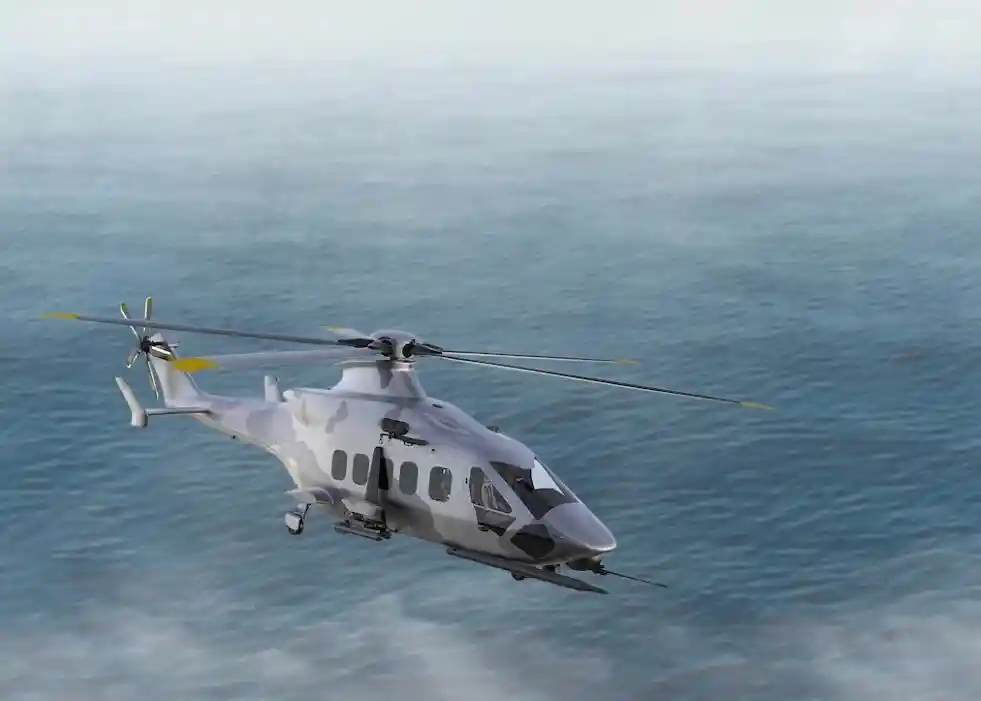
Airbus Helicopters has introduced two separate helicopter concepts in response to NATO’s Next Generation Rotorcraft Capability (NGRC) study. The works signal a dual-track approach that balances technological ambition with operational and industrial realism. The concepts were presented under a NATO Support and Procurement Agency (NSPA) contract awarded in July 2024. Airbus Helicopters was selected to lead the NGRC concept study phase. The proposed platforms are intended to meet alliance requirements for a future medium-lift rotorcraft capable. The goal is replacing helicopters such as the NH90, AW101, H225M, and certain UH-60 Black Hawk variants from the mid-2030s onward.
The first concept represents an evolution of conventional helicopter architecture. This approach focuses on improving speed, range, survivability, and mission effectiveness. It maintains conventional rotorcraft design principles. By building on proven aerodynamic and mechanical foundations, the platform offers lower technical risk, reduced lifecycle costs, and smoother integration into existing NATO force structures.
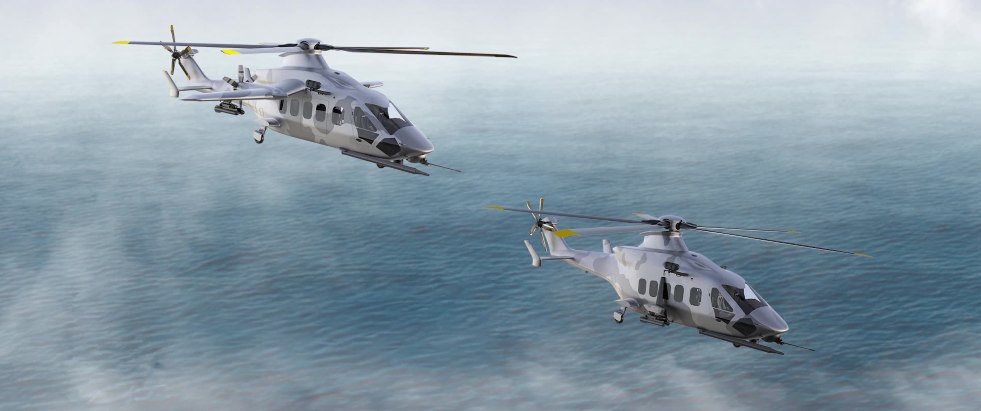
In parallel, Airbus has also proposed a more compound rotorcraft configuration designed to overcome the fundamental speed and range limitations of conventional helicopters. Drawing on the company’s X3 and Racer demonstrator programmes, this configuration incorporates auxiliary propulsion systems, such as lateral propellers, to increase cruise speed, improve climb performance, and extend operational reach. The compound architecture enables significantly higher transit speeds while preserving the vertical lift flexibility essential for troop transport, special forces insertion, and distributed operations in contested environments.
Together, these two concepts represent distinct but complementary doctrinal pathways. The advanced conventional configuration prioritises continuity, affordability, and reduced technical risk, while the compound rotorcraft emphasises expanded performance and long-term operational flexibility. Airbus’ dual-concept response reflects the uncertainty inherent in defining NATO’s next-generation vertical lift requirements, as alliance members seek to balance performance gains with procurement risk, affordability, and long-term sustainability.
The NGRC programme reflects a broader strategic reassessment of rotorcraft survivability and effectiveness. NATO planners have identified the limited speed, range, and survivability of current helicopter fleets as growing operational constraints, particularly in high-intensity warfare scenarios involving contested airspace, dispersed force structures, and extended operational distances.
A similar assessment has already shaped the United States Army’s Future Long Range Assault Aircraft (FLRAA) programme, which aims to replace the UH-60 Black Hawk. The US Army concluded that conventional helicopters no longer provide sufficient speed and operational reach for future combat environments and selected the tiltrotor Bell V-280 Valor to address these limitations. Tiltrotor aircraft offer significantly higher cruise speeds and extended range, enabling faster force projection and reducing exposure to ground-based threats.
Airbus’ NGRC response, however, reflects a different solution philosophy. Rather than committing immediately to a single radical configuration, the company’s dual-track approach allows NATO to evaluate both evolutionary and high-performance pathways. The compound rotorcraft concept offers substantial performance improvements while maintaining closer architectural continuity with conventional helicopters compared to tiltrotor designs, potentially reducing technical complexity, acquisition costs, and operational disruption.
This approach aligns with NATO’s multinational procurement environment, where interoperability, affordability, and industrial participation across multiple member states remain critical programme considerations. By offering both incremental and transformational pathways, Airbus positions its NGRC solution as a flexible framework capable of adapting to evolving operational doctrines and technological priorities.
As NATO advances the NGRC concept phase, the programme is expected to play a central role in defining the alliance’s vertical lift capability for the second half of the 21st century. The outcome will shape how allied forces conduct air assault, special operations, and distributed force projection missions across increasingly contested and geographically dispersed theatres.
Author: Özgür Ekşi