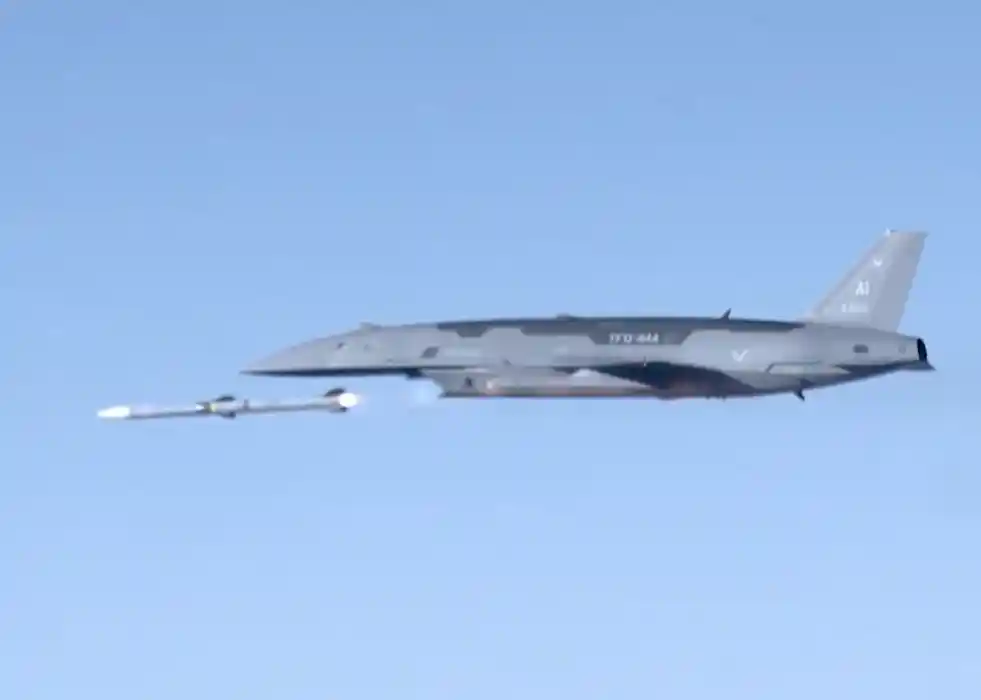
In its last test of 2025, Baykar’s KIZILELMA unmanned fighter flew with ASELSAN’s KARAT IRST to enable enhanced detection and tracking of low RCS targets.
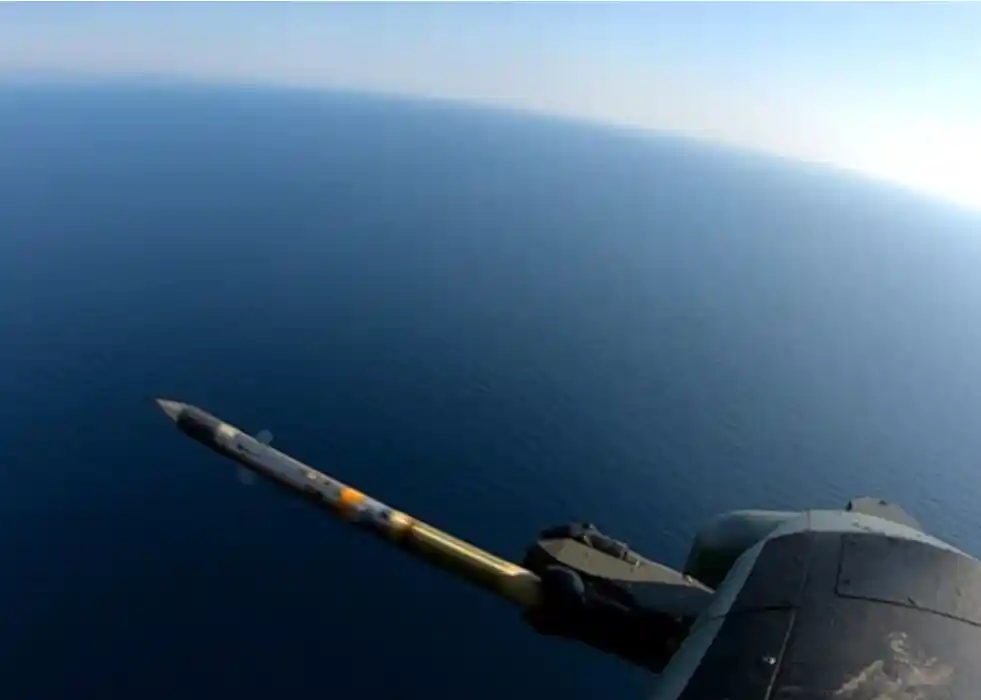
Not long after the tests with MURAD 100-A AESA radar and TOYGUN EOTS, KIZILELMA performed its first test flight with ASELSAN’s KARAT IRST. KARAT IRST tracked an air target, with the footage included in the video shared by Baykar regarding the test.
KIZILELMA was presented with KARAT IRST for the first time during IDEF2025, alongside TOYGUN EOTS.
While both KARAT and TOYGUN operate in infrared wavelengths, their purposes differ significantly. While TOYGUN, with a laser designator and MWIR camera, is focused on air-to-surface detection/targeting, KARAT is dedicated to air-to-air use with the capability to guide missiles.
KARAT’s development was launched initially for the KAAN fighter jet, which will also use the MURAD 600-A AESA radar and TOYGUN EOTS. Later on, KARAT’s platforms were expanded to KIZILELMA and TUSAŞ’s ANKA-III. As KARAT was developed with low observable aircraft in mind, its fairing’s radar cross section is optimised with a sharply angled profile. The IRST fairing might also have some degree of radar-absorbent properties, much like the canopy materials for modern fighter jets. The IR sensor on KARAT provides a resolution of 640x512 px.
Due to the placement of KARAT IRST, it is understood that it might be an alternative sensor for the radar, at least in KIZILELMA’s current configuration. Compared to a radar, IRSTs have their own advantages and disadvantages. Firstly, their passive nature reduces the chances of detection by signal interception. Secondly, due to their operating spectrum, IRSTs are unaffected by RCS and rely on the emitted heat from the target.
Author: Kaan Azman
Editor:Özgür Ekşi