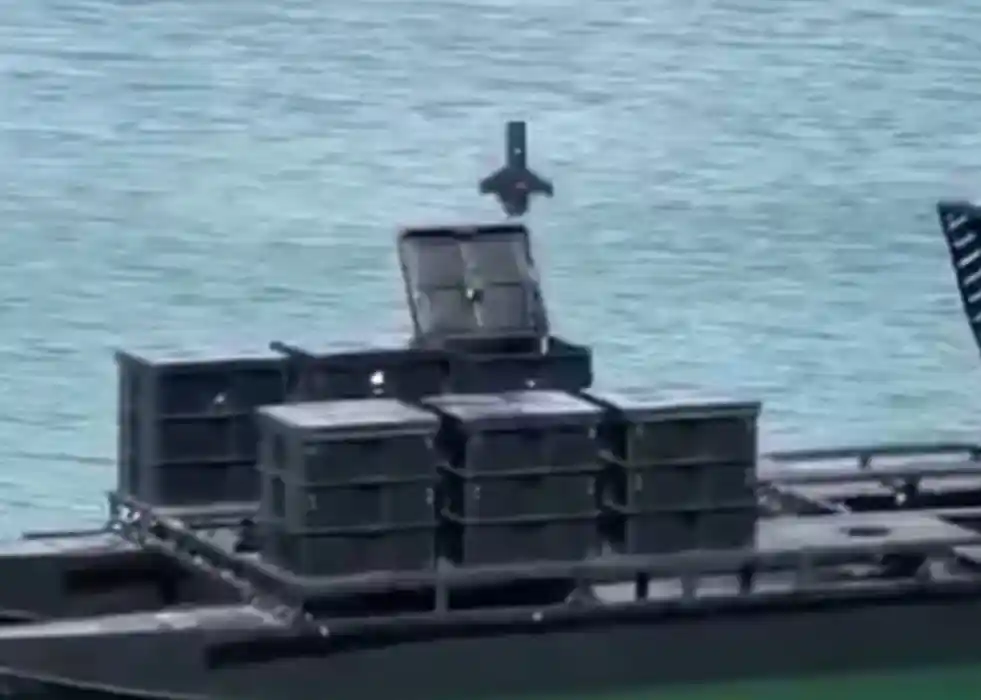
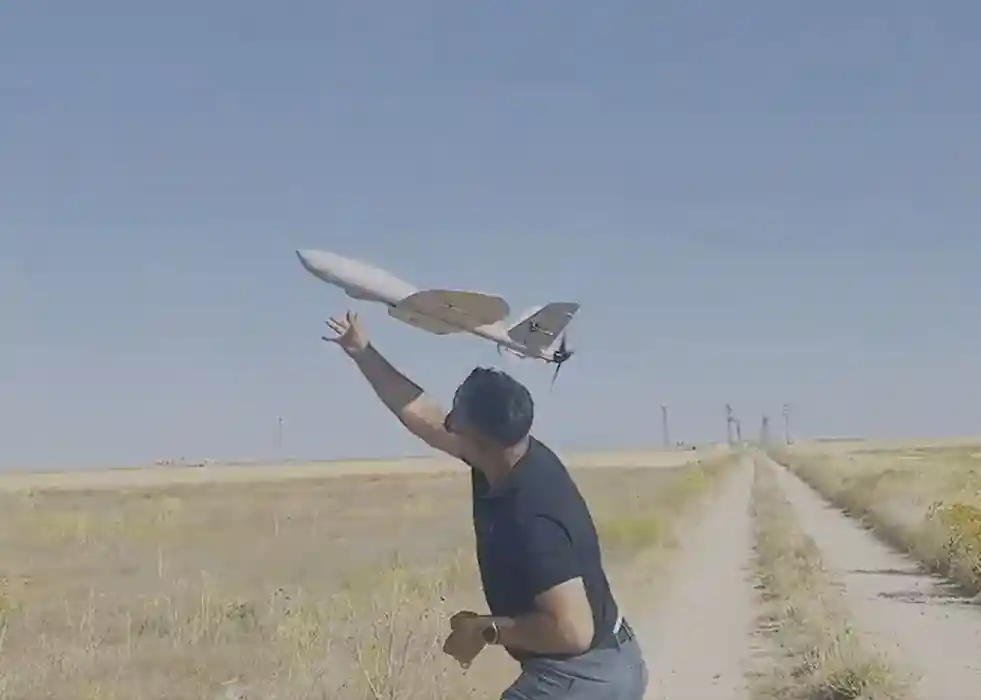
Türkiye’s Ministry of National Defence (MoD) has described the recent Black Sea unmanned aerial vehicle (UAV) incident as a successfully managed airspace security operation, while the main opposition Republican People’s Party (CHP) has called for broader lessons to be drawn in light of evolving asymmetric threats.
According to the MoD, an unidentified UAV approaching Turkish airspace from the Black Sea on 15 December 2025 was detected and monitored under existing rules of engagement and standard operating procedures. The ministry said that the platform's low radar cross section, flight altitude, and speed made it hard to find. This meant that data from different sensors, including as radar, electro-optical systems, electronic warfare assets, and early warning capabilities had to be combined and checked against each other.
After a full evaluation that put airspace safety, civilian aviation, and public safety first, Turkish Air Force F-16 jets tracked the UAV and then neutralised it through a controlled interception after all protocols were followed. The MoD said that the UAV was shot down in the air and broke into small pieces across a vast region, making it harder to retrieve and analyse the technology.
The ministry stressed that all decisions were made with the greatest care to protect inhabited regions and civilian aviation traffic. They also denied suggestions that the event showed deficiencies in Türkiye's air defence system.
It also warned against speculative commentary and disinformation before verification processes are finalised, emphasising that Türkiye’s airspace is protected around the clock through a layered and integrated system. In parallel, the MoD stated that both Russia and Ukraine were reminded of their responsibilities regarding Black Sea security amid the ongoing war.
From the opposition's point of view, CHP Deputy Chairman Yankı Bağcıoğlu, who is in charge of defence policies, was happy to hear that no imminent vulnerabilities had been found. He did, however, say that the strategic focus should now change from dealing with one incident well to becoming ready for more complicated and simultaneous threats in the future.
CHP evaluations showed that unmanned systems are becoming more important as asymmetric instruments. They also urged for a new look at priorities in military planning, operations, and the defence sector. These included speeding up important air and missile defence projects, making it easier to integrate sensors to protect against low-altitude and low-observable threats, improving the timelines for making command-and-control decisions, and putting more money into non-kinetic counter-UAV solutions like electronic warfare and directed-energy systems.
TurDef’s evaluates that Turkiye has lessons to learn from Ukraine. Experience shows that small and slow UAVs are often countered more efficiently by rotary wing and low-speed fixed-wing aircraft rather than high-performance fighters. In this context, Türkiye may consider assigning lower-cost, lower-speed platforms such as the Hürkuş to dedicated UAV interception roles. Such an approach would reduce operational costs, preserve high-value fighter assets for primary missions, and strengthen airspace security against persistent, low-end UAV threats.