Canada’s “Landing Zones” deploys military glider delivery system “Eagle Advanced Payload Delivery System (APDS)” to stealth balloons. APDS is tested.
Landing Zones Canada announced the conclusion of the flying test campaign for its Eagle Advanced Payload Delivery System (APDS). The Eagle is the world’s first APDS to launch from a high-altitude balloon. Military drones, such as the Eagle, can continue operating in extreme situations, whether operational or climatic. It can also function in various setups, from fully autonomous to man-in-the-loop.
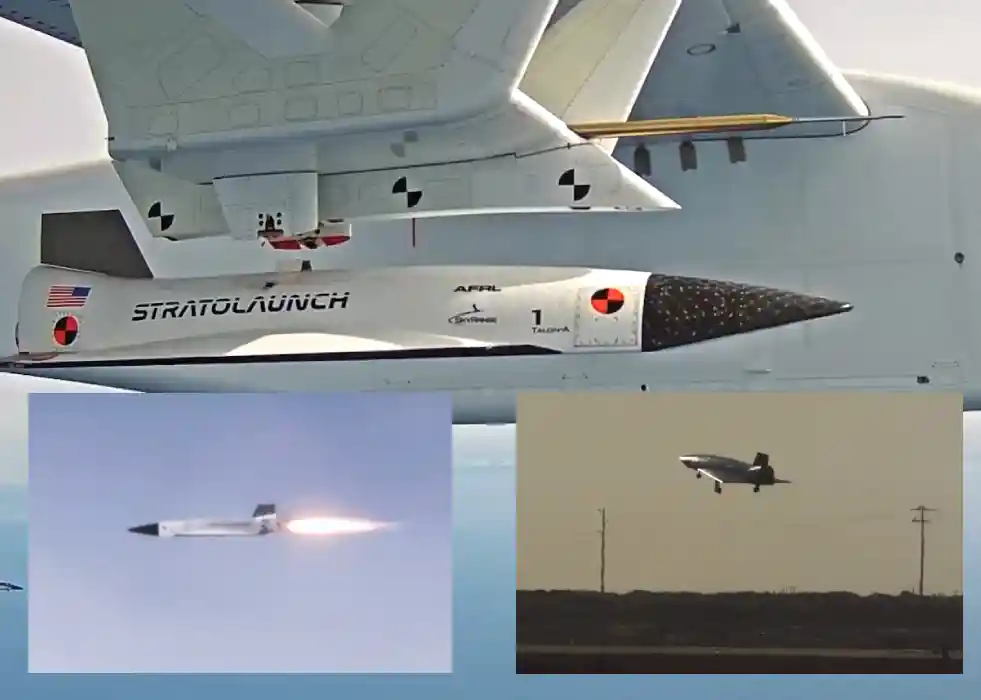
Its wing profile is particularly noteworthy since it enables the drone to switch from supersonic speeds to low loitering speeds. Eagle can fly at tremendous speeds and reach stratospheric altitudes. It has a small radar signature, which helps it survive in hostile skies.
Spence Fraser, the creator and CEO of Landing Zones Canada, stated, “With Eagle, we are setting a new benchmark for military drone technology.” Eagle is a game-changer for military operations worldwide because of its flexible wing profile, which allows it to fly at speeds ranging from supersonic to idling, its flexibility to carry different payloads, and its ability to operate in GNSS-contested settings.
High-Speed and High-Altitude: Eagle is designed to reach stratospheric altitudes and is built for speed and endurance. This ensures that strategic, operational, or tactical effects are delivered with precision hundreds of miles away.
Stealth and Resilience: The Eagle’s design is focused on low observability, which means it has a tiny radar signal. This considerably increases its chances of surviving in hostile skies.