European Union’s interest in Space security is increasing. The High Representative for Foreign Affairs and Security Policy and Commissioner for Defence and Space individually underlined the subject.
The Outer Space Treaty (OST), which is also known as the Treaty on Principles Governing the Activities of States in the Exploration and Use of Outer Space, Including the Moon and Other Celestial Bodies, was adopted in 1967. It continues to be the basis for international space law. It calls for the peaceful use of space, does not recognise claims of sovereignty, prohibits the placement of weapons of mass destruction, names states that are accountable for national space operations, and indicates that countries are liable for damages caused by their space objects to other states. On the other hand, US, Chinese, and Russian activities focus on exploring the moon and using satellites for intelligence gathering or communication interruptions.
European Union (EU) High Representative for Foreign Affairs and Security Policy Kaja Kallas has underscored the need to enhance security measures in space, stating, “When we defend space, we also defend our economies. The security of our satellites is the security of our societies.”
Kallas and the EU Commissioner for Defence and Space, Andrius Kubilius, addressed Brussels’s 17th European Space Conference.
Kallas emphasised that Europe is already facing a “hybrid war,” which poses substantial risks to both terrestrial infrastructure and the space industry against the backdrop of escalating threats from Russia.
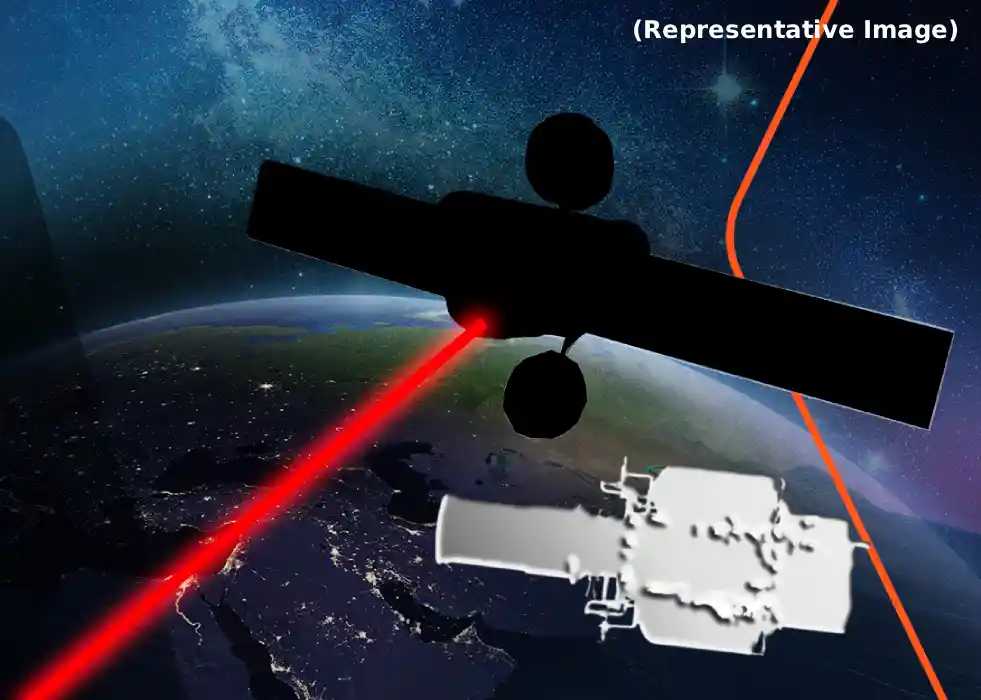
She stressed that Russia’s recent actions, such as testing anti-satellite missiles and launching cyberattacks on space systems, show that protecting Europe’s interests in space is critical.
Kallas urged to create a new European space strategy, stressing that it is in the greatest interest of all EU member states to ensure space security.
“When we defend space, we also defend our economies. The security of our satellites is the security of our societies. Addressing these challenges together is in the interest of all EU nations,” she stated.
She also pointed out that the new strategy should improve intelligence-sharing between EU countries, clearly identify aggressors and potential countermeasures, and encourage closer cooperation within the EU and with allies, especially the United States, to create a unified defence strategy against emerging threats in space.
“There is a real risk that space could turn into a Wild West where only the strongest survive. We cannot allow this to happen,” Kallas warned.
“We Must Increase Defence Spending Because of Putin, Not Trump”
On the other hand, Kubilius emphasised the importance of space in security. He pointed out that, given the increasing threats from Russia and changing geopolitical dynamics, investing urgently in the defence and space industries is essential.
He reiterated the European Union’s commitment to working more closely with the European Space Agency (ESA) and emphasised the necessity of improving Europe’s strategic independence in space.
Kubilius also underlined the necessity of increasing defence spending, suggesting that countries should allocate between 5 per cent and 6 per cent of their Gross Domestic Product (GDP) to defence expenditures.
“I have always advocated for increasing our defence spending. Not because of Trump, but because of Putin,” Kubilius asserted.