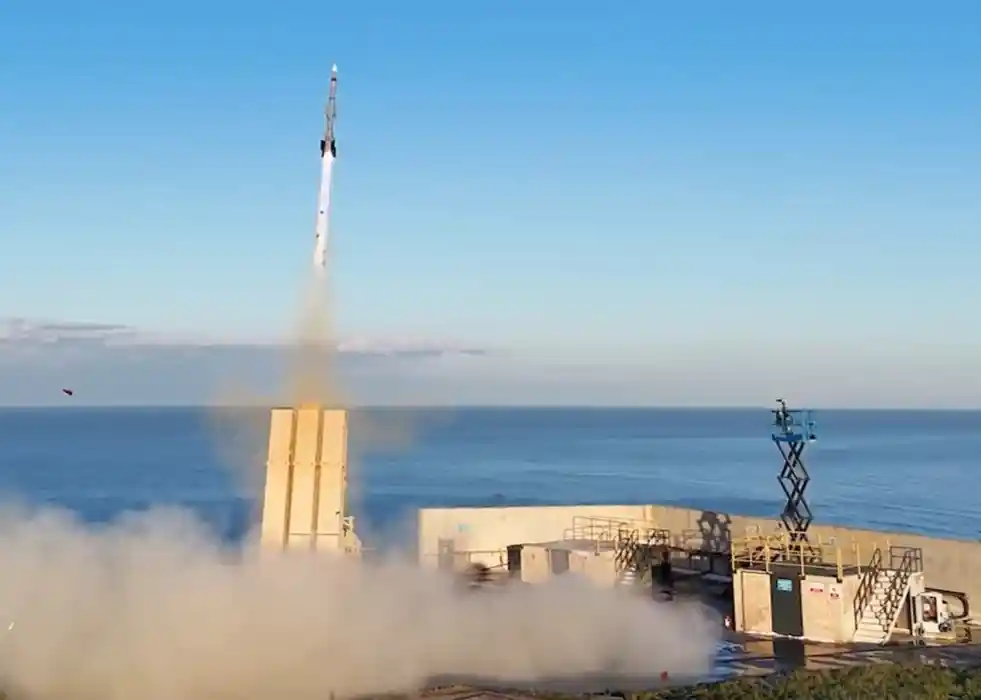
ROKETSAN CEO Murat İkinci stated that the Steel Dome IADS will be expanded to address exo-atmospheric threats and hypersonic missiles with new effectors.
Murat İkinci has outlined an expanded vision for Türkiye’s integrated air and missile defence architecture, stating that future layers of the Steel Dome concept must address threats originating beyond the atmosphere.
Speaking on Habertürk TV, İkinci said that developing air defence systems requires anticipating emerging threat vectors, including those involving ballistic trajectories extending into space. His words hinted that ROKETSAN is investing in technologies capable of countering such threats.
His remarks point to future engagement capabilities against advanced ballistic missiles, including intercontinental-class threats, which travel through exo-atmospheric phases before re-entry. This reflects a long-term effort to extend Türkiye’s defensive envelope beyond traditional air defence layers.
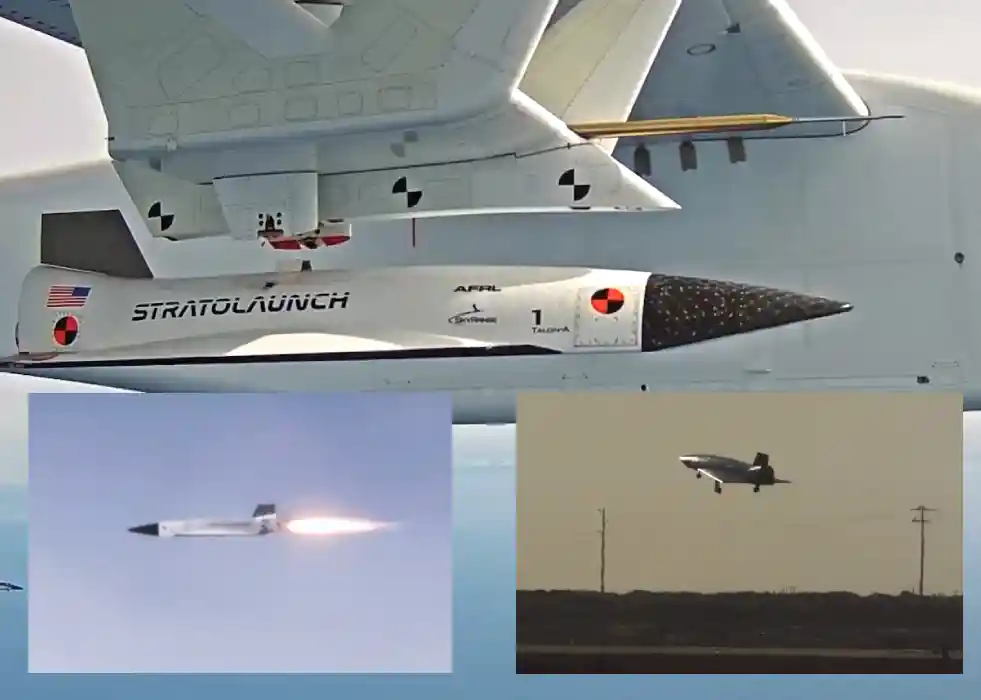
İkinci also mentioned that new interceptors will be incorporated as well to counter hypersonic threats, which operate at the upper layers of the atmosphere. Coupled with speeds well above Mach 5, the altitude limits the interception envelope for conventional long-range air defence missiles.
What Does It Take for an Exo-Atmospheric Interceptor?
Countering ballistic missiles outside the atmosphere requires a whole new realm of design when it comes to the interceptor due to the vacuum conditions and orbital mechanics involved.
Whereas a conventional air defence missile with anti-ballistic missile capability uses aerodynamic controls, an exo-atmospheric missile uses a kill vehicle that can be described as a miniaturised space vehicle to hit the incoming ballistic missile.
Kill vehicles use thrusters to control their speed vector and attitude, and sophisticated IR seekers for target tracking. Due to the extreme speeds involved and the requirement for a direct hit, the control and guidance have to react quickly and accurately at the same time.
Author: Özgür Ekşi & Kaan Azman
Editor: Özgür Ekşi