F-35 Lightning II Joint Program Office teased the F-55, the twin-engine variant of F-35 announced by President Donald Trump, on its Veterans’ Day poster.
F-35 Lightning II JPO shared the image on X and removed the post not long after. The image with two engines clearly seen shows that F-55 is not radically different in terms of overall structure compared to F-35.
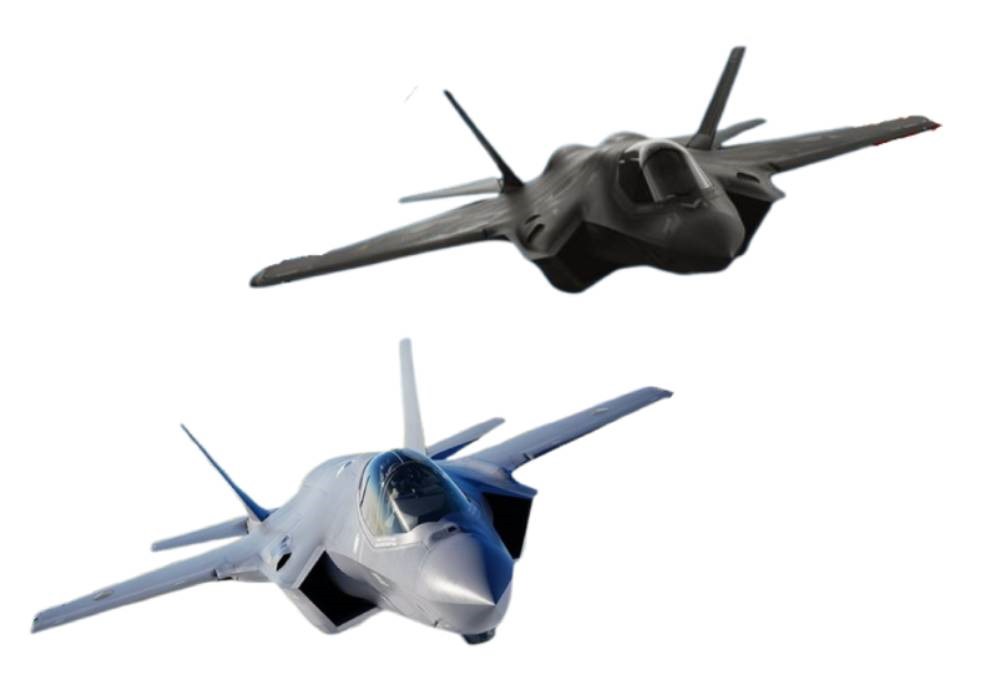
This is in line with TurDef’s previous predictions following Donald Trump’s announcement of F-55. The predictions regarding F-55 are that it is a structure that is mostly common with F-35s, and the use of turbofan engines is weaker than that of F135s individually. It is predicted that two F414-type engines will be used, judging from the image shared by the JPO, which shows that two engines of smaller diameter are present.
While Trump underlined the liability of a single-engine configuration to malfunctions only, the implementation of two engines, considering the recent developments following the introduction of the F-35, means more than just “having one backup engine.”
The Question of the Engine
The first reason for F414 being the most likely option is the fact that two engines of similar size with F135 would require more than fuselage changes, and the aircraft would be something entirely new, which takes more time to develop. However, with adjustments to the midsection spacing, the existing structure can hold two F414 engines. This will result in a slight length increase and possibly more spacing between horizontal stabilisers.
The second reason is the abundance of F414 and its components, which brings a logistical advantage. F414-GE-400, as the latest model in use, is present on the Navy’s F/A-18E/F Super Hornet fighters. Thus, it can be said that the U.S. Navy would be more than willing to support such a decision to obtain carrier-based stealth fighters which have common propulsion components with the existing Super Hornets.
If the current F414-GE-400 is to be used, the output of two engines would match what F135 gives in terms of thrust. However, likely, the long-proposed F414 EPE variant with an afterburner thrust of 26400 lbs will be dusted off to make sure F-55’s powerplant offers more than a single F135 (Which gives 43000 lb thrust with afterburner).
The F-35’s current powerplant has faced a series of issues, including thermal damage over time (which was addressed in a “thermal upgrade”) and power generation for future upgrades.
Power generation is something of importance for the upcoming decades, as upgrades like the new AN/APG-85 AESA radar using GaN technology and more powerful electronic warfare systems will demand a greater power supply. There has been an effort to open room for such upgrades with the TR-3 upgrade. The powerplant’s areas of focus can be expected to include electrical power generation as well.
Lastly, two engines -provided they put out a larger combined dry thrust than F135- can allow for a more sustainable supercruise capability.
All things summed up, F-55 can be taken as an iteration of F-35 that will lag behind F-47 to a lesser degree and address some of the problems with F-35’s current design, with the use of two smaller engines giving more than one large engine can.
Author: Kaan Azman
Editor: Özgür Ekşi