France has formally decided to cancel its participation in the multinational Eurodrone MALE initiative as part of an updated military programming law presented to the Council of Ministers on April 8, 2026. The decision, which reflects a broader pivot toward lower-cost domestic unmanned systems, raises fundamental questions about the system’s long-term relevance and exposes structural and doctrinal fault lines at the heart of one of Europe’s most ambitious unmanned aviation efforts. The timing of this decision is notable, coming as battlefield evidence increasingly challenges the viability of legacy MALE concepts. While the effort continues under German leadership, Paris’ departure underscores a growing disconnect between the platform’s original design assumptions and the realities of contemporary conflict.
Launched in 2015, Eurodrone was conceived as Europe’s answer to the U.S.-built MQ-9 Reaper, aiming to deliver sovereign intelligence, surveillance and reconnaissance (ISR) and strike capabilities. The project brought together Germany, France, Italy and Spain, with Airbus, Dassault Aviation and Leonardo sharing industrial responsibilities under OCCAR management. Beyond military capability, the system was also designed to meet civilian airspace certification requirements, reflecting Europe’s regulatory environment and dual-use ambitions.
From the outset, however, Eurodrone evolved less as a purely operational solution and more as a product of multinational compromise. Each partner nation sought to secure industrial participation and influence over requirements, resulting in a gradual expansion of the platform’s scope. What began as a Reaper-class concept grew into a larger, twin-engine design with increased payload capacity and complex certification demands. This expansion drove up both costs and development timelines, pushing the effort’s expected entry into service to around 2030—nearly 15 years after its inception.
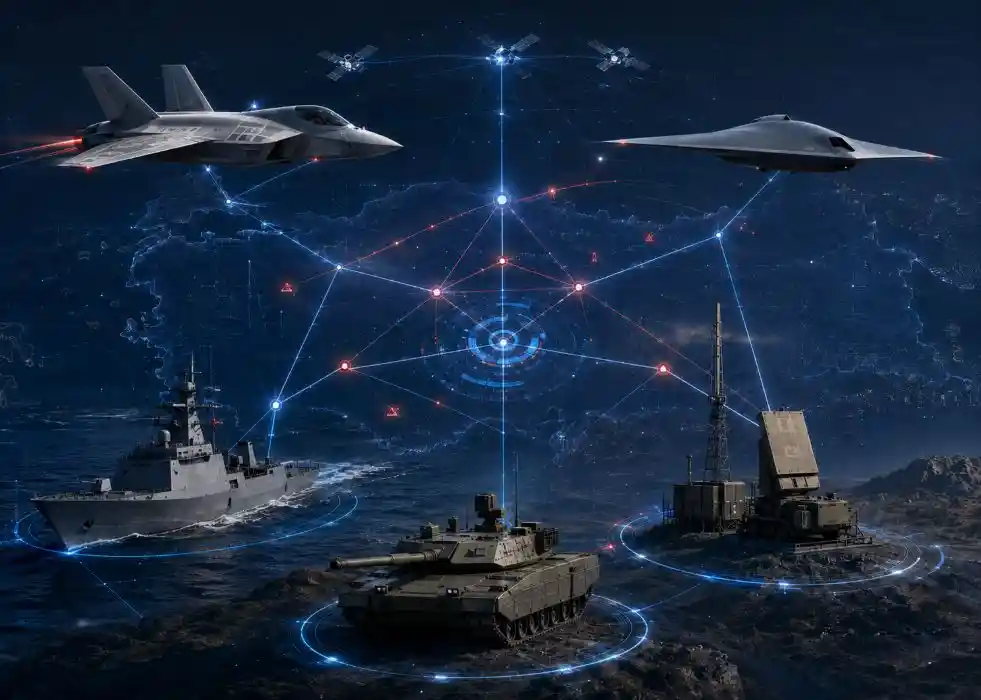
This prolonged timeline has proven particularly problematic in a domain defined by rapid technological change. Over the same period, unmanned systems have undergone a fundamental transformation, shaped by real-world combat experience. The war in Ukraine and conflicts in the Middle East have demonstrated the vulnerability of large, slow-moving MALE platforms in contested environments characterised by electronic warfare, layered air defences and dense sensor networks. Large MALE platforms increasingly risk becoming high-value targets—particularly when operating at relatively low speeds—in such environments where survivability is shaped by electronic warfare and integrated air defence systems.
Instead, recent conflicts have highlighted the growing importance of distributed, cost-effective systems that can operate in large numbers and absorb losses. This shift challenges the core assumptions behind Eurodrone, which was designed for relatively permissive environments where persistent ISR and selective strike could be conducted with limited risk.
France’s withdrawal reflects this changing perspective. It also points to a growing recognition—implicit rather than explicit—that earlier MALE concepts may no longer hold. Rather than continuing to invest in a high-cost, long-cycle platform, Paris appears to be pivoting toward lower-cost, more flexible unmanned solutions developed domestically. Emerging concepts such as Turgis & Gaillard’s Aarok, a lower-cost MALE platform positioned as a sovereign alternative to the MQ-9, alongside lighter and more rapidly deployable solutions like Enbata by Aura Aero and the EyePulse concept developed by Daher and Thales, point to a clear shift in direction. These efforts emphasise faster development cycles, reduced costs and operational adaptability over the high-end, certification-heavy approach that defined Eurodrone. This reflects a shift in philosophy—toward achieving similar operational effects at a fraction of the cost and development time. In effect, this shift suggests that the issue may not have been execution alone, but the relevance of the solution itself.
At the same time, France’s decision also raises questions about the project’s underlying governance model. Eurodrone has long struggled with fragmented decision-making, as multiple nations and industrial partners attempt to balance competing priorities. This dynamic has contributed to requirement inflation, delays and rising costs—issues that are not unique to Eurodrone but are characteristic of many European collaborative defence programmes.
The continuation of the initiative under German leadership may offer an opportunity to address some of these structural challenges—but only if Berlin can impose discipline on requirements, timelines and industrial interests. However, even if governance improves, the question of operational relevance remains unresolved. Proponents of the programme argue that large MALE platforms still offer value in permissive or semi-contested environments, particularly for long-endurance ISR missions and strategic persistence. From this perspective, Eurodrone is less a legacy system than a capability designed for a different operational niche.

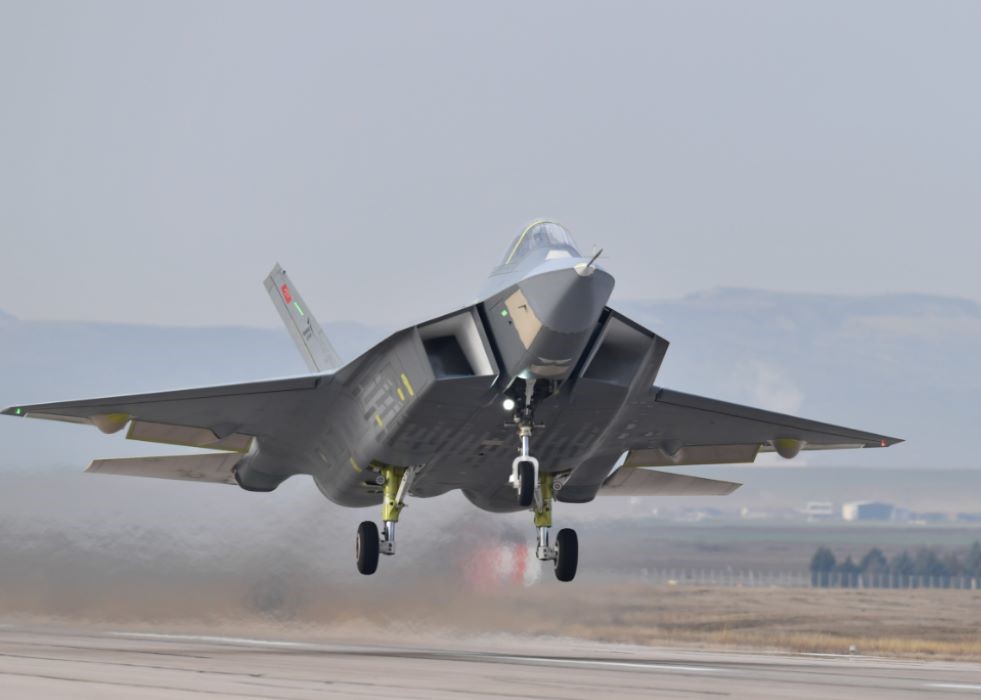
In parallel, alternative approaches to unmanned systems have continued to evolve. Türkiye’s experience provides a contrasting model, where platforms such as Bayraktar TB2 and TUSAŞ ANKA have been developed through iterative processes closely linked to operational use. Rather than pursuing maximum capability in a single platform, these systems emphasise cost efficiency, scalability and integration within a broader ecosystem that includes sensors, munitions and data links. This reflects a system-level approach, where platforms, munitions and operational concepts evolve together—rather than a platform-centric model focused on maximising individual system capability. More recent developments, such as Kızılelma, point toward a further evolution beyond traditional MALE concepts, incorporating higher speed and enhanced survivability for contested environments.
In this context, Eurodrone’s challenges appear less about engineering feasibility and more about strategic alignment. The system is attempting to deliver a sophisticated capability based on assumptions increasingly misaligned with modern conflict. In contrast, lower-cost and more adaptable systems have demonstrated significant operational impact when deployed at scale.
Europe’s difficulty, therefore, is not an inability to develop unmanned systems, but the challenge of doing so within a fragmented industrial and political framework while keeping pace with rapidly changing operational requirements. Eurodrone illustrates how the pursuit of strategic autonomy, when combined with complex multinational structures, can result in prolonged timelines and diluted design focus.
France’s exit does not end the effort, but it reinforces the perception that Eurodrone has struggled to maintain relevance as the operational environment evolves. Whether Germany can recalibrate the initiative and restore momentum remains to be seen. By the time it reaches operational maturity, the battlefield it was designed for may no longer exist.
More broadly, the development underscores a recurring pattern—now increasingly visible across major European defence programmes—where ambition is tempered by structural constraints and projects are pushed forward despite growing divergence in strategic priorities. This would not be the first time France has stepped away from a multinational aerospace initiative in favour of a sovereign path. Paris withdrew from the Eurofighter project in its early stages to pursue the Rafale, prioritising national control over collaborative compromise. While France remained within the A400M transport aircraft programme, it simultaneously maintained and expanded its reliance on U.S.-built C-130s to address operational gaps. Taken together, these cases suggest that France’s approach to defence cooperation in aerospace has often been conditional—supporting multinational frameworks when they align with national priorities, but stepping away when they do not. In this context, Eurodrone now risks following a similar trajectory to FCAS, where France and Germany have long struggled to reconcile industrial interests and operational visions—resulting in flagship efforts that continue to move forward, but with increasingly visible signs of forced and fragile momentum. Eurodrone may ultimately become not just a delayed initiative, but a system misaligned with the very battlefield it was meant to serve.
Author: Özgür Ekşi