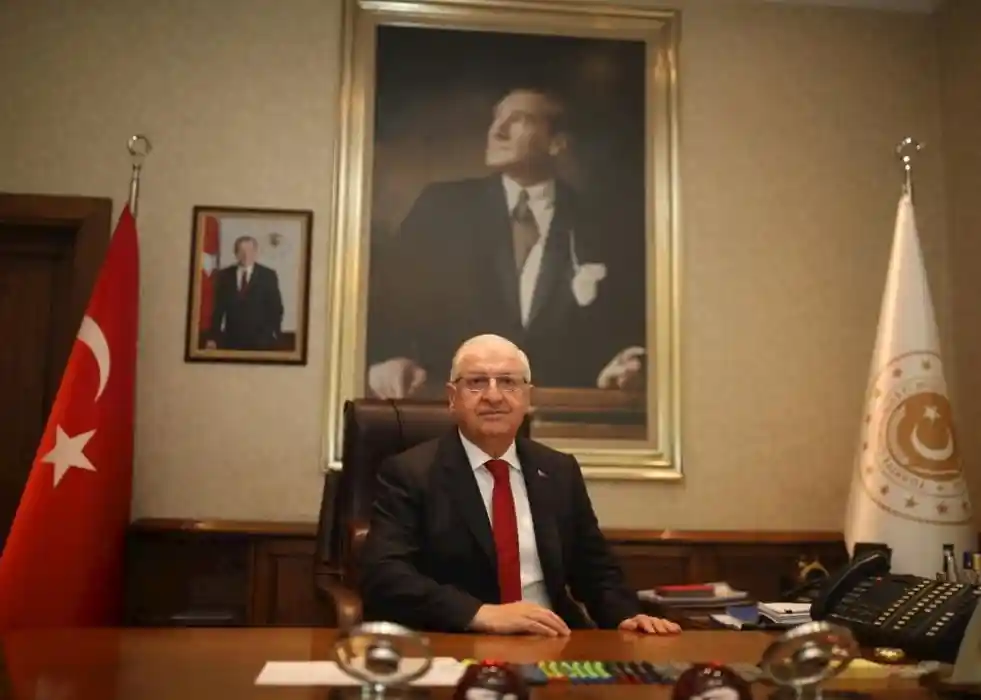
As NATO prepares to convene in Ankara on 7–8 July 2026, Türkiye is seeking to position itself not only as a front-line Ally but also as a contributor to the Alliance’s industrial resilience, regional stability and long-term security planning. In written answers to TurDef’s questions, Minister of National Defence Yaşar Güler addressed NATO’s changing agenda, defence production, lessons from recent wars and Türkiye’s place in Europe’s future security architecture.
Güler’s responses present Türkiye as a state preparing its defence industry, supply chains and next-generation technologies for a more demanding security environment while also framing Ankara as a stabilising actor between NATO’s eastern and southern flanks. The minister links Türkiye’s implementation of the Montreux Convention to efforts to prevent the Russia–Ukraine war from spreading across the Black Sea while keeping maritime trade functioning, and he ties defence industrial capacity, higher spending plans and criticism of the political logic behind Türkiye’s exclusion from parts of the EU’s defence agenda to Ankara’s broader security approach ahead of the summit.
How Türkiye is preparing for NATO’s changing agenda
Developments in the global security environment, particularly the Russia–Ukraine War, have significantly altered NATO’s priorities.
Today, NATO’s agenda is no longer confined to force structures and operational plans alone. Defence production capacity, critical ammunition stockpiles, supply-chain security, technological superiority and industrial resilience have also become integral elements of the Alliance’s deterrence architecture.
As NATO has frequently emphasised in recent years, there is now a need not only for more forces, but also for greater production capacity and logistics systems capable of sustaining those forces in the field over a prolonged period, should the need arise. Türkiye foresaw this transformation well in advance and has shaped its defence industrial ecosystem accordingly.
At present, our country is an Ally capable of developing indigenous systems across the land, naval, air, space and cyber domains, possessing a broad family of munitions and able to provide many of the critical capabilities required by NATO.
In this context, ahead of the Ankara Summit, we have focused our efforts broadly on four main areas.
The first is the expansion of our defence production capacity. In particular, we are expanding production lines in artillery ammunition, guided munitions, air defence systems, missile technologies, unmanned systems and electronic warfare. In this framework, we attach importance to developing a sustainable production infrastructure capable of supporting NATO’s potential need for prolonged, high-intensity operations.
The second is our contribution to the resilience of NATO supply chains. Current global developments and recent crises have demonstrated that reliable and sustainable supply networks in the defence industry also carry strategic importance. Thanks to its strong defence industry, engineering capacity and extensive SME ecosystem, Türkiye is in a position to serve as a reliable Ally within NATO’s supply chains.
The third concerns investments in next-generation technologies. AI-enabled systems, autonomous platforms, electronic warfare, cyber defence and integrated air and missile defence architectures are among our priority areas. The Steel Dome approach is also an important part of this vision.
Finally, we attach great importance to deepening defence industrial cooperation with NATO. Through the defence industry forum that we will organise as part of the Ankara Summit, we aim to contribute to the development of new forms of cooperation designed to increase opportunities for joint production, technology sharing and mutual investment.
In this regard, we see the Ankara Summit as a strategic opportunity to contribute to shaping NATO’s future defence production architecture.
Balancing the eastern and southern flanks
Instability in the Middle East, particularly following the US/Israel–Iran War, is adversely affecting not only the region itself but also global security and the economy.
The pressure created on the global economy by the Iran war is also affecting assistance provided to Ukraine. In such circumstances, we believe NATO should approach these crises in a balanced and measured manner through its 360-degree approach.
Türkiye lies at the very centre of this balance and is positioned as a key actor in the preservation of stability. Since the outbreak of the Russia–Ukraine War, our country has applied the Montreux Convention with great care, preventing the conflict from spreading into the Black Sea and ensuring that international maritime traffic and trade are not disrupted.
Likewise, the measures we have taken together with Romania and Bulgaria under the principle of regional ownership — including the Mine Countermeasures Black Sea Task Group — are contributing to stability.
On the southern flank, our counter-terrorism operations, particularly in northern Syria and northern Iraq, contribute not only to Türkiye’s security but also to Europe’s security.
Alongside the military measures we have taken, our ongoing diplomatic initiatives are also reinforcing our country’s role as a pivotal regional actor.
As one of NATO’s strongest members, Türkiye is ensuring both its own security and that of the Alliance by creating an area of stability in its region, while also making highly significant contributions to regional and global stability.
Türkiye’s contribution to NATO defence production
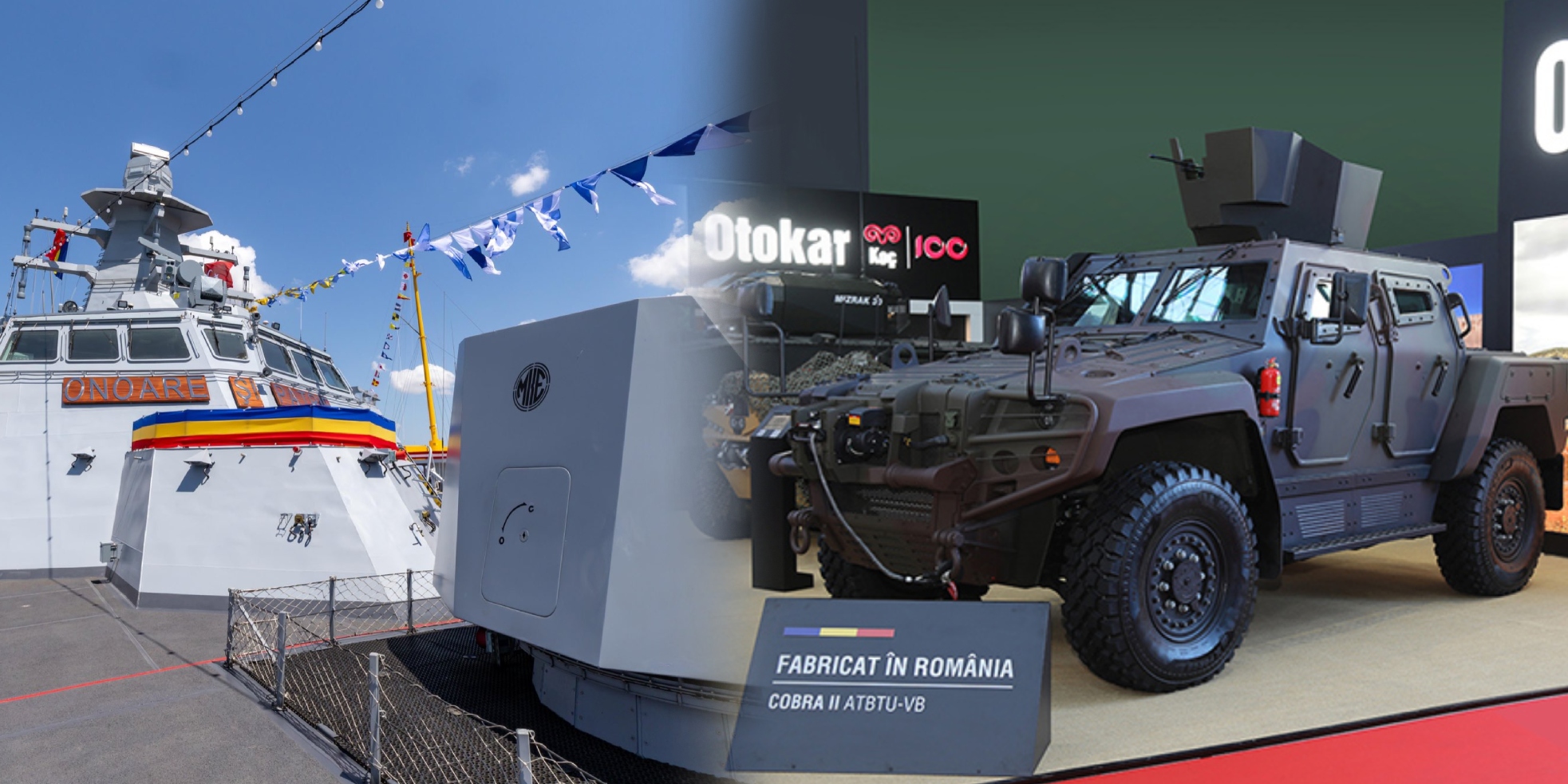
As we have all observed, our defence industry has made significant progress over the past twenty years and has today evolved into a structure capable of designing, developing, producing and exporting systems and platforms. This transformation, and the success we have achieved as a result, strengthens NATO’s collective defence capacity in addition to contributing to our national security.
Alongside the strength of our armed forces, one of Türkiye’s most important contributions to NATO is its ability to deliver rapid and high-volume defence production. Global developments and the conflicts of recent years have clearly demonstrated the importance of a sustainable defence industrial infrastructure. The Turkish defence industry possesses the capacity to respond rapidly to the needs of our Allies and of NATO in the fields of munitions and missile systems, unmanned land and air vehicles, various naval and land platforms, and electronic systems.
In addition, together with our armed forces’ high level of readiness and experience, the expertise we have gained in unmanned systems and our combat-proven systems provide important advantages to our Allies during NATO’s transformation process. All of these capabilities make a significant contribution to NATO’s collective deterrence.
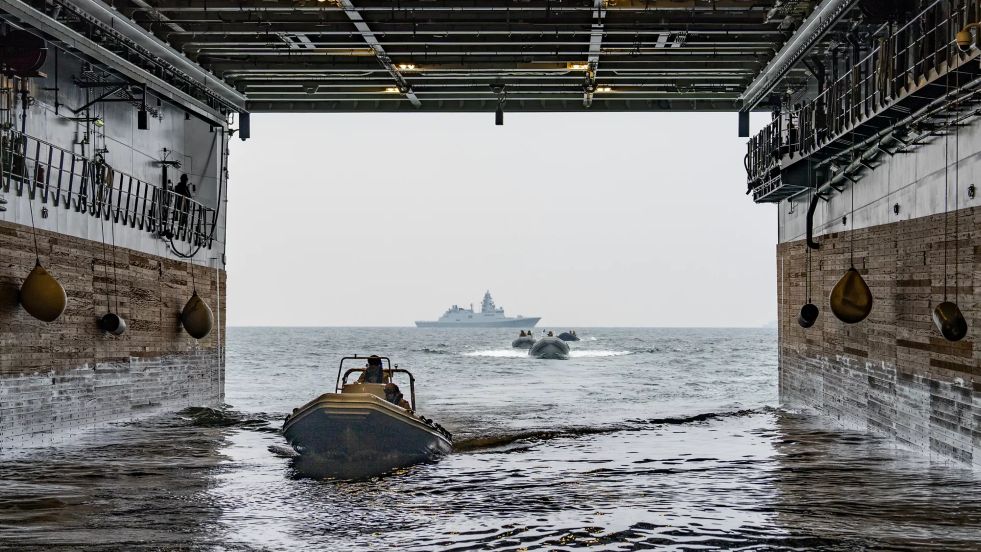
RHIB boats return to TCG Anadolu following naval operations during exercise Steadfast Dart 26. (Photo Credit: NATO)
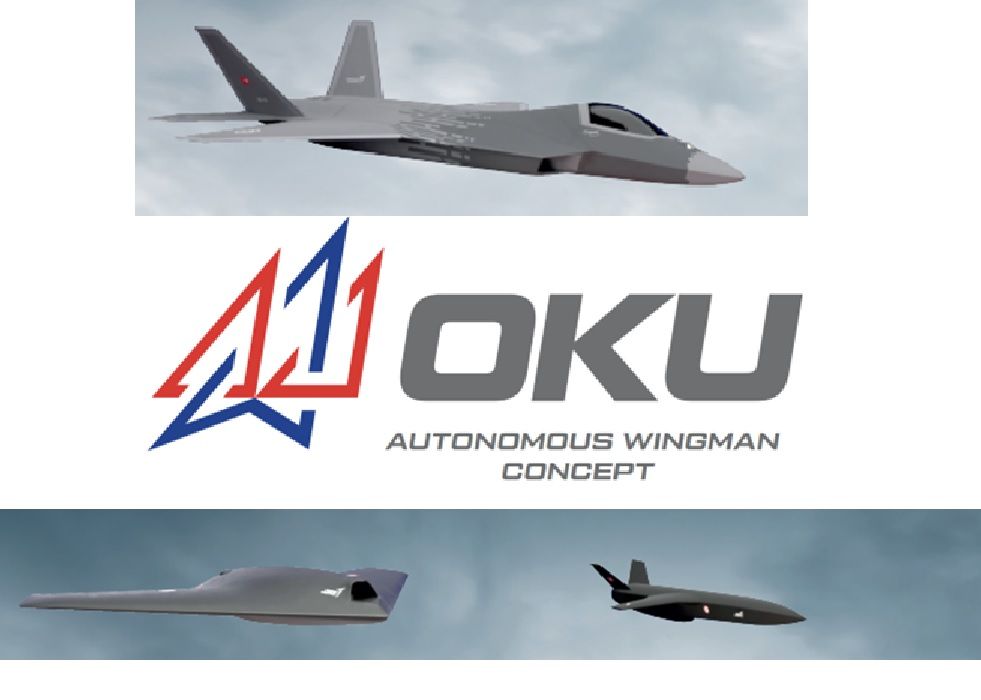
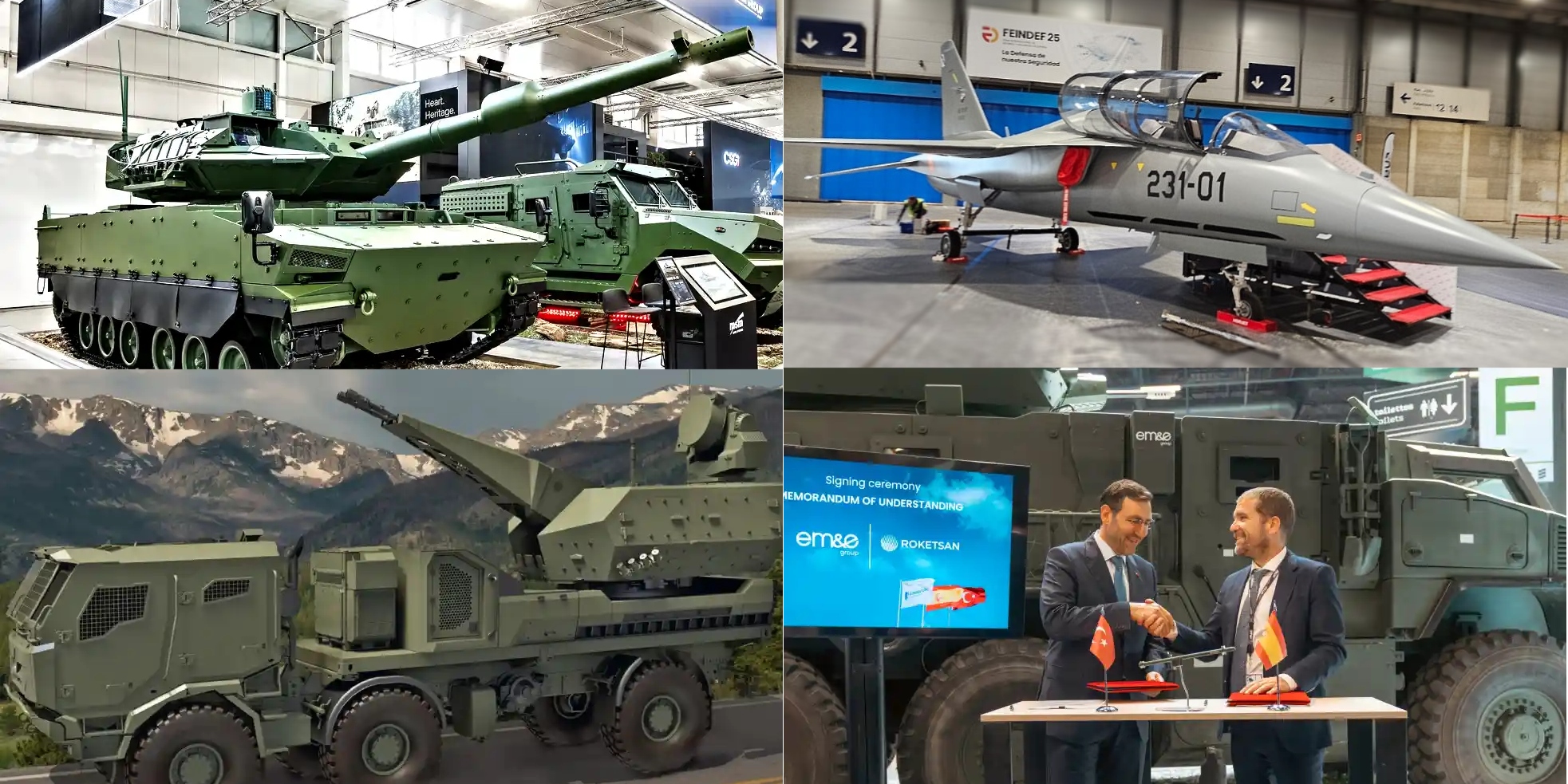
In this context, and in light of the lessons drawn from recent wars and our assessments of the future operating environment, the areas to which we assign investment priority include, foremost, the indigenous and national multi-layered integrated air defence system Steel Dome, as well as hypersonic/ballistic missile systems, the KAAN national combat aircraft, frigate and aircraft carrier projects, tanks and armoured fighting vehicles, unmanned systems — underwater, surface, air and land — and capability projects in the space and cyber domains.
Lessons from recent wars and NATO adaptation
During the operations we launched in northern Syria and northern Iraq from 2016 onwards in order to eliminate the terror corridor to our south, we in the Turkish Armed Forces directly experienced how important unmanned systems, electronic warfare and low-cost precision strike capabilities are, and we continue to modernise the Turkish Armed Forces accordingly.
The Russia–Ukraine War, which began in 2022, has confirmed the changing nature of warfare. On the other hand, the US/Israel–Iran War has also laid bare the importance of a multi-layered air defence system.
The reason NATO remains the most successful alliance in history lies in its ability to adapt to changing circumstances. In this context, NATO is taking the necessary steps to adapt to the new style of operations observed after the Russia–Ukraine War.
The Deterrence and Defence Concept and the 2022 NATO Strategic Concept emerged in response to the changing global security environment. These concepts are transforming both NATO and the armed forces of NATO member states in a manner compatible with the future.
With the 2024 Hague Summit, NATO took a historic decision by setting the defence spending target at 5 per cent. Within the framework of this target, our country will increase defence spending, further develop the multi-layered air defence system Steel Dome, expand production capacity at our shipyards, and further advance its capabilities in hypersonic/ballistic missile systems and autonomous and unmanned systems.
Türkiye and Europe’s future security architecture
Europe’s assumption of greater responsibility for its own security is an inevitable consequence of the current strategic environment. However, we believe that, when discussions are held regarding the future of European security, the role played by Türkiye and the contributions it provides should not be overlooked.
In addition to being one of NATO’s most important military powers, Türkiye has in recent years also made notable progress in defence technologies and production capacity. When its operational experience, developing defence industrial infrastructure and geographical position are taken into account, Türkiye is not merely a partner contributing to European security, but one of the essential pillars of this architecture.
We believe that the limited place afforded to Türkiye in the European Union’s defence initiatives is shaped less by rational considerations than by political approaches.
Yet today’s security environment requires strategic decisions to be shaped not by political preconceptions but by real needs and concrete capabilities. The purpose of defence cooperation should not be to create new divisions, but to strengthen common security capacity.
We believe that if the European Union adopts a holistic approach in its decision-making processes on European security — one based on common security interests rather than the political ambitions of certain member states — the contribution and strategic importance of our country to European security will become more clearly visible.
In conclusion, Türkiye should be regarded not as a temporary or external actor in Europe’s long-term security framework, but as a strategic partner and a structural component.
It is clear that European security cannot be considered independently of NATO, nor NATO’s deterrence independently of Türkiye’s contributions.
Our expectation is that decision-makers in Europe will approach security matters from a broader perspective and develop more inclusive models of cooperation on the basis of common interests. Such an approach would benefit not only Türkiye, but the Euro-Atlantic security architecture as a whole.
Author: Özgür Ekşi
Copyright Notice: This content is an exclusive TurDef interview. Permission is granted to republish excerpts or the entire text, subject to mandatory source attribution and a clickable backlink to the original article.