By Özgür Ekşi
Turkiye is facing a dilemma concerning the possession of Russian-made S-400 Triumf Air Defence Systems. This issue has become the litmus test of bilateral relations between Turkiye and the USA. Legally speaking, Turkiye preferred Russian systems to U.S. Patriot or European Aster Block 30 systems and faced the CAATSA, which resulted in the country’s removal from the F-35 programme.
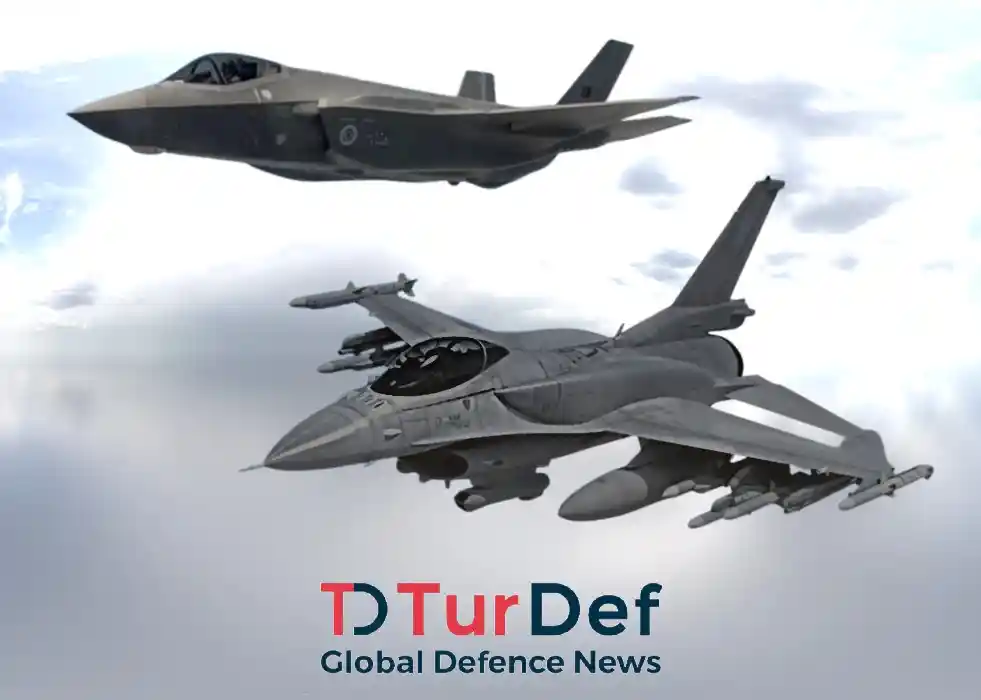
Since Sweden’s accession to NATO, Turkiye and the U.S. have met over defence and defence industry issues. Turkish Air Force’s demand to acquire 40 brand new F-16 Viper and 79 modernisation kits to upgrade existing ones to Block 70 level was approved on January 2024. The $ 23 billion worth of arms request includes acquiring U.S. weapons and missiles.
The most recent discussion emerged from Greek media, stating that the U.S. proposes Turkiye to station S-400s at İncirlik Air Base in Adana, but Turkiye refuses. Turkish media has also confirmed that Turkiye will not accept such demands.
TurDef had the opportunity to learn the U.S. vision first-hand.

Deploying S-400 at İncirlik Air Base (IAB) won’t solve the problem. Sources stated to TurDef: “The threshold is about meeting the legal requirements set out in the NDAA, which would then allow the removal of CAATSA sanctions.”
Speaking on the condition of anonymity, U.S. sources stressed, “The threshold is about meeting the legal requirements outlined in the NDAA before CAATSA sanctions can be removed.”
Recent Greek claims suggesting Turkiye could ease U.S. concerns over the Russian S-400 air defence system by deploying it at Incirlik Air Base have been firmly dismissed by sources. Speaking on the condition of anonymity, U.S. sources stressed, “The threshold is not about easing U.S. concerns. It’s about meeting the demands outlined in the NDAA and CAATSA.”
The sources clarified that the meetings between Turkiye and the U.S. cannot be called negotiations, but they are discussions, and the U.S. can only act according to the relevant law regarding relations with Turkiye.
The critical legal frameworks in question are the National Defense Authorization Act for Fiscal Year 2021 (NDAA 2021) and the Countering America’s Adversaries Through Sanctions Act (CAATSA), specifically Section 1241. According to this section, the U.S. President can lift sanctions only if Congress is presented with certification that Turkiye no longer possesses the S-400 system and that Russian personnel are no longer involved in its operation or maintenance. Furthermore, Turkiye must provide assurances that it will not attempt to reacquire the system in the future.
Hope for a Post-CAATSA Era in Turkish-U.S. Defence Relations
There is optimism regarding the future of Turkish-U.S. defence relations once the CAATSA hurdle is overcome. U.S. sources indicated that if CAATSA sanctions are lifted, opportunities for cooperation could significantly expand. “There is a lot of room for deepening defence sector cooperation because we know that Turkish defence companies have top-quality engineers and they make great products,” a source remarked. They added with a hint of anticipation: “Many Turkish firms make great products. If and when the CAATSA issue is resolved, there would likely be interest in exploring the feasibility of using their products on U.S. platforms.”

From Russian Fighters to Eurofighter: Turkiye’s Shifting Focus
In the past, Turkiye expressed interest in Russian fighter jets. However, when such a move’s political consequences and financial burdens became evident, the focus shifted to the Eurofighter Typhoon, a Western alternative. The United Kingdom strongly supports this acquisition; however, it became evident that Eurofighter programme partner Germany opposes the deal behind closed doors.
While the U.S. has consistently highlighted the incompatibility of Russian fighters with NATO systems, no such concerns were voiced regarding the Eurofighter. When TurDef mentioned the acquisition of Boeing’s F-15 C Eagle or F-15 EX Eagle II as alternative solutions, U.S. sources were open to the idea of Turkiye acquiring such jets, stating, “We would love to sell our jets to Turkiye.” However, they underlined that no meetings regarding such a request have occurred.

AIM-120 AMRAAM, AESA Radars, and a $23 Billion Defence Deal
As part of the F-16 modernisation program, Turkiye is in the process of negotiating a substantial defence deal with the U.S., worth a whopping $23 billion in total. When asked about the allegations that the U.S. is reluctant to sell the AIM-120 C-8 AMRAAM and AN/APG-83 AESA SABR that the Turkish Air Force wants to acquire, sources did not admit or deny the claims but said it takes a long time to finalise negotiations. The negotiations, originally expected to conclude by June, are still ongoing.
Beyond AMRAAM and AESA radar, Turkiye’s defence shopping list includes 864 GBU-39/B Small Diameter Bombs (SDB-1), 96 AGM-88B High-Speed Anti-Radiation Missiles (HARM), 96 AGM-88E Advanced Anti-Radiation Guided Missiles (AARGM), 401 AIM-9X Block II Sidewinder missiles, and various Joint Direct Attack Munition (JDAM) kits.
Turkiye may want to integrate Turkish indigenous missiles or ammunition into upgraded or brand-new F-16 Vipers. U.S. sources refrain from commenting on that topic.

The F-35 Program: Turkiye’s Parked Jets and a Possible Return
When the U.S. imposed an embargo on Pakistan, it kept the F-16 aircraft in the hangar and collected parking and maintenance fees. Despite Turkiye’s removal from the F-35 Joint Strike Fighter program, it still has six F-35 jets stored in the U.S. Air Force’s Air Bases.
When asked about the costs of storing and maintaining these jets, the U.S. sources were tight-lipped, refraining from commenting on the exact financial burden Turkiye has been charged so far. However, they did confirm that the jets are being maintained regularly. “The total amount will be known when both sides agree,” one source added.
Could Turkiye return to the F-35 program? The possibility isn’t off the table. The U.S. acknowledges Turkiye’s previous role as an essential industrial partner in the program, from producing central fuselages to being even a sole component supplier. With growing global demand for the F-35, there could be room for renewed Turkish involvement. “U.S. industry knows the high quality of Turkish products and the advantages they bring,” the source noted. However, they cautioned there has been no change in Washington’s policy on Turkiye’s participation in the F-35 program, and the requirements are well known.

F-16 Modernisation: Sweden’s NATO Accession Unlocks Progress
The long-awaited 40 brand new and 79 F-16 Viper modernisation kits and weapon acquisition program has not been finalised. The deal was expected to be signed by June, but it was not signed until the end of September. When asked about current negotiations concerning the production of F-16 and modernisation kits, The sources acknowledged Turkish competence over the production but stated that Lockheed Martin wants to have some production backlog on its Louisville facility to keep it running.
U.S. sources reiterated that the effort is not about where the jets are produced—whether in Turkiye or the U.S.—but ensuring that delivery timelines align. “Regardless of how many F-16 aircraft are ultimately produced in Turkiye or the U.S., the complicated nature of the supply chain means the components that will constitute the aircraft will be produced in the same time frame, and in the end, the aircraft delivery time will not be very different,” the source concluded.
TurDef Exclusive: This news is exclusive to TurDef. Republishing or sharing is permitted only with proper attribution to TurDef. Any unauthorised use will be subject to legal action.