Spanish defence firm Indra announced the indigenous VALERO modular remote carrier prior to the start of FEINDEF’25 defence exhibition being organised in Spain.
Spain’s indigenously developed remote carrier will be displayed in FEINDEF’25, named VALERO by the manufacturer Indra. Indra also stated that the development of VALERO was launched in 2023 as an indigenous project.
VALERO, judging by the firm’s description, is a “multi-purpose air vehicle” that can be used for “deception and saturation”.
VALERO’s size and looks seem to match an average air-launched cruise missile, but as stated before, its functionality is not limited to being a missile.
In addition to aircraft, VALERO is being developed to be compatible with ground launch. As a network-centric system, all VALEROs will be coordinated by the centre of command in operations.
While not strictly a cruise missile, VALERO can still be described as Spain’s first indigenously cruise missile due to its provision and operational definition.
Development of Remote Carriers
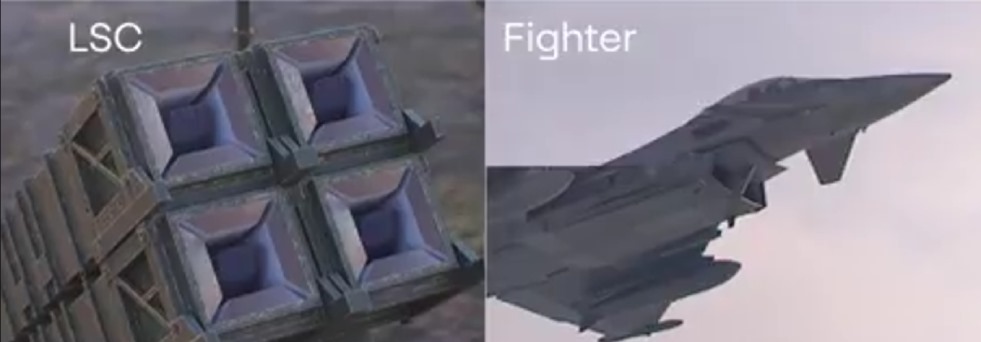
The term “remote carrier” emerged with the ongoing FCAS programme, which includes the development of remote carriers in different sizes to support the next-generation fighter in development.
Multiple countries are working on such systems, which can be described as semi-recoverable UAVS that can perform a variety of functions like stand-in jamming, ISR, remote sensing, and acting as cruise missiles to support manned aircraft.
The first examples were shown by Airbus and MBDA, ranging from platforms identical to small bombs to ones one-third of a fighter jet in size.
MBDA is actively working on the RCM2 remote carrier as a multi-platform system for use as a stand-in jammer, decoy, and cruise missile, depending on requirements.
Diehl also revealed its concept during ILA2025, a weapons carrier to hold the future FCAAM missile or a half-length variant of it.
Turkiye, while not a part of the FCAS programme, is developing the Süper Şimşek UAV, which can be likened to the remote carriers with a similar goal. The UAV will be a central component of the OKU MUM-T system being developed for the KAAN fighter jet.
ROK’s KAI is also known to be developing a remote carrier as a part of its own future air combat system, which will include KF-21 fighter, FA-50 LCA, and two types of UCAVs.
Author: Kaan Azman
Editor: Özgür Ekşi