Iran conducted its second successful test to reach space, claiming the test was designed for research, while West is concerned about ballistic experiments.
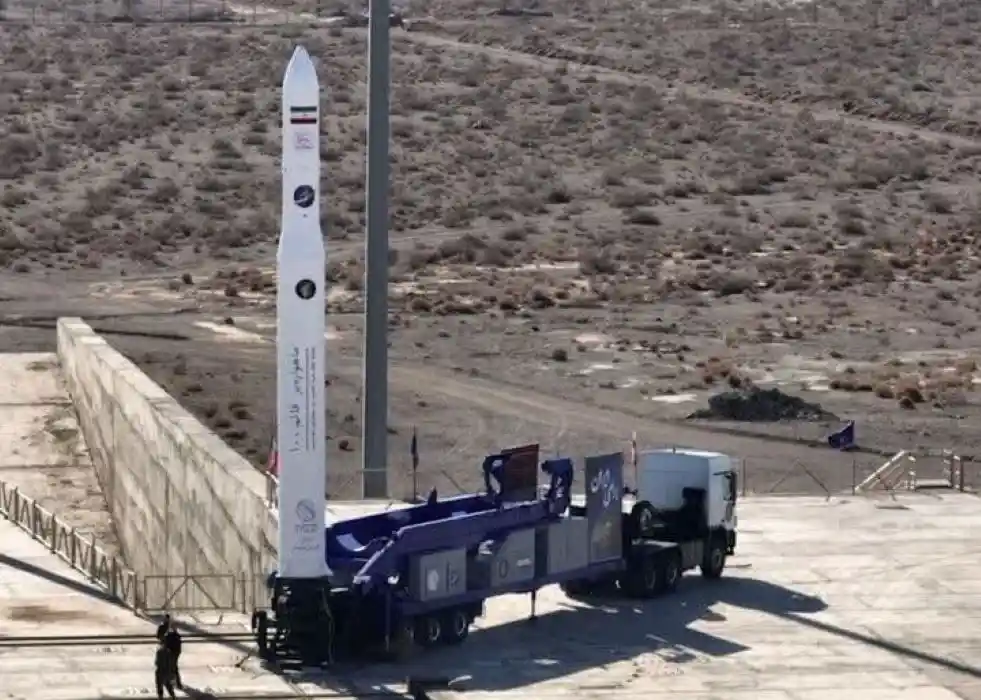
Iran successfully launched the Chamran-1 research satellite into orbit. The satellite reached space using the Islamic Revolutionary Guard Corps Aerospace Force’s (IRGC) “Qaem-100” satellite carrier powered by a solid-fuel engine.
The microsatellite, weighing 60 kilogrammes, entered a 550-kilometer low-orbit. Iranian Electronics Industries (SAIran) designed and produced the satellite.

Iran received its first signal from the satellite. In January, Iranian media announced that the Sorayya (Sky) satellite was launched into a 750 km orbit, the country’s highest.
According to the U.S. military, the long-range ballistic technology used to launch satellites could also be used to launch long-range weapons. Tehran disputes that its satellite efforts are a cover for ballistic missile research and claims that it has never sought nuclear weapons development, despite the United States’ frequent claims.
Reaching outer space extends ballistic missile ranges to a minimum of 2500 km. Iran, which has one of the most extensive missile programs in the Middle East, failed various times to launch satellites due to technical difficulties.