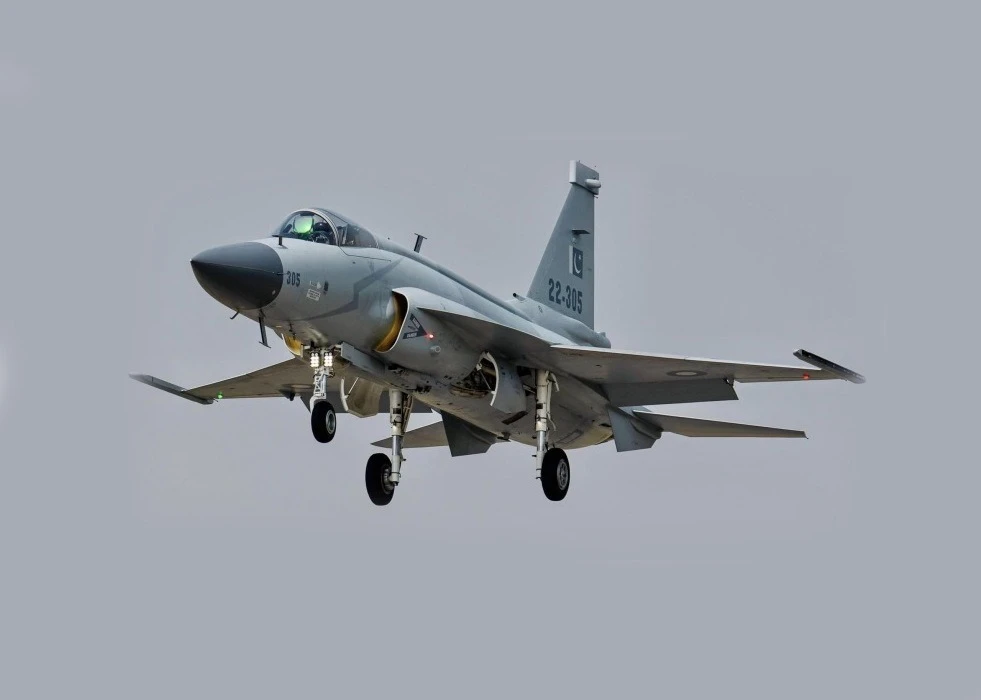
An official statement has been made from Pakistan regarding Iraq's interest in JF-17 Thunder fighters and Super Mushshak trainers. International Defence Analysis reported that the following statement has been made from Pakistan after the visit of the Iraqi delegation: "The delegation expressed admiration for PAF's indigenization initiatives and expressed a strong interest in acquiring JF-17 Thunder fighter jets, as well as an additional 12 Super Mushshak Trainer aircraft, along with maintenance and lifecycle support from PAF, emphasizing the potential for enhanced collaboration."
Iraq is also interested in the Korean FA-50 LCA and uses the trainer variant T-50IQ. Compared to JF-17, FA-50 has less range and weapons capacity, but commonality with the existing T-50IQs is nevertheless an advantage over JF-17 with Pakistani and Chinese equipment.
While both aircraft can use a variety of air-to-surface and air-to-air weaponry, JF-17 has a slight advantage in weapons diversity with provision for cruise missiles and KLJ-7A AESA radar coming with Block III configuration allowing for long-range engagements.
Iraq's highly possible budget constraints are likely to push towards a cheaper solution, and from a political standpoint, it is the one less likely to experience embargoes. China has already entered the Iraqi Armed Forces in various branches, including armoured vehicles and UAVs.
JF-17 being a Pakistani Chinese fighter and the Western countries' trigger-happy approaches when it comes to sanctioning weapons contribute to the chances of Iraq opting for JF-17. The latter is important as FA-50's weapon systems are from either one of the U.S. or the EU. However, weapon systems acquired from China or those with Chinese involvement have their own dangers despite the prices being too low to reject.
The primary concerns include quality and technical support while risky means of financing (Such as taking over ports in place of unpaid loans) can be put on the table, mostly observed in sales to African countries.