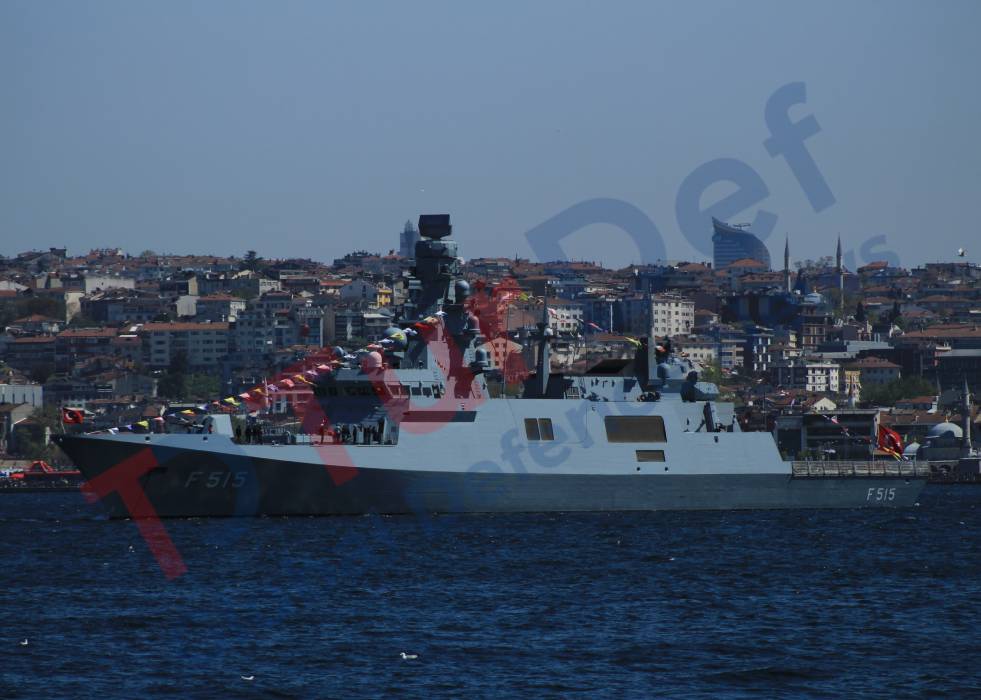
Debate surrounding the potential export of two Istif-class vessels has revealed far more than a defence procurement issue. The matter is not simply about the sale of two ships; it concerns how that sale was explained to the Turkish public. The same question arises: in what context was it presented, and which issues were left unanswered? The episode once again shows that in defence policy, communication can be as decisive as strategy.
This situation is not unique to Türkiye. Similar reactions were seen in France and Italy. Looking at the lessons learned, the debate is better approached not by asking “why did this happen here,” but “how did others manage similar moments?”
The issue gained traction in Türkiye because the ships had already been named. In Turkish culture, a name carries meaning. This is why a name is traditionally given only after a baby is born. Once named, it is no longer “a plan,” but “one of ours.” The emotional response largely stems from this point.
The second reason is structural. Over the past twenty years, Türkiye has invested heavily in its defence industry. These investments produced not only military capability but also a strong political and social narrative. Defence projects became symbols of confidence. As a result, any development perceived as reduction or retreat in this field quickly becomes politicised. The Istif debate grew within that environment.
There are two recent examples of similar export experiences. France sold the FREMM frigates Normandie and Lorraine to Egypt before commissioning them in 2015. The ships were already named and included in naval planning. This sale triggered debate. It is worth remembering that France had previously followed a similar policy. That decision can be seen as part of France’s long-standing export-oriented defence approach. In programmes such as the Magister, Alouette II/III and Mirage III, foreign customers were often given priority delivery positions. This approach helped France maintain competitiveness in global markets.
The United States, by contrast, followed a model of retaining its newest generation systems for domestic use before exporting them. France’s geopolitical position during the Cold War — not being a direct front-line state — allowed more flexibility.
When the ship sale took place, the reaction in Paris closely resembled the debate in Türkiye:
— “The navy’s right was sold.”
— “We needed them first.”
— “Can a named ship be sold?”
The issue reached the French National Assembly. France managed the situation through two clear steps: it declared that replacements would be built and it accelerated the construction timeline.
There are other reasons why the controversy did not evolve into a broader identity crisis in France. It is partly rooted in French military culture. French national memory is centred largely on land warfare — Verdun and Austerlitz remain symbolic anchors. The navy is strategically vital, but it is not considered the core of national myth-making. As a result, the discussion quickly shifted back to capacity and scheduling rather than symbolism.
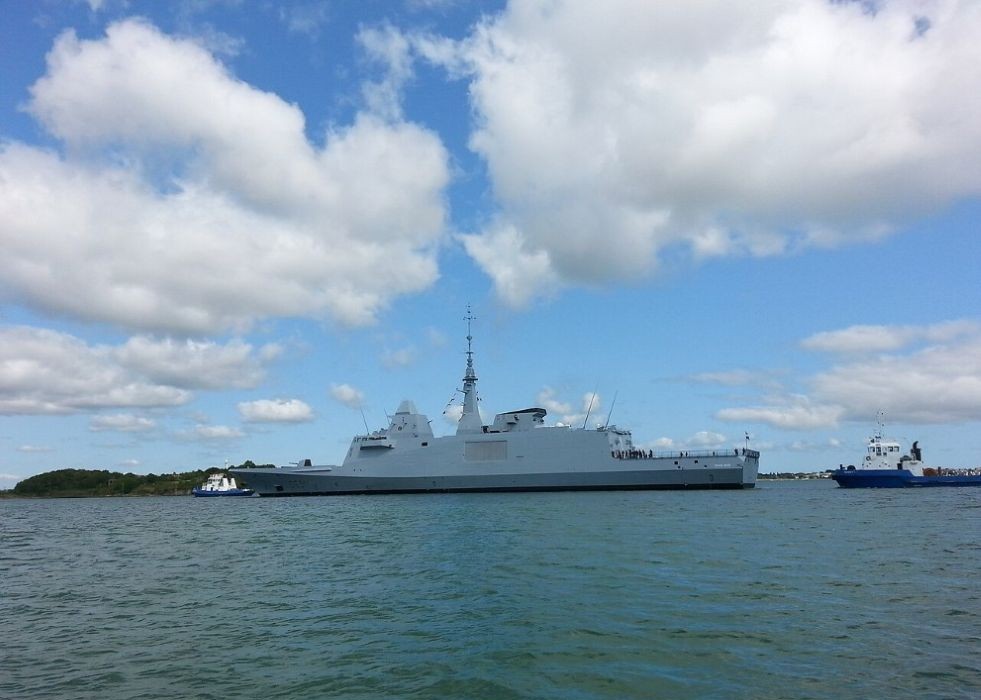
Photo: Marie-Lan Nguyen / CC BY-SA 4.0 (cropped)
Italy, on the other hand, experienced an even stronger reaction when the FREMM frigates Spartaco Schergat and Emilio Bianchi were transferred to Egypt before entering service.
In Italy, the debate was not purely technical. The Marina Militare enjoys strong public respect, particularly due to its humanitarian and search-and-rescue missions. Therefore, the sale was perceived not merely as an adjustment in procurement but as a moral issue. Nevertheless, Italy, like France, framed the issue around replacement planning. Over time, the reaction subsided.
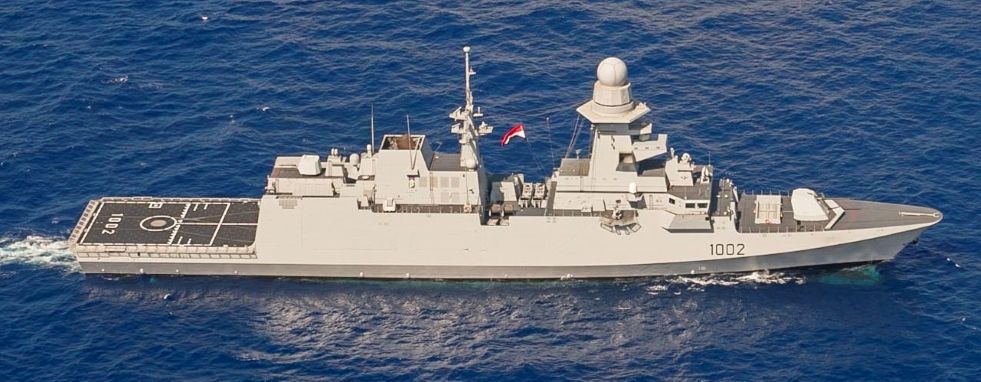
Photo: U.S. Navy / MC2 Dawson Roth
At the time, the Egyptian leadership sought to demonstrate rapid progress through consecutive high-profile projects. The intention to receive the ships before the inauguration of the New Suez Canal created delivery pressure. That compressed timetable increased the financial value of the deal and produced substantial returns for France and Italy.
At the same time, tensions between Türkiye and Egypt were rising in the Eastern Mediterranean. In that atmosphere, the sale was interpreted by some as having implications for the regional balance. It combined economic, political and strategic elements. Whether a similar geopolitical window exists in the Indonesian case is a separate discussion.
In Türkiye, understanding the debate requires examining the historical roles of the Land Forces and the Naval Forces together.
For Turks, the Turkish Armed Forces are not simply an institution but a founding pillar of the state. The army carries symbolic weight rooted in the War of Independence and reinforced by Mustafa Kemal Atatürk’s identity as a land officer. The navy represents a different symbolism. It carries the Turkish flag to distant seas and represents diplomatic visibility.
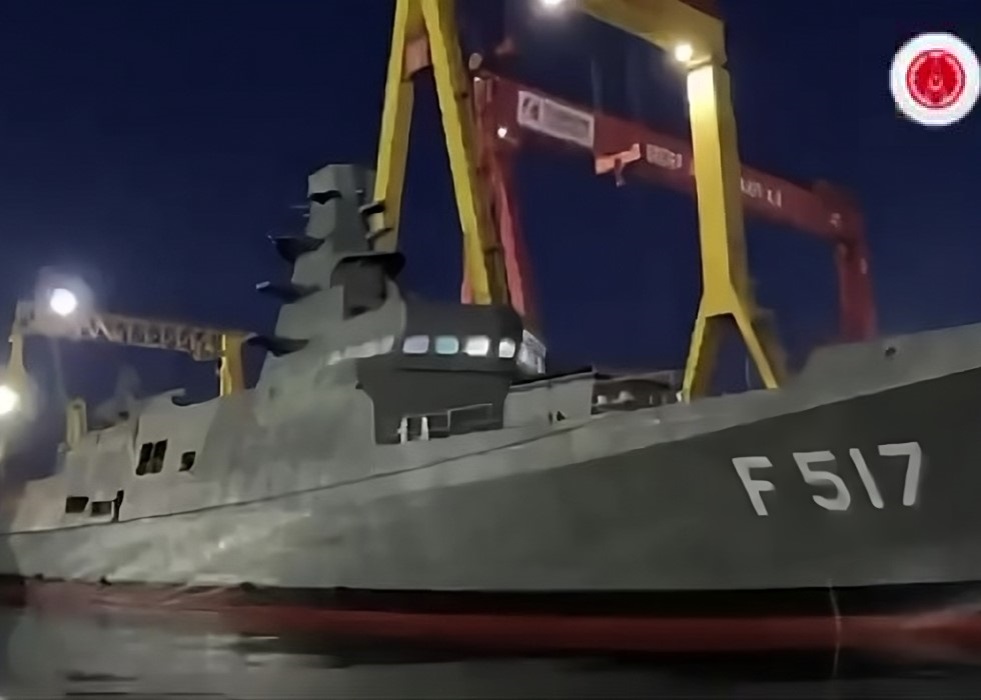
There were two communication challenges. First, ships that were publicly presented in 2023 as destined for naval inventory were not clearly described as potentially linked to export alternatives. Second is the numerical issue. Eight ships were referenced in connection with both naval inventory and export markets. Eight ships were also officially stated as the navy’s requirement. If the goal is to preserve the eight-ship target, additional vessels must be built. Otherwise, the effective number falls to six.
Regional developments have also influenced perceptions. The Greek Navy has been modernising its fleet. Egypt and Israel have also expanded their naval capabilities. At the same time, network-centric operations, unmanned naval and aerial platforms, and distributed operational concepts are making traditional tonnage comparisons less straightforward. In short, the regional balance must be reassessed in doctrinal as well as numerical terms.
The Ministry of National Defence recently issued a statement to clarify the legal dimension.
Three elements stand out:
Exports are part of planning.
The memorandum of understanding is not legally binding.
Thirty-nine ships are currently under construction.
However, the statement does not directly answer the central question: how will the eight-frigate target be preserved in practical timeline terms?
“Planned from the beginning” does not ease concerns unless replacement intent is clearly articulated.
Today, the debate revolves less around legal status and more around clarity regarding replacements.
As the examples from France and Italy indicate, crises do not originate from the act of selling itself but from the uncertainty surrounding it. Debates conclude not when authorities defend themselves, but when they clearly define the future.
The key questions remain:
— Will the frigate target be preserved?
— Will additional ships be constructed?
— What is the timeline?
There is also an Indonesian dimension.
Given Indonesia’s maritime geography — more than 17,000 islands and key straits such as Malacca, Sunda and Lombok — blue-water capable vessels are required.
Its fleet consists of:
— Martadinata-class frigates (SIGMA 10514), commissioned after 2017
— Ahmad Yani-class frigates, in service since the 1980s (Dutch origin, derived from the British Leander class and built under licence in the Netherlands)
By 2027, the Ahmad Yani-class vessels will approach sixty years of service. Therefore, the purpose of procurement is to manage a capability transition between 2025 and 2030 and maintain visible deterrence around the Natuna waters.
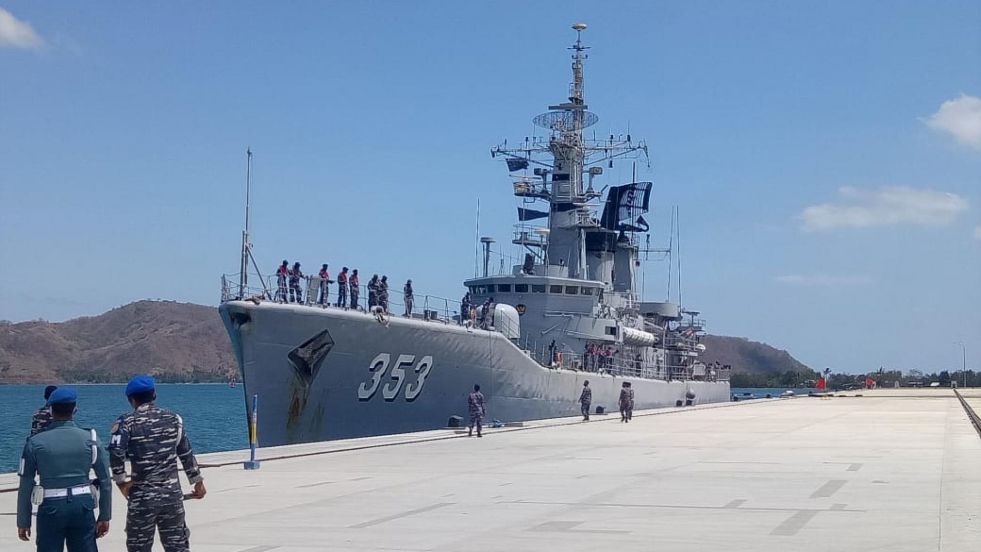
Photo: Deni Sugandi / CC BY-SA 4.0 (modified)
This is not an immediate wartime urgency. However, a gap between 2026 and 2028 could increase internal pressure.
In recent years, Indonesia has engaged with France, Italy and Türkiye simultaneously. Additionally, it has purchased two Italian PPA warships originally built for the Italian Navy. This demonstrates that flexible sourcing models exist.
If Türkiye is unable to deliver by 2026, competition could theoretically resume. However, the number of countries capable of providing ready delivery within that timeframe remains limited. A delay would not automatically place Türkiye at a disadvantage.
Ultimately, the Istif debate is not a defence industrial failure. It is a test of strategic communication and planning.
The Ministry’s clarification has weakened claims of binding commitment, but it has not removed numerical or timeline uncertainty.
As seen in France and Italy, once authorities clearly state replacement plans and schedules, perceptions shift from crisis to technical adjustment.
Until that clarity emerges, the debate will remain symbolic.
Author: Özgür Ekşi