About the Exercise
Exercise Mavi Vatan (Blue Homeland)-2026, conducted under the command of the Turkish Navy, took place from 3 to 9 April 2026. The activity, which involved warships, helicopters and unmanned aerial vehicles (UAVs), was conducted in the Eastern Mediterranean and concluded on 9 April with live-fire drills. The Blue Homeland exercise, conducted with the aim of facilitating joint operations between Turkish naval assets and other military units, ensuring interoperability, and testing new technologies under near-combat conditions in a real operational environment, is one of the largest exercises involving naval units.
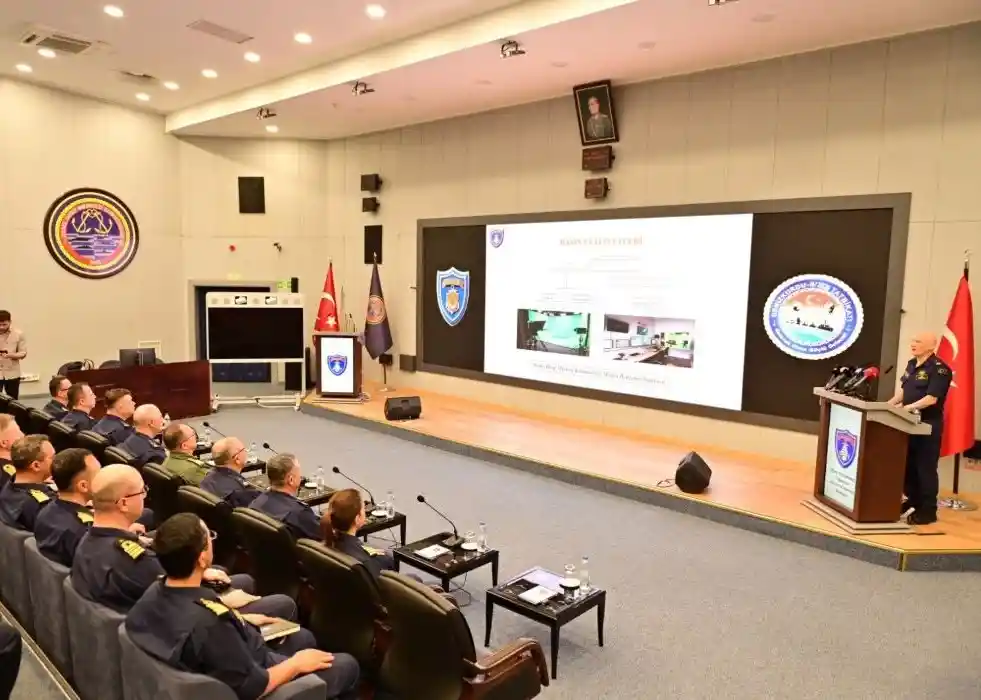
Scenarios and situational conditions were designed to enhance the operational capabilities of units participating in the exercise and were conducted under real-world conditions. Furthermore, during the exercise, which tested the command-and-control capabilities of the headquarters and operations centres of the Navy’s subordinate commands, the assessment, anticipation and decision-making abilities of command-and-control and field personnel, as well as participating units, were evaluated in a high-threat environment. The exercise’s objectives also encompassed the development of interoperability procedures with other military commands, public institutions and organisations.
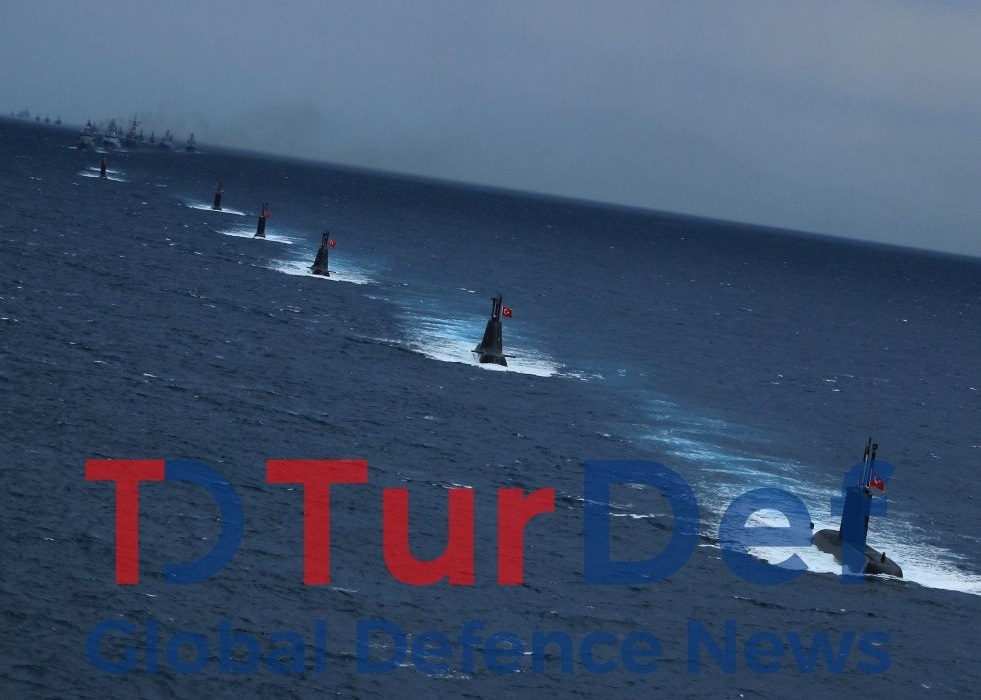
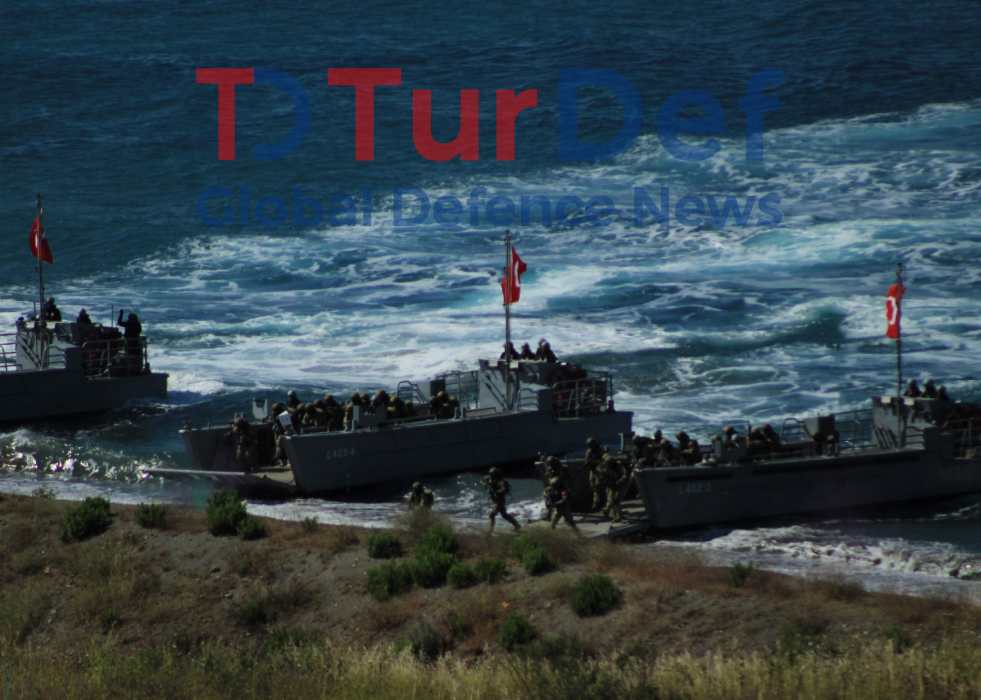
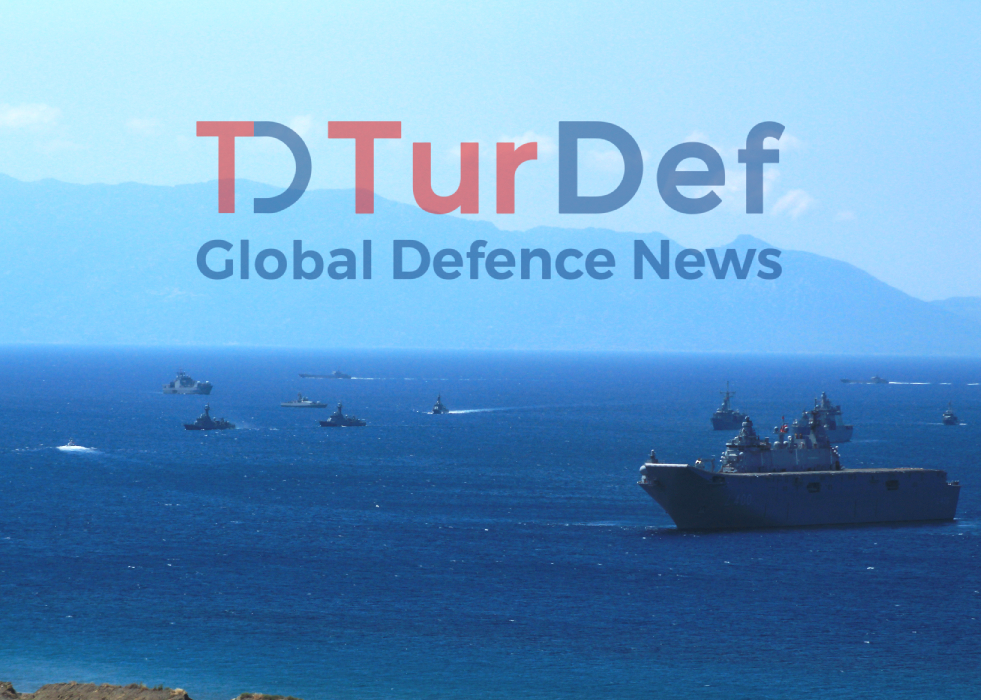
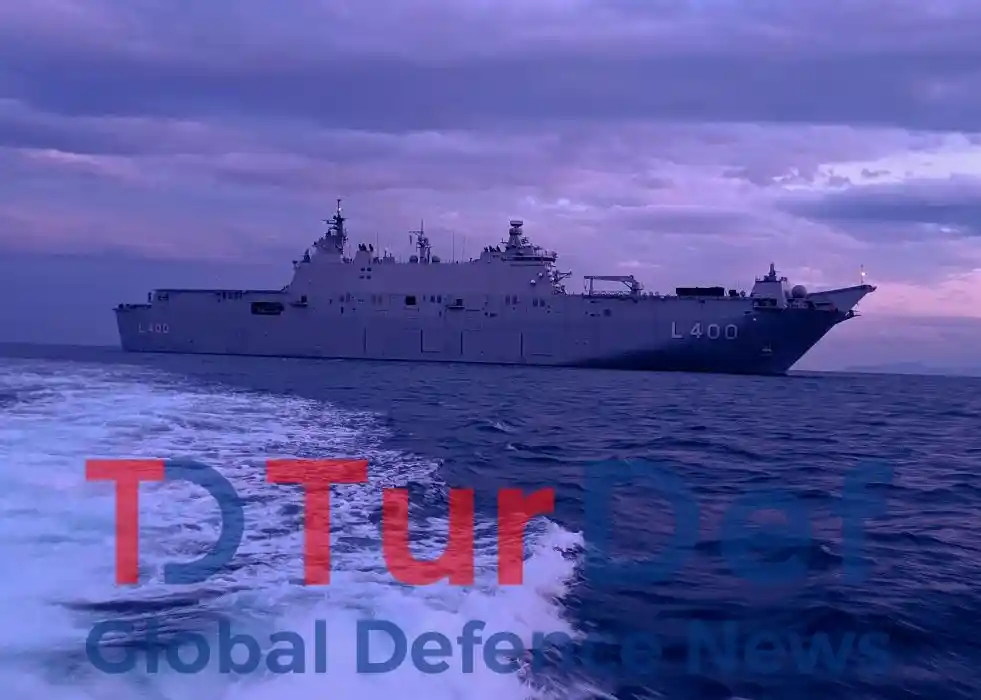
The exercise involved 30 major surface combatants of various classes, eight submarines, 21 amphibious platforms, including the helicopter-capable amphibious assault ship TCG Anadolu, eight mine countermeasure vessels, 29 auxiliary vessels and five unmanned surface vehicles. Moreover, the Coast Guard Command contributed eight vessels, including two corvettes.
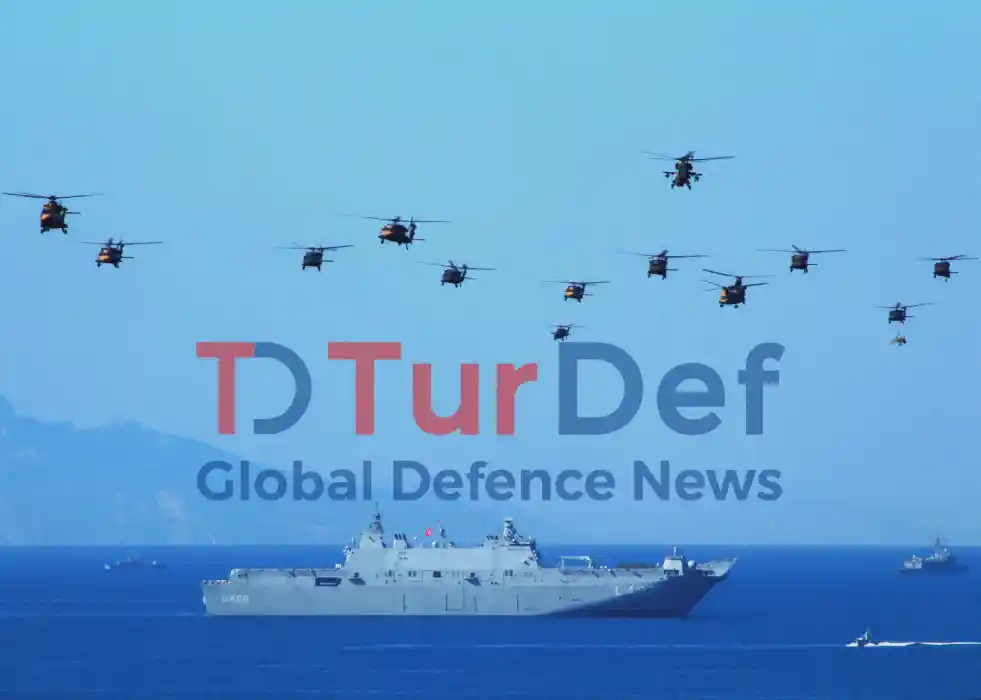
The air component of the exercise comprised five maritime patrol aircraft, three transport aircraft, eight anti-submarine warfare helicopters, four attack helicopters belonging to the Turkish Navy, one heavy-lift helicopter, three utility aircraft, two fighter jets and 24 armed unmanned aerial vehicles. A total of 15,000 personnel were deployed across the entire activity, including combat and support units as well as civilian personnel.
As part of this joint exercise, which involved personnel from different services, operational readiness and weapons training were conducted between 3 and 8 April 2026. Live-fire exercises then took place on 9 April. The programme also included training on the disposal of drifting mines, a constant priority for the Turkish Navy due to the ongoing war in Ukraine. In addition to the unmanned surface vessel attack, the Turkish Naval Forces had the opportunity to demonstrate their strength, capabilities and capacity in a real operational environment through guided missile launches.
Live Fire Drills
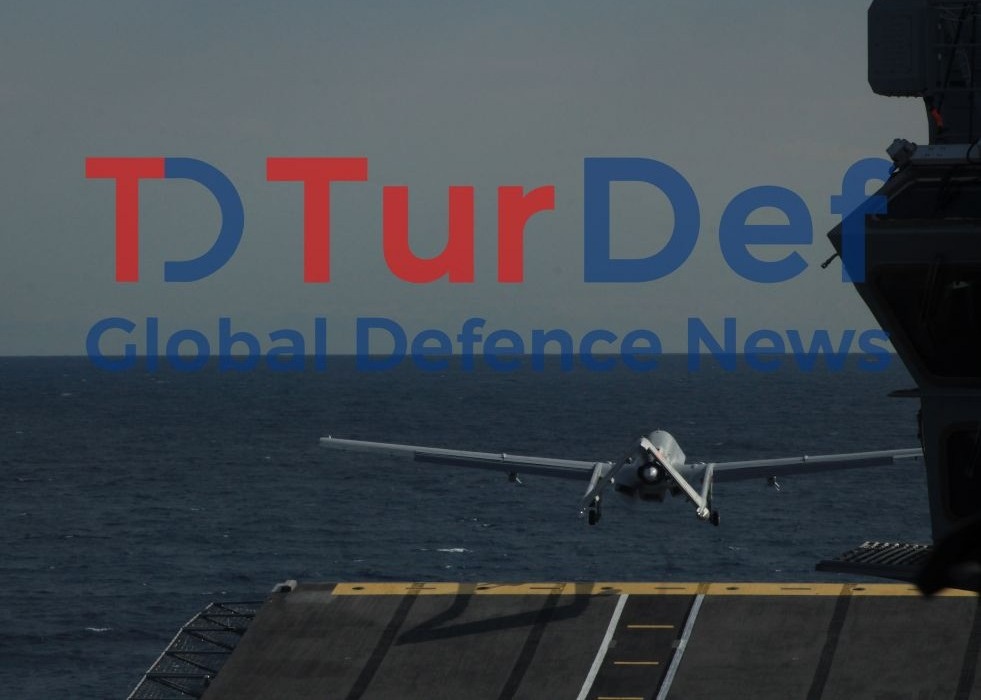
As part of the live-fire day of Mavi Vatan-2026, air and naval units conducted live-fire activities using various types of conventional and guided munitions from different platforms.
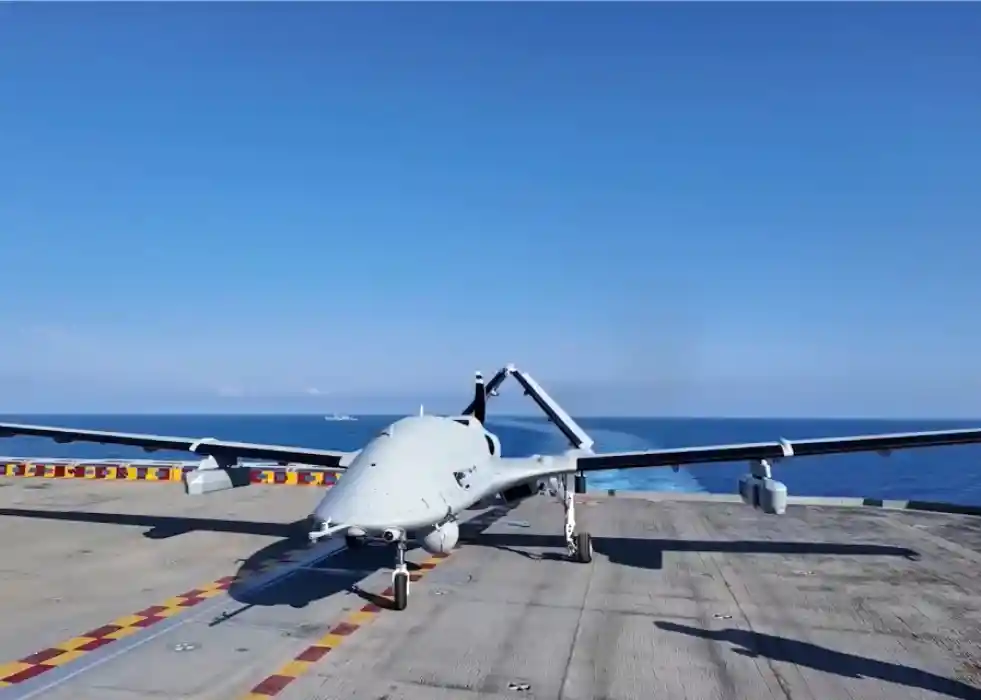
The sequence of events began with the launch of two TB3 unmanned aerial vehicles, each equipped with MAM-L smart micro munitions, from the amphibious assault ship TCG Anadolu (L 400). MAM-L, developed from the L-UMTAS guided missile, is essentially an unpowered version featuring a similar guidance system. It constitutes the main strike capability of Turkish unmanned aerial vehicles. The munition, which has been deployed in numerous operations to date, is capable of gliding towards its target despite being released from low-speed platforms, thanks to the momentum gained during free fall. This eliminates the need for a propulsion section, which is not essential at higher altitudes, thereby enabling its use even on lower-capacity unmanned aerial vehicles. In addition to this capability, it also provides the user with the ability to conduct opportunity strikes in rapidly evolving situations from platforms engaged in reconnaissance and observation missions during low-intensity engagements. The removal of the propulsion section also results in significant savings in munition costs.
The amphibious assault ship TCG Anadolu (L 400) also participated in the operation, which was monitored by unmanned aerial vehicles from beginning to end. The platform is capable of deploying a battalion-sized amphibious task force, together with the necessary combat and support vehicles, to crisis zones without requiring support from a main base. It is also worth noting that the ship includes the necessary medical facilities. Furthermore, the required infrastructure has been established, taking into account the vessel’s potential role as a flagship in a possible amphibious operation. The ship provides a command-and-control infrastructure capable of coordinating simultaneous and synchronised operations involving air, land, sea and unmanned assets in a multi-domain environment. From this perspective, TCG Anadolu’s capability to operate, command and sustain unmanned aerial and surface vehicles represents an important vision of future power in the rapidly evolving modern battlefield.
Mine Warfare
As part of the live-fire exercises, the initial task was the detection and subsequent neutralisation of a drifting sea mine. In the context of the ongoing war in Ukraine and the annual presence of dozens of drifting mines and unmanned surface vessels, the Turkish Navy is maintaining a firm stance on this issue. Since the beginning of the war, a series of measures has been implemented, particularly to ensure the safety of the approach waters to the Istanbul Strait, and patrols in the area have been intensified.
It is known that new capabilities have also been acquired in this context. The use of synthetic aperture radar for the detection of objects drifting at sea that may pose a potential mine threat is of critical importance. This capability is enabled through the use of unmanned aerial vehicles. In response to this threat, the Navy has taken decisive steps by integrating Meteksan’s MİLSAR-equipped UAV systems into its inventory. This capability has enabled the rapid monitoring and security of large maritime areas, beyond the reach of conventional warships and auxiliary vessels, without exposing them to risk.
At the Nusret-2025 Invitation Exercise, the Turkish Navy also placed particular emphasis on the mine threat, underlining its determination to ensure that the Black Sea is cleared of mines and other remnants of war. This effort, under Türkiye’s leadership, is considered both a priority and a responsibility of the littoral states in the region. The link provides access to a study by TurDef on mine warfare and the capabilities of the Turkish Naval Forces Command.
The drifting mine detected by Aydın-class (A Class) minehunters was neutralised by the detonation of demolition charges laid by Underwater Defence (SAS) units.
New capabilities have also been introduced. Among the most significant is the use of synthetic aperture radar on unmanned aerial vehicles to detect drifting objects that may pose a mine threat. ANKA and AKSUNGUR UAVs equipped with Meteksan’s MİLSAR radar have significantly enhanced this capability.
During the exercise, a drifting mine detected by Aydın-class mine countermeasure vessels was neutralised by underwater defence (SAS) units using explosive charges.
Naval Artillery
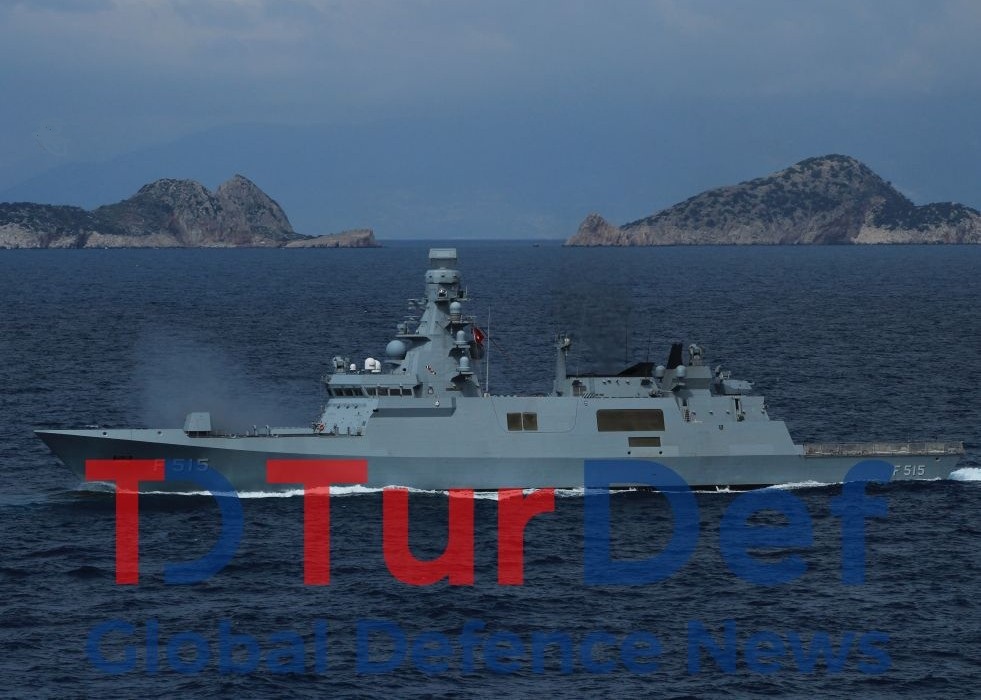
Following the clearance of the region from mine threats, the MİLGEM corvettes TCG Heybeliada (F 511), TCG Büyükada (F 512) and TCG Kınalıada (F 514), together with the programme’s fifth vessel, the frigate TCG İstanbul (F 515), carried out naval bombardment against the target island using their 76/62 mm main guns. The firing exercises were conducted using the TAKS naval gun fire control system, developed by ARMERKOM and ASELSAN as the first domestically developed solution in this field. On TCG Heybeliada (F 511) and TCG Büyükada (F 512), the system operated with the MİLGEM-GENESIS Combat Management System, while on TCG Kınalıada (F 514) and TCG İstanbul (F 515), the HAVELSAN ADVENT Combat Management System was used. The vessels conducted firing in fully automatic mode using fire control systems supported by target tracking radars, based on data collected from onboard sensors, ship reference systems and combat management systems.
Following the frigates and corvettes, Kılıç-I and Kılıç-II class fast attack craft TCG Kılıç (P 330), TCG Kalkan (P 331), TCG Mızrak (P 332) and TCG Atak (P 337) also conducted bombardment against the target island using their 76/62 mm main guns and 40 mm Fast Forty stern guns. The high accuracy recorded in both firing sequences demonstrates that the Turkish Navy, with its long-established naval gunnery tradition, continues to maintain its effectiveness in this field through indigenous solutions.
Battles of Today and Tomorrow
While unmanned systems were initially deployed for reconnaissance, surveillance and intelligence purposes, their capabilities have expanded significantly. Technological developments in materials, munitions, electronics and software have enabled the execution of combat missions with high levels of autonomy in demanding environments. As a result, these systems are now frequently used in combat operations.
The low cost of these systems, combined with their ability to be produced rapidly in large numbers, provides significant advantages to countries that possess them. These include border security, control and protection of maritime areas, and attrition warfare, which places sustained pressure on the industrial, economic and social systems of opposing sides. Over the four years of conflict following Russia’s invasion of Ukraine, significant technological and doctrinal advances have been achieved in the operation of these systems, whether factory-produced or assembled near the front line.
Türkiye is among the countries that recognised this trend early. The leading position it achieved in aerial systems is now being extended into naval and land domains. In this context, an Albatros unmanned surface vehicle carried out a pre-planned attack mission.
Recent developments in warfare have brought unmanned systems into direct confrontation. In the ongoing war in Ukraine, both sides have conducted unmanned naval attacks using either purpose-built vessels or adapted surface platforms. In this domain, the defending side has inflicted notable losses on the Russian Navy.
With globalisation, developments occurring anywhere in the world can quickly manifest in different regions. However, Türkiye’s proximity to the current theatre of conflict means it directly faces the consequences of events in the northern Black Sea. The threat posed by drifting unmanned surface systems reaching the northern coast of Anatolia, together with evolving warfare concepts, is driving the Turkish Navy to adopt and continuously refine new measures.
Within the scope of Exercise Mavi Vatan-2026, an MKE-produced Pirana-K unmanned surface vehicle was neutralised by a MAM-L munition launched from a TB3 unmanned aerial vehicle, marking a first within the exercise.
This activity provides an indication of future combat scenarios while demonstrating a significant capability. Unmanned surface vehicles pose a highly agile threat due to their low detectability, hull designs that allow them to skim across the surface depending on their type, and high power-to-displacement ratios. Their low radar cross-section and low profile make detection, engagement and neutralisation extremely difficult.
In this context, unmanned aerial vehicles are emerging as important force multipliers due to their wide range of sensor options. Synthetic aperture radar, millimetre-wave radar and electro-optical systems enable early detection and identification of potential threats before they reach dangerous proximity to land or naval assets. UAV-based strikes also allow threats to be neutralised before they can pose a risk.
Given Türkiye’s capabilities in the UAV domain, the successful execution of this mission during the exercise may be considered as opening a new chapter in the defence of coastal waters. The laser-guided nature of MAM-L also enables engagement of moving targets, allowing cost-effective and sustained maritime security operations over extended ranges.
Guided Missile Launches
A variety of guided missiles were launched from both naval and airborne platforms in the context of the Exercise Mavi Vatan-2026. As part of this operation, a AH-1W Super Cobra helicopter belonging to the Naval Aviation Command successfully eliminated a ground target on the island using an AGM-114 Hellfire guided missile. These systems, manufactured in the US, utilise laser guidance to engage stationary or moving targets from distances of up to 8 kilometres. The hollow-charge warhead of the system enables the penetration of armoured vehicles.
Another guided missile launch during the exercise was carried out using a Temren missile sent from an SH-70 Sea Hawk helicopter of the Turkish Navy. As with the MAM-L, the system has been developed by Roketsan based on the UMTAS and is equipped with a laser and imaging-infrared guidance. The ammunition provides the user with considerable operational flexibility, as it can be equipped with various types of warheads, including armour-piercing tandem, hollow-charge, high-explosive fragmentation and thermobaric options.
During the exercise, the sequential use of the predecessor and successor missiles of the Turkish Navy inventory –namely the AGM-114 Hellfire and the Temren– made it possible to observe a significant difference between the two systems. It is well established that AGM-114s, particularly when launched from low altitude or to long-range targets, pitches up to climb higher immediately after leaving the launcher. This phenomenon enables them to gain momentum for a glide phase prior to diving towards the target. However, it was evident that during the launch from the SH-70 Sea Hawk, the Temren's upward trajectory was much less pronounced; in other words, it reached the target by following a relatively flat trajectory. This also provides significant indications that, although they share similar parameters, the Temren possesses a superior propulsion and guidance infrastructure compared to the Hellfire system, and that its initial velocity and acceleration are comparatively better.
As part of the Exercise Mavi Vatan-2026, live-fire exercises were also conducted using the RIM-7 Seasparrow surface to air missile. During the official parade held as part of the event's final programme, it was observed that the covers of two tubes on the Mark 29 launcher of the frigate TCG Turgutreis (F 241) were absent. Consequently, a target drone simulating an air threat was shot down by what is believed to have been fire from the vessel in question.
The Turkish Navy has upgraded its ship air defence capabilities to incorporate RIM-162 ESSM systems as part of its modernisation programme. The subsequent phase entails the transition to the Siper family's naval models in conjunction with domestic products. The objective of this transition is to ensure the security of both current and future domestic platforms utilising Turkish systems. Nevertheless, eight ships equipped with the aforementioned missile have been deployed to the Turkish Navy's inventory. It is important to note that, due to the ongoing operational effectiveness of these systems, substantial quantities remain in active service, even on vessels that have undergone modernisation to incorporate Mark 41 VLS and RIM-162 ESSM capabilities. It can be deduced from the live-fire exercises that were conducted during the manoeuvre that the Turkish Navy is continuing its efforts to maintain its current capabilities and capacity.
In summary, the Turkish Navy has demonstrated and reinforced its combat capabilities in multi-domain warfare involving various types of targets. The Turkish Navy has demonstrated its ability to deploy various types of vessels, equipment and weapons simultaneously and in a coordinated manner. This has been achieved through the implementation of flexible deterrence options, which have served to reinforce the heightened state of readiness. These options have also served to demonstrate the strength, capabilities and capacity of the Turkish Navy to safeguard rights and interests, maintain operational effectiveness and sustain deterrence, particularly in the Blue Homeland (Mavi Vatan) and in other regions as required whenever.
Conclusion
In summary, the Turkish Navy demonstrated and reinforced its capability to operate in multi-domain warfare environments involving different target types. It showed that it can employ various platforms, systems and weapons simultaneously and in a coordinated manner, reinforcing its readiness, deterrence and ability to protect maritime interests in the Blue Homeland and beyond.
Author: Özgür Ekşi